
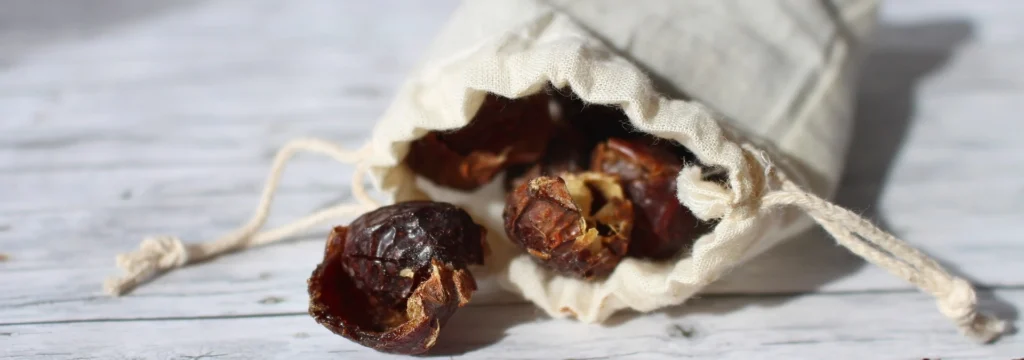
In this article you will learn what makes the soapnut a popular and effective alternative to conventional laundry detergent.
Soapnuts: Origin and Use
Soapnuts are the fruit of the soapnut tree, often referred to as the soapberry tree. The tree is native to the tropical and subtropical regions of Asia and typically only bears fruit for the first time at around ten years of age. The soapnuts are initially sticky and are dried after being harvested in the autumn.
Soapnuts contain 15 percent wash-active substances, so-called saponins. They have long been used in India for cleaning clothing and hair. They have only been used here more recently, but are becoming increasingly popular. The shells of the nuts are simply placed in a small pouch and put into the washing machine; they do the REST on their own.
Advantages of soapnuts as an alternative
Compared with conventional detergent, there are several arguments in favour of soapnuts:
- Soapnuts grow in nature. They are not produced through elaborate chemical processes and are therefore an ecological, biological alternative to conventional detergent that does not require wasteful resource use.
- They are also very inexpensive.
- They remove grease and light stains as well as detergent does — without attacking the fibres or the colour intensity of the garments.
- Regardless of the wash temperature, you can use soapnuts at any temperature.
- The soapnut’s wash-active substance is quickly biodegradable.
- If you develop a rash from regular detergent or suffer from atopic dermatitis, you should try soapnuts.
- You can compost the remains of the soapnuts. Unlike conventional detergent, they therefore do not generate packaging waste. Tip: If you use the nuts only at 30 degrees Celsius, you can usually reuse them.
Drawbacks of soapnuts as an alternative
Of course, soapnuts also have a few disadvantages:
- You cannot remove stubborn stains from your clothes with soapnuts; their cleaning power is insufficient for that.
- They also contain no bleaching agents, which makes them not necessarily advantageous for white laundry. Soapnuts are also not well suited to hard water because they do not contain water-softening substances.
If you prefer scented laundry, you will not be satisfied with soapnuts, as they do not contain any fragrance.
An alternative to soapnuts is chestnuts, which are widely available and can be processed into detergent at home.