
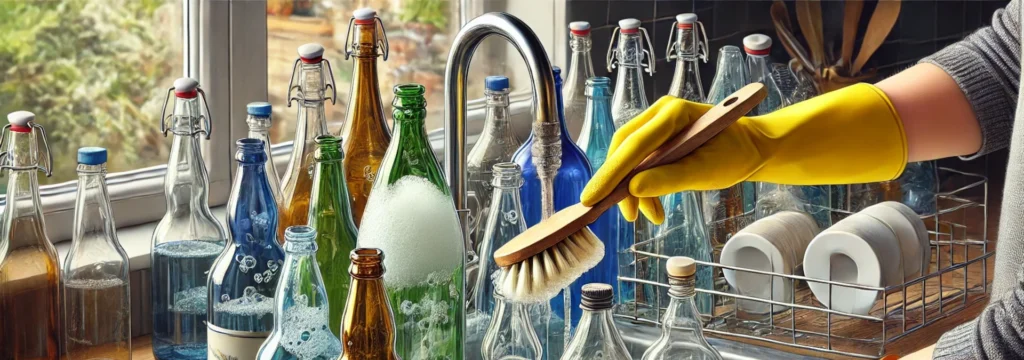
Regularly cleaning bottles is essential to prevent bacteria, mold and unpleasant odors. Whether glass bottles, stainless steel drinking bottles or baby bottles – every bottle requires thorough care to remain hygienically sound. In this article you will learn which methods are best suited, which home remedies are particularly effective and what to pay attention to when cleaning.
Why is regularly cleaning bottles so important?
Bottles that are used daily provide an ideal breeding ground for germs, bacteria and mold. Drinking bottles for water, juices or smoothies in particular must be cleaned thoroughly, since moisture and residues promote bacterial growth. If you do not clean your bottles regularly, you risk unpleasant odors and possibly health problems. Cleaning prevents bacteria and germs, removes odors and ensures better taste neutrality of the bottle.
Which bottles need to be cleaned regularly?
- Drinking bottles made of glass, stainless steel or plastic
- Baby bottles and sports bottles
- Reusable bottles and glass bottles for water or juice
- Thermos bottles and coffee cups with lids
- Oil bottles
The best methods for cleaning bottles
Depending on the material and degree of soiling, there are different cleaning methods for bottles.
1. Cleaning bottles with hot water and dish soap
This method is suitable for daily cleaning:
Fill the bottle with warm water. Then add a few drops of dish soap. We recommend Almawin dish soap or the dish soaps from Sodasan or Sonett. Clean thoroughly with a bottle brush
Rinse well and leave to dry upside down
2. Cleaning bottles: with vinegar against limescale and odors
Vinegar is a natural disinfectant and removes limescale as well as unpleasant odors.
Fill the bottle with a mixture of water and vinegar (1:1), then let stand for 15–30 minutes
Rinse thoroughly with water
3. Cleaning bottles: With baking powder or baking soda for heavy soiling
Baking soda and baking powder help remove deposits and mold.
Add 1 tsp baking soda or baking powder to the bottle. Then fill with warm water. Shake vigorously and rinse thoroughly.
4. Use rice
This method is especially suitable for bottles with narrow necks.
Add 2 tbsp uncooked rice to the bottle. Then add warm water and a drop of dishwashing liquid. Shake well to remove deposits. Rinse the bottle thoroughly.
5. Washing bottles in the dishwasher
Many glass or stainless steel bottles are dishwasher-safe. The bottle should be placed upside down in the top rack of the dishwasher. Plastic bottles should generally be washed by hand or only washed at low temperature to avoid deformation. However, always follow the manufacturer’s instructions. Some bottles may only be hand-washed.
The best tools for cleaning bottles
1. Bottle brushes
A long bottle brush with stiff bristles is ideal for thoroughly cleaning the interior. Models with a flexible neck also reach tight spots. And for baby bottles there are special small brushes for nipples and lids.
2. Cleaning beads – Perfect for narrow bottle necks
Cleaning beads are made of stainless steel or glass and remove dirt through movement inside the bottle. Simply add them to the bottle with water and a little dish soap, shake and then rinse.
3. Vinegar & baking soda – Natural household cleaners for bottle cleaning
Vinegar acts as a disinfectant and removes limescale deposits, while baking soda loosens dirt. This combination is ideal for an intensive cleaning.
4. Drying rack or bottle holder – For quick drying
After cleaning it is important to dry bottles thoroughly. A bottle holder enables optimal air circulation and prevents residual moisture from accumulating.
Special Tips for different bottle types
For glass bottles: These are particularly hygienic and neutral in taste. Clean them with vinegar and hot water.
For stainless steel bottles: Stainless steel bottles are durable and robust. Baking soda and water help against discoloration.
For plastic bottles: Be careful with high temperatures, as plasticizers can leach out. Use mild cleaning agents.
Baby bottles should always be cleaned immediately after use. Sterilizing is particularly important.
Thermos bottles: Do not use vinegar or citric acid, as these can damage the interior coating.
How to dry bottles correctly?
After cleaning, bottles should be thoroughly dried to prevent mold growth. Ideally, place them upside down on a clean cloth or in a bottle holder. If moisture accumulates inside, kitchen paper or a dry cloth can help.
Descale bottles regularly – here’s how
Especially with glass bottles or baby bottles, limescale deposits can form. A mixture of vinegar and water or citric acid helps dissolve limescale. Let it sit overnight and rinse thoroughly. Alternatively, use a limescale remover. We recommend the Poliboy Bio Limescale Remover.
How often should bottles be cleaned?
Daily – drinking bottles, baby bottles and sports bottles
Weekly – reusable bottles, thermos bottles and glass water bottles
After each use – milk bottles or bottles for juices and smoothies.
Conclusion – Keeping bottles hygienically clean
Cleaning bottles correctly is essential for hygiene and longevity. Whether with vinegar, baking soda, dish soap or a bottle brush – regular cleaning prevents bacterial growth and keeps bottles fresh and odor-neutral. With these tips, every bottle remains hygienically clean and long-lasting.