
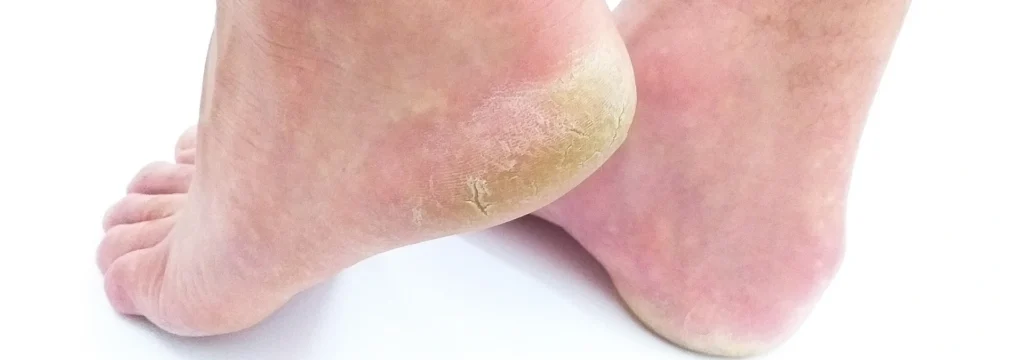
What is a callus?
A callus is a thickened layer of dead skin cells that forms as a protective mechanism to shield the underlying tissues from pressure and friction. It occurs particularly often on the feet, since they are subjected to heavy loads on a daily basis.
1. Structure of the callus
The callus consists of keratinized cells that are continuously renewed. The outermost layer of the skin, the epidermis, contains keratin, a protein-rich material that gives the skin strength. In areas with high mechanical stress, such as the soles of the feet, constant friction leads to increased formation of corneocytes.
2. Function of the callus
The callus has several important functions. On the one hand, it protects the sensitive tissues beneath from injury and pressure points. It also serves as a natural shock absorber, reducing the load on the foot bones and joints. Furthermore, the callus makes the feet more resilient to external influences such as heat, cold or coarse surfaces.
3. Problems with calluses
Although a callus is a natural protective mechanism, excessive accumulation can lead to discomfort. Too much callus can be unpleasant, cause pain and make walking difficult. If the callus becomes too thick, corns or hard calluses can develop. These can be very painful and may require treatment.
The formation of calluses on the feet is a common problem that affects many people. Calluses arise from excessive friction and pressure on the skin, particularly on the heels, the balls of the feet and the toes. To maintain healthy, soft skin on the feet, it is important to remove calluses regularly and to prevent their formation.
Callus removal
There are various ways to remove calluses. A popular method is the use of a pumice stone or a callus file. These tools help to gently abrade dead skin layers. A foot bath before application makes callus removal easier. Alternatively, specialized creams or ointments containing keratolytic agents can be used to soften and dissolve the callus.
1. Pumice stone or callus file
A proven means of callus removal is the use of a pumice stone or a callus file. These can be used to gently abrade rough skin. Treatment should be carried out on damp skin, for example after a foot bath or a shower, to soften the callus.
2. Callus creams and ointments
There are specialized creams and ointments that contain keratolytic agents. These help to soften and loosen the callused skin. The products should be applied regularly to achieve good results.
3. Electric callus removers
Electric callus removers are devices that abrade callused skin with a rotating roller or an abrasive head. They are straightforward to use and can be effective when applied correctly.
4. Professional foot care
For pronounced calluses or foot issues, it is advisable to consult a professional such as a podiatrist or a foot care specialist. They can remove calluses professionally and provide further recommendations for foot care.
Professional foot care specialists and podiatrists are familiar with various methods for removing calluses. They use tools such as pumice stones, callus debriders, or specialized creams to gently remove excess callus. This contributes to improved foot health and comfort.
Treatment of further foot problems
For foot problems such as corns, warts, calluses, or athlete’s foot, professional foot care specialists can offer targeted treatments. They can also recommend orthotic insoles or aids such as toe separators or heel pads to relieve specific foot problems.
Care recommendations
After treatment, professional foot care specialists provide advice on proper foot maintenance. This includes moisturizing with emollient creams, wearing comfortable shoes, and performing regular foot baths. These recommendations help to maintain foot health over the long term.
Professional foot care is a valuable support to preserve the health and well-being of our feet. Regular visits to a foot care professional can help to identify and treat potential problems at an early stage.
Protection against friction
To prevent the formation of calluses, it is advisable to pay attention to suitable footwear. Comfortable shoes with a good fit and padded soles provide adequate protection against excessive friction. Wearing insoles or gel pads can offer additional comfort and relieve pressure points.
Preventing callus formation
To prevent callus formation on the feet, regular foot care and attention to a few tips and measures are important. Through consistent prevention, the development of calluses can be minimized.
1. Correct shoe choice
Wear well-fitting shoes that provide enough room for the toes and are not too tight. Avoid high heels and shoes with overly thin soles, which can increase pressure on the soles of the feet.
2. Moisturizing care
Regularly applying a moisturizing foot cream keeps the skin supple and reduces the formation of callus. Pay special attention to dry areas such as the heels; at night apply a thick layer of foot cream and put on cotton socks to lock in the moisture.
3. Foot baths
A regular foot bath with lukewarm water and some sea salt or specific bath additives can help keep the skin soft and remove excess callus. Afterwards use a pumice stone or a callus file to gently remove dead skin flakes.
4. Wearing insoles
Insoles or orthopedic inserts can distribute pressure across the feet evenly and thereby prevent callus formation in certain areas. Consult a specialist to find the suitable insoles for your needs.
5. Regular foot care
Take time regularly to care for your feet. Gently remove excess callus with a pumice stone or a callus file. However, avoid cutting or scraping off callus, as this can lead to injuries.
By integrating these measures for callus prevention into your daily routine, you can reduce the risk of excessive callus formation and keep your feet healthy and well cared for.
When should you seek medical advice?
For severe or persistent callus problems, it is advisable to seek medical advice. A dermatologist or a podiatrist can provide an accurate diagnosis and recommend an appropriate treatment.
1. Diagnosis
A doctor can identify the cause of excessive callus formation and rule out other possible foot problems. This can be done through a thorough examination of the feet.
2. Professional treatment
A podiatrist can perform a professional callus removal. The callus is carefully debrided and the feet are subsequently treated accordingly.
3. Medical foot care
For certain medical conditions, such as Diabetes or circulatory disorders, regular medical foot care is particularly important. A physician or podiatrist can provide specific recommendations on how to control and treat callus formation.
4. Use of medications
In some cases the physician may prescribe specific ointments or creams that soften the callus and promote healing. These should be used only according to medical instructions.
5. Further diagnostic investigations
If there is suspicion of an underlying condition, the physician may order further investigations such as blood tests or imaging procedures to establish an accurate diagnosis and initiate appropriate treatment.
It is important to seek medical advice if callus formation is painful, accompanied by inflammation or infection, or does not improve with conventional methods of callus removal. The physician can develop an individualized treatment strategy to address your specific needs.
Conclusion
Regular removal of calluses and consistent foot care are essential to maintain healthy, well-maintained feet. In cases of pronounced callus formation or foot problems, it is advisable to consult a specialist, such as a podiatrist or dermatologist and, if necessary, a physician.