
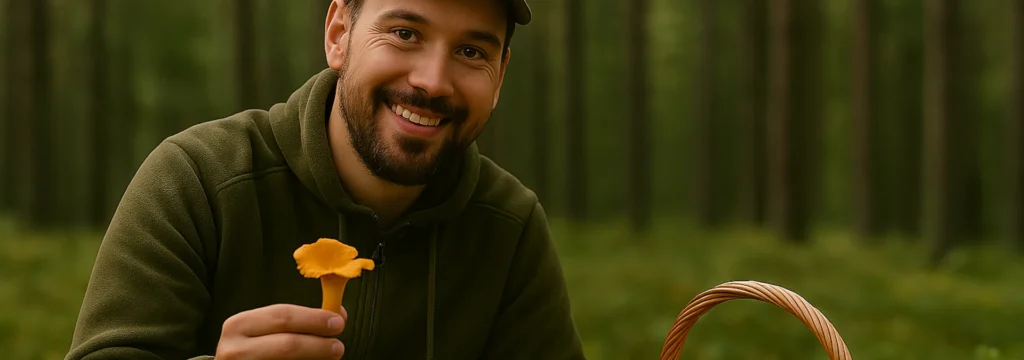
Chanterelles are among the most popular edible mushrooms in Europe. Their bright yellow to golden-orange appearance, delicate peppery flavour and versatile uses make them a genuine delicacy. Chanterelles are generally in season from June to October, with a peak in mid-summer. Freshly foraged from the forest or purchased at the market, they enrich a wide range of dishes and are also rich in valuable nutrients. In this article you will learn everything worth knowing about chanterelles — from identification and harvesting to proper preparation and the associated health benefits.
Chanterelles
Chanterelles (Cantharellus cibarius) are wild mushrooms that grow in forests with mixed or coniferous trees. They occur in Europe, North America and parts of Asia. Characteristic for the species is its funnel-shaped cap with a wavy margin and an intense yellow colouring. The underside does not feature true gills but ridges that run down the stem. The flesh is firm and slightly fibrous; the scent is reminiscent of apricots, which gives the mushroom a particularly fine aroma.
Foraging chanterelles – tips for beginners
Foraging chanterelles is a popular pastime for mushroom enthusiasts. They prefer moss-rich, moist woods and form symbiotic relationships with trees such as spruce, pine or beech. They often appear in groups and, under favourable conditions, can be harvested from the same spot for several weeks. When harvesting it is important not to pull chanterelles out of the ground but to cut them carefully with a knife directly above the forest floor. This preserves the mycelial network in the ground and allows new fruiting bodies to form.
Many countries have legal regulations on how many mushrooms may be collected per person in order to protect stocks. In Germany the maximum amount is generally one to two kilograms per day for personal use. Inexperienced foragers should only take mushrooms if they can identify them with absolute certainty, to avoid confusion with poisonous species.
Cleaning chanterelles – how to do it correctly
Chanterelles should be cleaned as gently as possible, since they absorb water easily and can lose flavour. Rather than washing them in water, it is advisable to remove coarse dirt with a brush, a soft toothbrush or kitchen paper. Stubborn soiling can be removed with a brief rinse under running water; the mushrooms should then be dried thoroughly and immediately.
Preparation ideas
They can be prepared in many ways. Their piquant aroma comes into its own when they are gently sautéed in butter or olive oil. Classically, they are combined with onions, cream and fresh herbs such as parsley into a creamy sauce that pairs well with pasta, potatoes or meat. As a topping on a quiche, in a mushroom skillet with other wild mushrooms, or as a filling for omelets, chanterelles are also a delight.
A simple and popular preparation is sautéing in butter with a pinch of salt and some pepper. Chanterelles require only a few minutes of cooking time, otherwise they can become tough. To preserve their full flavor, add them to other ingredients only at the end of the cooking process.
Preserving chanterelles
Because chanterelles are delicate, they should be processed as fresh as possible. In the refrigerator they keep for a maximum of two to three days when stored in a breathable container. To extend their shelf life, chanterelles can be frozen or dried. When freezing, it is advisable to blanch them briefly beforehand so that the texture is preserved. Dried chanterelles can be stored for several months and should be rehydrated in warm water before use.
Health benefits of chanterelles
Chanterelles are not only tasty but also nutritious. They contain several important nutrients, including vitamin D, which is important for bones and the immune system, as well as vitamin A and various B vitamins. Minerals such as potassium, iron and copper are also present in appreciable amounts. With a low calorie content of around 15 kilocalories per 100 grams, chanterelles are well suited to a calorie-conscious diet.
Chanterelles also provide dietary fiber, which supports digestion. Their relatively high protein content makes them a valuable addition to vegetarian or vegan diets.
Chanterelles and sustainability
As wild mushrooms, chanterelles do not require agricultural cultivation or pesticides. They grow naturally in forests and are therefore an ecologically sustainable food. Collectors who show respect for nature help to preserve stocks in the long term. This includes harvesting only as many mushrooms as are actually needed and leaving small, still-immature specimens in place.
Chanterelles and their culinary tradition
In many European countries chanterelles occupy a fixed place in regional cuisine. In Germany and Austria they are part of the typical summer and autumn menu, often served with dumplings, Spätzle or rösti. In Scandinavia chanterelles are traditionally prepared with cream and dill, while in France they enrich autumnal ragouts and pâtés. This cultural variety demonstrates how versatile and popular chanterelles are.
Buying tips
If you do not collect chanterelles yourself, you can find them during the season at weekly markets or in supermarkets. When buying, look for a fresh, strong color and a firm, dry cap. Soft, dark or very moist specimens are less aromatic and should be avoided.
Conclusion
Chanterelles are true treasures of the forest — aromatic, healthy and versatile. Whether freshly foraged or purchased, they enhance countless dishes and provide valuable nutrients. Those who harvest them responsibly and prepare them gently can enjoy their delicate aroma to the fullest. The short season makes them a special highlight of the summer that many connoisseurs eagerly anticipate year after year.