
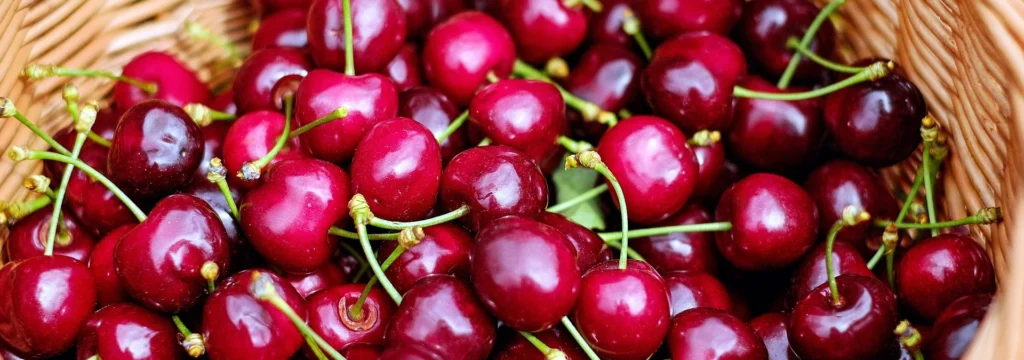
Cherries are among the most popular summer fruits and are an integral part of home gardens, markets and recipes. With their sweet to tart flavor, bright red color and versatile uses, cherries are not only a pleasure but also a symbol of summer, nature and harvest season. This article provides all essential information about the fruit: from its origin through cultivation to storage, varietal diversity and uses — well-founded, factual and search-engine optimized.
Origin and history of the cherry
The history of the cherry goes far back: cherries were already cultivated in ancient Greece. According to accounts, the Roman general Lucullus brought the fruit to Europe in the 1st century BC, after which it spread rapidly. The sweet cherry (Prunus avium) likely originates from the area between the Black Sea and the Caucasus, while the sour cherry (Prunus cerasus) developed later through deliberate hybridization.
Today cherries are widespread worldwide. They are an established part of seasonal diets, particularly in Europe, North America and Asia. In Germany they rank among the most popular summer fruits. June and July are considered the main season for fresh cherries.
Cultivation and harvest time
Cherries grow on deciduous trees that prefer temperate climates. The tree places high demands on location and care. A sunny, well-ventilated site with nutrient-rich, well-drained soil promotes growth and fruiting. Fertilization is also an important part of cherry tree care (e.g. the universal fertilizer from ARIES). Adequate pollination is particularly important — some varieties require a second cherry variety for cross-pollination.
The cherry harvest begins depending on variety and region in late May or June and usually ends in July. Early varieties can yield sweet fruit already in early June, while late varieties only ripen toward the end of the month. The harvest period is highly weather-dependent — a cool spring can delay ripening.
Varietal diversity
There are several hundred cherry varieties, which can be roughly divided into two groups:
1. Sweet cherries
These varieties are suitable for raw consumption and are characterized by a crisp texture and sweet taste. The best-known include:
- Burlat (early-ripening, dark red)
- Hedelfinger (late-ripening, particularly aromatic)
- Kordia (large-fruited, firm-fleshed)
2. Sour cherries
They have a higher acidity and are frequently used for processing, e.g. in jams, compotes or cakes. Typical varieties are:
- Schattenmorelle (classic for cherry cake)
- Morellenfeuer (particularly aromatic)
- Carnelia (good for juice and preserves)
Each variety differs in color, size, flavor and ripening time – with a smart selection of varieties the cherry season can be significantly extended.
Storage and shelf life of cherries
Fresh cherries are delicate and should be consumed as quickly as possible. They are best stored cool and unwashed in the refrigerator. This keeps them fresh for about two to three days. Washed cherries lose quality faster because their delicate skin can be easily damaged.
Various methods are suitable for longer preservation, such as:
- Freezing: pitted or whole
- Canning: as compote or preserves
- Drying: for muesli or baked goods
- Juice and syrup: for beverages or desserts
These options make cherries available outside the season and versatile in use.
Culinary uses
Cherries can be used in many culinary ways—both raw and processed. They are particularly popular in classic recipes such as:
- Black Forest cake
- Cherry crumb cake
- Cherry compote
- Fruity summer salads
- Smoothies or bowls
- Cherry sauce for game or desserts
Fresh cherries are also excellent as a snack or in yogurt. Those who are creative can even refine savory dishes with cherries—for example in chutneys or paired with goat cheese.
Role in the garden
Cherry trees are not only attractive for consumption but also for the garden. A cherry tree provides a splendid blossom in spring and serves as a food source for bees and other insects. The later fruit, in turn, attracts birds—therefore hobby gardeners are advised to install nets to protect the harvest.
Dwarf forms and columnar fruit trees are particularly suitable for smaller gardens or balconies. Compact varieties can also be cultivated in containers. Regular care, pruning and sufficient fertilization are important.
Flowering and pollination
Cherry blossom usually begins in April and is not only attractive to look at but also decisive for the later harvest. While some varieties are self-fertile, others require a suitable pollinator variety nearby. Without successful pollination by insects, the trees remain fruitless.
For this reason, a diverse, bee-friendly garden layout is particularly important – not only for cherries but also for many other fruit varieties.
Ecological Importance
Cherries also have ecological relevance. Their flowering period provides early nectar for insects, while the tree itself creates habitat for birds and small animals. Old cherry varieties are regarded as cultural heritage and contribute to biodiversity.
Many orchards with cherry trees are under nature protection or are maintained by regional initiatives. Buying cherries from local cultivation not only shortens transport distances but also supports the preservation of these traditional landscape forms.
Buying cherries – what to look out for?
When buying cherries, pay attention to the following points:
- Freshness: plump, glossy fruits without soft spots
- Stem: green and firm – a sign of freshness
- Regional origin: short transport distances protect the environment
- Season: during the peak season in June and July the fruits are most flavorful
- Organic quality: free from synthetic chemical pesticides
Many weekly markets, farm shops and direct sellers offer fresh cherries from the region – often with more aroma than imported goods from the supermarket.
Conclusion
Cherries are far more than just a sweet summer fruit. They stand for seasonal enjoyment, garden culture and a long tradition in fruit growing. With their range of varieties, easy processing and high culinary potential, they delight year after year. Those who buy locally and at the right time can experience the cherry in all its facets – fresh from the tree, in cake or as a winter preserve. In this way, enjoyment, sustainability and nature are combined in a delicious way.