
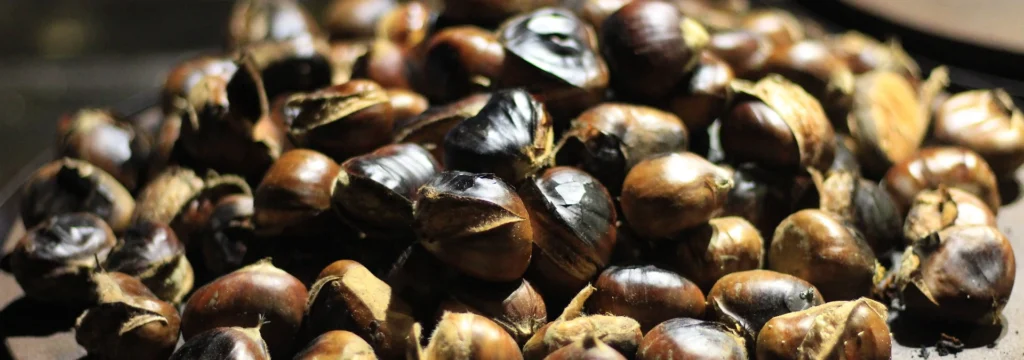
Maronen, also known as sweet chestnuts, are a true highlight of the autumn and winter season. These nutty fruits of the chestnut tree are tasty and also rich in valuable nutrients. They are versatile in use and suitable for numerous savory and sweet dishes. Below you will find everything important about Maronen: from their constituents and preparation tips to recipe ideas for optimal enjoyment.
What are Maronen?
Maronen belong to the family of sweet chestnuts and come from the sweet chestnut tree (Castanea sativa). The starch-rich nuts grow inside a spiky husk and ripen in autumn. Unlike the smaller, bitter horse chestnuts, which are inedible for humans, Maronen are sweet-nutty in flavor and suitable for consumption. The shell is brown and glossy, while the flesh is light beige to yellowish. Maronen are traditionally harvested in autumn and are particularly popular as roasted treats at Christmas markets.
Nutritional values and health benefits
Maronen are not only flavorful but also highly nutritious. They are rich in complex carbohydrates, dietary fiber and contain important minerals such as potassium, magnesium and iron. Compared with other nuts, they contain less fat and fewer calories, but provide a good amount of vitamins, particularly vitamin C and B vitamins.
The main health benefits:
- Energy source: The complex carbohydrates provide long-lasting energy and make them ideal for a balanced diet.
- Dietary fiber: They contain abundant fiber that supports digestion and provides prolonged satiety.
- Minerals: Potassium and magnesium support muscle function and electrolyte balance, which is particularly important during stressful periods or after physical exertion.
- Antioxidants: Vitamin C and B vitamins strengthen the immune system and support cellular health.
- Gluten-free: They are naturally gluten-free and therefore suitable for people with gluten intolerance.
Difference between Maronen and chestnuts
Although the terms marrons and chestnuts are often used synonymously, there is a difference. Chestnuts are the general designation for the fruits of the sweet chestnut tree. Marrons are a specific variety of chestnuts that are larger and sweeter in taste. They also have a slightly tapered shape and are less deeply notched than chestnuts. This difference is particularly important in cooking and baking, as marrons are often preferred for their more intense and sweeter flavor.
Preparing marrons correctly
Preparation is simple. And there are a few important tips to get the most out of these delicious fruits.
1. Roasting marrons
Roasting is the most popular preparation method. It particularly brings out the nutty flavor. Here’s how:
- Score the shell of the marrons crosswise so they don’t burst while roasting.
- Preheat the oven to 200 °C.
- Place the scored chestnuts on a baking sheet and roast them for about 20–25 minutes, until the shell splits and the flesh is tender.
- Let them cool briefly and peel them while they are still warm.
2. Boiling marrons
Boiled chestnuts are excellent as an ingredient for purées, soups or fillings.
- Score the shell crosswise.
- Boil them for about 15–20 minutes in lightly salted water.
- Let the marrons cool slightly and peel them.
3. Pan-frying marrons
Marrons can also be pan-fried, which gives them a particularly intense flavor.
- Add some oil or butter to the pan.
- Pan-fry the scored marrons over medium heat for about 15 minutes, until they are golden brown.
Recipe ideas
Marrons are very versatile and suitable for a wide range of recipes, from savory dishes to sweet desserts. Here are some popular recipe ideas you can try.
1. Marron purée
Marron purée is a delicious side for meat dishes or a base for sweet desserts.
Ingredients:
- 200 g chestnuts (cooked and peeled)
- 100 ml milk
- 1 tbsp butter
- Salt and pepper to taste
Preparation:
- Cook the chestnuts until soft and purée them with the milk and butter.
- Season the purée with salt and pepper.
- Serve the purée as a side dish or, with a drizzle of maple syrup, as a sweet dessert.
2. Chestnut soup
A warming soup is perfect for cold autumn and winter days.
Ingredients:
- 300 g chestnuts (cooked and peeled)
- 1 onion
- 500 ml vegetable stock
- 100 ml cream
- 1 tbsp olive oil
- Salt and pepper to taste
Preparation:
- Dice the onion finely and sauté it in olive oil.
- Add the chestnuts and pour in the stock.
- Simmer the soup for about 15 minutes until the chestnuts are soft.
- Purée the soup and stir in the cream.
- Season with salt and pepper and serve.
3. Pan-fried chestnuts with Brussels sprouts
This dish is a hearty side or a vegetarian main course.
Ingredients:
- 200 g chestnuts (cooked and peeled)
- 300 g Brussels sprouts
- 1 tbsp olive oil
- Salt and pepper to taste
Preparation:
- Halve the Brussels sprouts and pan-fry them in olive oil until golden brown.
- Add the chestnuts and fry them together with the Brussels sprouts until everything is nicely crisp.
- Season with salt and pepper.
4. Chestnut dessert with cream
For those who prefer something sweet, this chestnut dessert is a delicious choice.
Ingredients:
- 200 g chestnuts (cooked and pureed)
- 100 ml cream
- 1 tbsp powdered sugar
- 1 tsp vanilla extract
Preparation:
- Whip the cream with the powdered sugar and vanilla extract until stiff.
- Fold the purée into the cream.
- Pour into glasses and garnish with chocolate shavings or fresh berries.
Storing and preserving chestnuts
Chestnuts should be stored in a cool, dry place. Fresh chestnuts will keep in the refrigerator for about two to three weeks. You can freeze already peeled chestnuts to extend their shelf life. Alternatively, pre-cooked and vacuum-packed chestnuts are available; they also store well and provide a convenient way to enjoy them year-round.
Conclusion
Chestnuts are not only a delicious ingredient for autumn and winter recipes, but also a nutrient-dense snack with many health benefits. Whether roasted, boiled or used as an ingredient in soups and purées, they offer a wide range of culinary possibilities and are well suited to the cold season. Thanks to their sweet, nutty flavor and valuable nutrients, they are an ideal addition to a healthy and varied diet. Try the different preparation methods and recipes to fully explore the versatility of this tasty autumn fruit.