
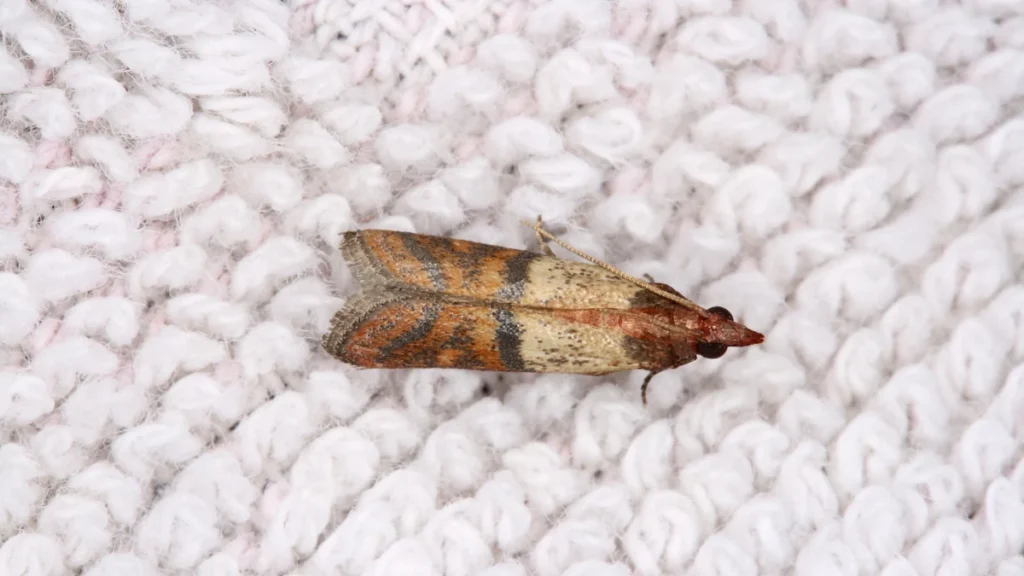
Millimetre-sized holes in clothing are an unfortunate sign: they indicate that your dwelling is infested with clothes moths. If you detect an infestation, you should act promptly, because a single moth can lay approximately 300 eggs. We explain how to effectively combat clothes moths.
Recognising a clothes moth infestation
Clothes moths are noticed less by fluttering insects and more by the small holes in textiles. You will also often find small web-like structures made of white filaments, similar to fine spider webs. Once you have identified a moth infestation, begin searching for other affected textiles. The pests do not spread only through the wardrobe; they commonly occur in soft toys, cushions or carpets as well. On carpets, the webbing is usually found on the underside of the fabric.
Which materials do clothes moths prefer?
Clothes moths prefer materials of animal origin. They therefore target textiles made of wool, leather and fur, but also silk and down. Blended fabrics containing wool are also favoured. Synthetic fabrics and plant-based fibres such as linen or cotton generally leave clothes moths alone. If you find a clothes moth in your home, you should first inspect all wool-containing textiles thoroughly.
Possible causes of a clothes moth infestation
Clothes moths are strongly attracted by the scent of sweat, wool or hair. The attraction is so strong that the moths can enter the home through almost any gap. Old carpets, coats or duvets stored in the attic or cellar are often infested. From these initial sources the moths spread gradually throughout the house. If these items are not cleaned before being brought into the living area, clothes moths will likely hatch in a short time. Therefore, wool clothing should be properly cleaned and thoroughly dried before storage. Afterwards, store them preferably in plastic garment covers.
Combating clothes moths — thorough work is absolutely necessary
Of course, combating clothes moths requires a certain amount of effort.
All textiles should, where possible, be washed at 60°C.
This temperature kills both the eggs and the adult moths.
Since not every garment can be washed that hot, freezing has proven very effective.
Place the wool sweater in a plastic bag, seal it tightly and keep it in the freezer for about one week.
If you have a garden or balcony, you can also hang the garments in direct sunlight.
This will cause the moths to vacate the items on their own.
Additional tip: where the textiles tolerate it, wrap them in black plastic foil.
The temperature inside then rises within a few hours to a level that kills all clothes moth larvae.
Carpets should ideally be taken to professional cleaning. As mentioned earlier, a single clothes moth can lay more than 300 eggs. The resulting larvae then feed their way through the wardrobe. Therefore it is essential to clean all surfaces thoroughly with a vinegar-based cleaner. Remove shelving boards where possible, since the moths‘ eggs can hide even in the smallest corner. Afterwards, wipe the wardrobe dry. What else to consider: if the moths were, for example, in the child’s wardrobe, they have most likely settled on other textiles in the same room, e.g. soft toys. These must also be cleaned thoroughly. Even with the most thorough cleaning, clothes moth eggs can be overlooked. Therefore it is important to use sticky traps with pheromones in the wardrobe. They capture the males and prevent further reproduction. Lavender or lavandin oil, vinegar water and pheromone traps are effective measures to combat clothes moths.
Preventing moth infestations
Clothes moths typically enter homes through open windows. A fly screen already provides a first barrier against these small pests. Worn or infrequently worn clothing containing wool should be packed and stored in zipped garment covers. As an additional measure, essential aromatic oils, which moths find very unpleasant, can be used. Moths avoid cupboards where, for example, lavender/lavandin, Swiss stone pine, camphor or cloves release their scent.