
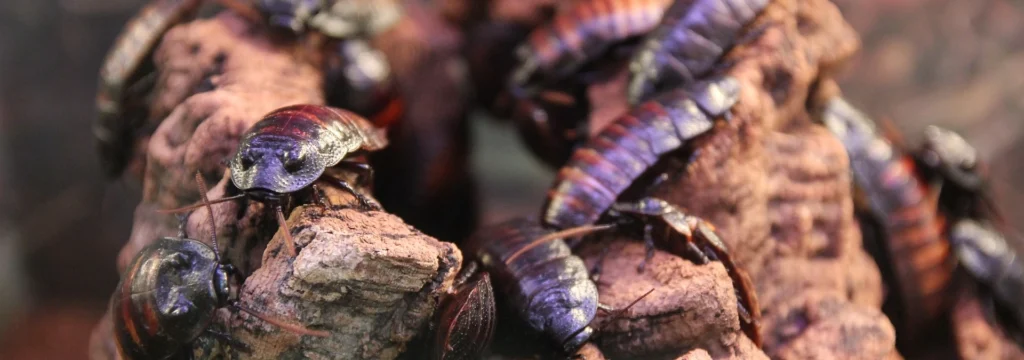
Cockroaches are among the most feared pests found in homes and buildings. These insects are known for their resilience and their ability to survive in almost any environment. They are not only a nuisance but can also transmit diseases and trigger allergies. In this text you will learn more about the way cockroaches live, how they enter houses, the health risks they pose, and which control and prevention measures are sensible.
What are cockroaches?
Cockroaches belong to the order Blattodea and are distributed worldwide. There are over 4,000 cockroach species, some of which are among the most common pests in human settlements, such as the German cockroach, the American cockroach and the Oriental cockroach. These insects are flattened and oval in shape, usually brownish, and have long antennae. They are predominantly nocturnal and hide during the day in dark, damp areas.
2. Lebensweise und Verhalten
Cockroaches are survivors and can exist under extreme conditions. They are omnivorous and feed on almost anything, including food scraps, paper, skin flakes and even soap. Their survival instinct is so pronounced that they can find food even in a clean home.
a) Reproduction
Cockroaches reproduce very quickly. A single female cockroach can lay hundreds of eggs during her lifetime, which makes controlling these pests particularly difficult. The eggs are enclosed in so-called egg cases (oothecae), which are deposited in hidden places to protect them from external influences.
b) Harborage and dispersal
Cockroaches prefer dark and damp locations such as kitchens, bathrooms, basements or sewer pipes. They are able to squeeze through the smallest cracks and crevices to enter a building. They often come in via drains, ventilation shafts or unsecured doors and windows.
3. Health risks
Cockroaches are not only a hygiene burden but can also pose health risks to people. Their presence in the household is often associated with the transmission of bacteria, viruses and parasites.
a) Transmission of diseases
Cockroaches can transmit pathogens such as Salmonella, Escherichia coli and other bacteria that can cause food poisoning and gastrointestinal illnesses. They leave these pathogens on surfaces and food they contaminate while foraging for food.
b) Allergies and asthma
Cockroaches are a common cause of allergies, particularly for sensitive individuals. Their saliva, fecal particles and shed body parts can trigger allergic reactions and worsen asthma attacks. In densely populated areas and in large infestations, the health impact can be particularly severe.
4. Controlling cockroaches – why is it so difficult?
Controlling cockroaches is a challenge because they are extremely resilient. They can survive long periods without food and water and are resistant to many conventional insecticides. Their ability to hide in narrow cracks and crevices makes it even harder to reach every individual in an infestation.
a) Adaptability
Cockroaches have adapted to diverse habitats over millions of years and can survive in extreme situations. They are known to adapt to chemical agents, which complicates control efforts.
b) Rapid reproduction
The high reproductive rate of cockroaches means that a small infestation can quickly become a large problem. It is therefore important to take early measures to prevent spread.
5. Prevention and control
The most effective way to keep cockroaches away is to prevent their access to food, water and hiding places. Here are some proven strategies:
a) Hygiene and cleanliness
A clean household is the best prevention against cockroaches. Ensure that no food is left exposed, and wipe surfaces regularly to remove crumbs and food residues. Waste containers should be tightly closed, and care should be taken to eliminate water leaks or standing water.
b) Sealing cracks and crevices
Since cockroaches can enter a dwelling through the smallest openings, it is important to seal cracks and gaps in walls, floors and windows. Door gaps and ventilation shafts should also be secured with appropriate measures to prevent pest entry.
c) Use of insecticides and baits
If an infestation is already present, specialized cockroach baits and insecticides (such as ARIES Pistal Profi Insektizit) can help reduce the population. These products should, however, be used with caution, especially in households with children or pets. In persistent cases it is advisable to consult a professional pest control operator.
6. Natural home remedies for cockroach control
There are also some natural methods to get rid of cockroaches. These remedies are less harmful to the environment and can be a good alternative.
a) Baking powder and sugar
A mixture of baking powder and sugar can serve as an effective bait. The sugar attracts the cockroaches, and the baking powder reacts in the insects‘ stomach, killing them.
b) Essential oils
Certain essential oils such as peppermint oil, lavender oil or tea tree oil act as a deterrent to cockroaches. These oils can be dripped onto cotton balls and placed in the affected areas.
c) Vinegar and lemon juice
Vinegar and lemon juice are suitable for cleaning surfaces, as they can repel cockroaches. These natural cleaning agents also leave a fresh scent and are an environmentally friendly alternative.
Conclusion
Cockroaches are a nuisance and resilient pests that can pose health risks. Their control requires a combination of hygiene, prevention and, if necessary, targeted pest control. By sealing entry points, removing food sources and using natural home remedies, cockroaches can be effectively kept away. Those who take measures early can prevent an infestation from spreading and keep their household cockroach-free in the long term.