
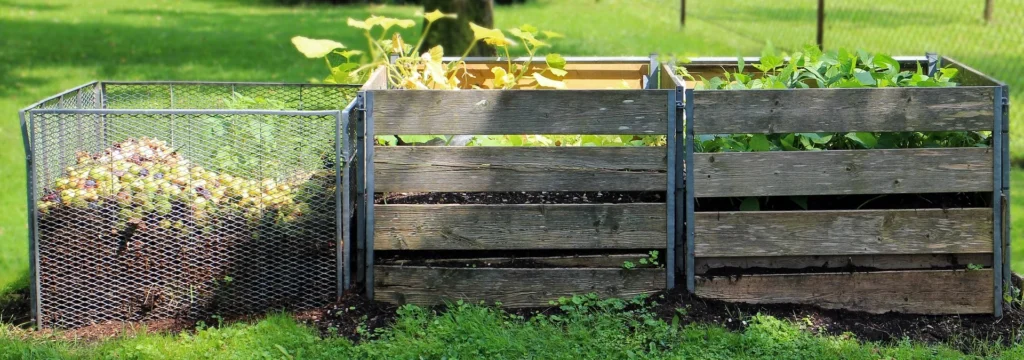
Composting is an environmentally friendly practice that enables the recycling of organic waste into valuable humus. This natural method of waste disposal benefits not only the garden but also the planet. In this article you will learn why composting is important, how it works and how to implement it effectively in your household.
Why Compost?
Waste disposal is one of the greatest challenges of modern society. Increasing amounts of waste end up in landfills, which burdens the environment. Compostable material, however, constitutes a significant portion of household waste and can be converted into valuable compost with little effort.
Composting contributes to waste reduction and to preventing methane emissions that arise from landfills. Instead of incinerating waste or depositing it in landfills, composting uses natural processes to break down organic matter and transform it into a rich, nutrient-dense soil.
Compost also improves soil structure. Adding compost increases the soil’s water retention capacity, promotes aeration and stimulates microbial activity. This leads to healthier plants and more productive gardens.
How does composting work?
Composting is a biological decomposition process carried out by microorganisms, fungi and insects. These organisms break down organic material into its basic components, which then become humus, a nutrient-rich soil constituent.
There are two main types of composting: aerobic and anaerobic composting. In aerobic composting the decomposition processes depend on oxygen, which means the compost pile must be aerated regularly. In anaerobic composting, by contrast, decomposition occurs without oxygen, resulting in slower and less efficient breakdown.
To create a successful compost pile, it is important to observe the correct ratio of ‚green‘ (nitrogen source) to ‚brown‘ (carbon source) material. Green material includes fresh plant waste such as vegetable scraps, grass clippings and coffee grounds. Brown material includes dry leaves, straw, branches and paper. A balanced mix of both promotes rapid decomposition and prevents unpleasant odors.
Steps to successful composting
- Choose the right compost container: There are various types of compost containers – from a simple pile to dedicated composter bins. The choice depends on your available space and preferences. A closed container protects against animals and retains moisture better, while an open pile composts faster but also requires more space.
- Find the right location: The location of your compost heap should be shaded and well ventilated. A spot in the garden or behind the house is suitable. Make sure the ground is not too wet so the compost receives enough air.
- Add materials: Start with a layer of coarse material such as branches or straw to promote ventilation. Then layer green and brown material alternately, with the ratio roughly 1:2. Turn the pile every few weeks to accelerate decomposition and avoid unpleasant odors.
- Moisture and ventilation: The compost pile should be moist but not wet. If it is too dry, add some water. If it becomes too wet, add additional dry material such as leaves or straw. Regularly aerating the pile ensures good air circulation that promotes decomposition.
- Wait and be patient: The composting process can take between 3 and 6 months depending on material, temperature, and moisture. You can check progress by turning the compost regularly and checking that the pile appears well decomposed. When the compost is dark and crumbly, it is ready and can be used in the garden.
What can be composted?
There is a variety of organic materials that can be processed in compost. Here is an overview:
- Green material: Fresh fruit and vegetable scraps, grass, coffee grounds, tea bags without metal staples, eggshells.
- Brown material: Dry leaves, straw, stalks, wood shavings, uncoated paper.
- Kitchen waste: Fresh fruit and vegetable scraps, eggshells, coffee grounds, tea bags (without wire staples), small amounts of paper tissues.
- Garden waste: Grass clippings, leaves, small twigs, flower trimmings, plant-based food scraps.
There are, however, some materials that should not be composted. These include:
- Meat, fish and dairy products: These materials attract animals and lead to unpleasant odors.
- Pathogens: Avoid diseased plant material, as it can introduce pathogens into the compost.
- Weeds with seeds: To prevent weeds from spreading in your garden, avoid composting weeds that contain seeds.
- Plastic and metal: These materials do not decompose and will contaminate the compost.
Composting in urban environments
Composting is not limited to rural areas. You can successfully compost in urban environments as well. Compact compost bins that require little space, such as Bokashi composters or vermicomposters, are particularly suitable for this. These composting methods are especially appropriate for small apartments or houses without a garden and provide an efficient way to recycle organic waste.
Compost as a valuable garden element
Finished compost is a true asset for your garden. You can work it directly into the soil to improve plant nutrient availability, or use it as mulch to suppress weed growth and retain soil moisture. Compost also encourages the development of beneficial soil organisms such as earthworms, which further improve soil structure.
Conclusion
Composting is a simple and effective way to reduce waste and enrich your garden. It not only promotes sustainability but also results in healthier soils and improved plant development. By composting organic waste correctly, you actively contribute to environmental protection while obtaining a valuable natural fertilizer. Try it and benefit from the advantages of composting — both for the environment and for your garden. And if you have no opportunity to compost but are looking for a good fertilizer for your plants, you can find various fertilizers (including vegan fertilizers) in our naturhaus Shop.