
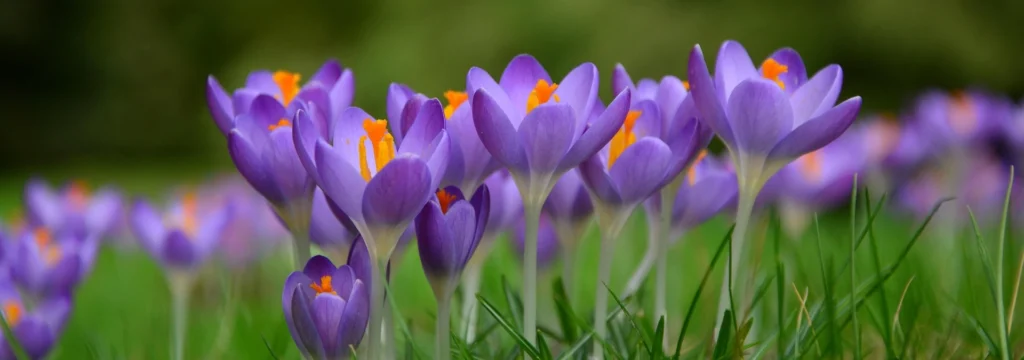
Crocuses are among the first flowers to emerge from the ground in spring and bid farewell to winter. With their bright colors and delicate blooms they signify the beginning of a new season and bring color and life to the garden. In this article you will learn everything you need to know about crocuses — from planting to care — and how to integrate these spring flowers optimally into your garden.
What are crocuses?
Crocuses (botanically: Crocus) are delicate flowers that belong to the iris family. Most crocuses are early bloomers and appear already in late winter or early spring, making them among the first signs of spring. They are known for their striking, colorful flowers, which occur in shades such as yellow, violet, white and blue. Their flowers open during the day in sunshine and close again at dusk or in poor weather.
Why plant them in the garden?
There are many good reasons to plant crocuses in your garden:
- Spring awakening: They are among the first flowers to announce spring. Their vivid colors make them a true highlight after the long winter.
- Low maintenance: Crocuses are easy to care for and require little attention. They thrive in almost any garden soil and are resistant to many pests.
- Wide range of colors: Crocuses come in numerous colors, so you can combine them according to your taste and set color accents.
- Useful for bees: As one of the first food sources in spring, crocuses are important for bees and other insects that rely on nectar.
Planting crocuses: a step-by-step guide
They are relatively easy to plant if you observe a few things. Here is a simple guide on how to properly grow crocuses in your garden:
1. The right time
The best time to plant is in autumn, ideally in September or October, before the ground freezes. This gives the bulbs enough time to establish themselves before the cold winter months begin.
2. The right location
Crocuses prefer a sunny to partially shaded location. They do best in well-drained soils that are not too wet. Avoid areas where water can stagnate, as the bulbs may otherwise rot.
3. Planting
Dig small holes or planting pits about 5 to 10 cm deep. The bulbs should be placed in the soil with the tip facing upwards. Ensure a spacing of about 5 cm between the bulbs. Then cover the bulbs with soil and press them in lightly.
4. Watering and Care
After planting, you should water them well so the bulbs can establish. During the winter months crocuses do not require additional care. In spring, when they begin to flower, you can water occasionally if needed, especially during dry periods.
5. Fertilization
Crocuses do not need much fertilizer. Once a year, at the start of spring, you can spread some fertilizer or compost around the plants to support growth. We recommend the ARIES Universal garden fertilizer.
Care: Tips for a long flowering period
Their care is straightforward, but here are some tips to ensure your crocuses bloom again each year:
- Remove faded flowers: Cut off faded flowers to give the plant energy for forming new blooms. However, only remove the leaves once they have fully yellowed, as they still transfer nutrients to the bulb.
- Mulching: A mulch layer of leaves or compost protects crocuses from frost and retains soil moisture.
- Allow to rest after flowering: Crocuses require a rest period after flowering during which they build up energy for the next year. This typically takes about 6 to 8 weeks.
In pots and containers
If you don’t have a garden or want to enjoy crocuses indoors, you can also plant them in pots or containers. Ensure the pots have a good drainage hole so excess water can escape. Plant the bulbs the same way as in the garden, but make sure the pot is placed in a sunny location.
The best crocus species for your garden
There are many different crocus species you can plant in your garden. The most common species are:
- Spring crocus (Crocus vernus): These crocuses bloom early in spring and are available in many different colors.
- Saffron crocus (Crocus sativus): This variety is particularly known as the source of the expensive spice saffron. It blooms slightly later than the spring crocuses.
- Ornamental crocuses (Crocus chrysanthus): These smaller varieties often have bright yellow or white flowers and are particularly suited to garden soil.
Crocuses as Companion Plants
They combine well with other spring flowers. You can plant them with snowdrops, daffodils or hyacinths to create a colourful spring meadow. Planting crocuses alongside perennials or grasses also produces a varied and colourful garden design.
Crocuses in Mythology and Symbolism
Crocuses are valued not only for their beauty but also carry symbolic meaning in various cultures. In Greek mythology the crocus stands for love and life, as it is often associated with the story of Hermes and the nymph Smilax. In modern symbolism the crocus represents hope and new beginnings, since it heralds the arrival of spring.
Conclusion: Crocuses — an Asset for the Garden
They are ideal flowers for spring. They are low-maintenance, attractive and a true eye-catcher in any garden. With their vivid colours they bring life and cheer to the first days of spring. Whether in the garden, in pots or as part of flower beds — crocuses are an enhancement to any garden design. Plant them today and look forward to the first signs of spring!