
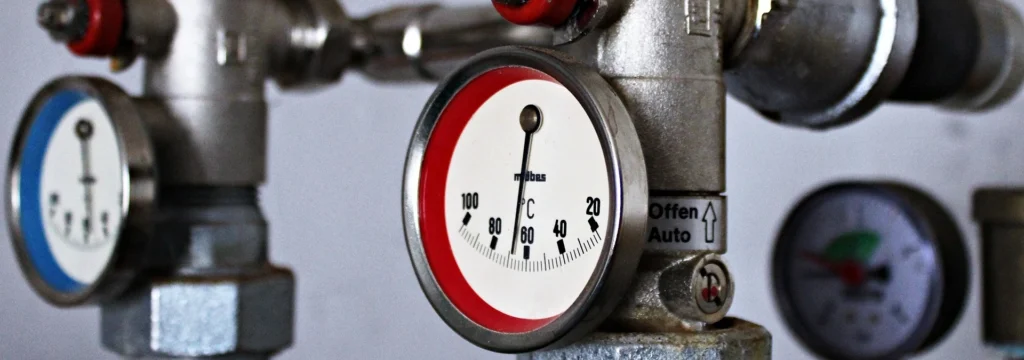
Heat properly — these tips save you real money
Heating costs have risen sharply in recent years, especially this year. To reduce your heating costs, a change of mindset by everyone in your household is necessary. You have a variety of options to keep the costs of energy supply as low as possible. In this article you will find a few helpful tips.
Richtig heizen: Tipp 1 Heizung freihalten
So that your radiator can distribute heat optimally, it is important that the radiator is not covered by your furniture or other items. The radiator must be fully visible. If your radiator is covered by a sofa, curtain or bed, a so-called heat build-up occurs. This unnecessarily drives up your heating costs. Experts recommend maintaining a distance of 30 cm in front of the radiator. This ensures that the heat can distribute better into the room air. Curtains in front of the radiator are also a barrier to heat. If you have curtains at your windows, you should also ensure that they do not cover the radiator. Ideally, the curtains should end above the radiator.
Richtig heizen: Tipp 2 Öfters Stoßlüften
Remember to ventilate the rooms properly even in winter. Regular short, intensive airing ensures an optimal exchange of oxygen. This is not only sensible for your health, but also prevents mold formation in rooms. For short airing, open the window for about 10 to 15 minutes. You can ventilate even more effectively with cross-ventilation. In this process you open two windows located in opposite rooms. This accelerates the air exchange. Therefore you should avoid tilting windows. Why? If you only tilt the window, you need about 1 hour for the same effect. And that has a negative impact on your heating costs. With cross-ventilation you achieve fresh air in the rooms in about 2 minutes.
Richtig heizen bedeutet auch: Tipp 3 Heizung nie ganz ausschalten
You should only switch on the heating in rooms that you actually use a lot. To prevent the respective room from cooling down, keep the doors in that room closed. Never turn the heating off completely in these rooms. Even if it seems paradox at first glance: you can save significantly more heating energy if the heating is not switched off for hours. Especially in winter, a room cools down completely if the heating has been turned off entirely. Moisture accumulates in the air. In the worst case this can even lead to mold formation. After turning the heating back on, it takes even longer for the walls, ceilings and the air to warm up again. Make sure that your room temperature does not fall below 14° C even in winter.
Richtig heizen: Tipp 4 Nutze elektronische Heizregler
In general, the living room and bathroom are the rooms kept warmest. In winter the temperature should not exceed 23° C. In the bedroom a temperature between 17 and 20° C is sufficient. The hallway should be no higher than 18° C and the guest toilet 19° C. The degree-setting indicators can be read and checked on the radiator thermostat. Electronic radiator thermostats are especially practical here. Modern units have an integrated timer. To make it easier to save on heating costs, you should equip all heaters with a thermostat. This has the advantage that each heater can be optimally adjusted to individual needs. Each thermostat costs around €10. These costs are quickly recouped once the heating in your home is optimally regulated.
Heating correctly also means: Tip 5 Bleed radiators regularly
The heating can be set manually or by timer to the desired reduced period. This reduces heating energy while you are not at home. Turn the heating off completely in summer. Remember to bleed the radiator regularly. Only then can it work effectively. If your radiator no longer becomes properly warm or emits loud gurgling noises, it is time to bleed it. In this case you can be sure there is air in the radiator. Open the bleed valve located on the side of the radiator. Since some water will always escape at the same time, it is advisable to hold a cup under the valve. Bleeding is complete only when water — not air — flows out. If too much water escapes, the radiator should be refilled.
Heating correctly: Tip 6 Avoid leaky windows and doors
Remember: a room can only be kept comfortably warm in winter if the heat cannot escape. A major risk is leaky doors or windows. If this is the case and you live in a rented flat, you should inform your landlord about the condition. It helps to lower the roller shutters; this protects the window from the cold. Seal gaps at the bottom of doors with draught excluders. Leaky windows can be sealed with self-adhesive foam strips, plastic profiles or sealing tape.
Tip 7: Use water-saving showerheads
When you replace your old showerhead with a water-saving model, you can save up to 30% energy. About 13 liters of water flow per minute through a conventional showerhead. With a shower time of 6 minutes alone you consume roughly 80 liters of water. This water is heated on average to a temperature of 38° C. That means you consume an additional 4.2 kWh of energy per shower. This energy is required so that you have comfortably warm — not cold — water available for showering. Did you know that? More than half of showering costs are made up of energy costs. With a new showerhead you can reduce energy consumption to 2.6 kWh. Thus, while maintaining your usual shower comfort, you save not only water but also energy. Showers should always end with a cold rinse. This stimulates your circulation and strengthens your immune system. Cold water makes you alert. And another positive effect is that by finishing with a cold rinse you can save large amounts of heat energy.