
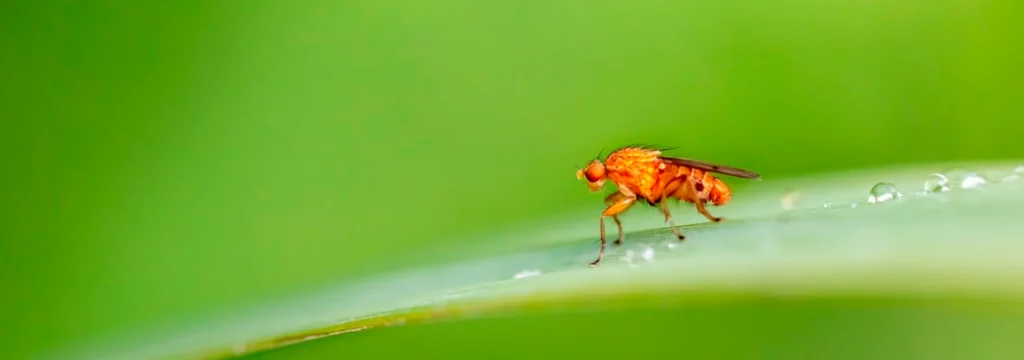
What are fruit flies?
Fruit flies are small insects about 3-4 mm in size, commonly found in the kitchen and near fruit and vegetables. They feed on fermented fruits and vegetables and lay their eggs in the food. The flies reproduce quickly and can develop into a veritable infestation.
Causes of fruit fly infestations
There are various reasons for a fruit fly infestation in the kitchen. Often overripe fruit and vegetables, open bins or food scraps are the cause of these pests. Potting soil or poorly maintained rubbish bins can also attract fruit flies.
Where do fruit flies come from?
Fruit flies are among the most common pests in our kitchens and living spaces. They are small, fast and can multiply rapidly. But where do these small insects actually come from?
Fruit flies preferentially lay their eggs on ripe or overripe fruit and vegetables. Female fruit flies can lay up to 500 eggs in just a few days. The eggs hatch after a few days and the larvae feed on the fruit and the sugars contained within. The larvae eventually develop into adult flies.
Besides fruit and vegetables, fruit flies can also reproduce in other foods such as juices, wine or vinegar. It is therefore particularly important to store these foods well sealed to prevent the flies from multiplying.
Fruit flies can also develop in potting soil, as it provides a moist, nutrient-rich substrate. It is therefore advisable to dry the soil sufficiently before use or to use specialist soil without organic components.
Preventive measures against fruit flies
To avoid a fruit fly infestation, several preventive measures should be taken. These include:
- Consume fruit and vegetables promptly or store them in the refrigerator
- Dispose of food leftovers and organic waste in sealable containers
- Cover potting soil and water it regularly
- Clean bins regularly and seal
- Fruit flies are an unpleasant and persistent companion in any kitchen.
- Fruit flies are attracted to sweet and juicy foods such as fruit and vegetables, vinegar or wine.
The fruit fly trap exploits this preference and lures the flies with an attractive bait. Once the flies enter the trap, they cannot escape and drown in the liquid.
Fortunately, you can easily build a fruit fly trap yourself. With a few simple steps you can get rid of the pests without resorting to toxic chemicals.
What is needed for the trap?
For the fruit fly trap you only need a few simple household items: a small glass or a cup A piece of cling film A rubber band or adhesive tape A bait (e.g. vinegar, wine or fruit)
Pour the bait into the glass. Cover the glass with a piece of cling film. Secure the film to the rim of the glass with a rubber band or adhesive tape. Poke several holes in the film with a toothpick or needle so the flies can enter the trap. Place the trap where fruit flies are commonly present. Replace the bait regularly and dispose of the trapped flies.
Other options for a fruit fly trap:
Place a bowl with fruit vinegar and a few drops of dish soap. The flies are attracted by the smell, land in the vinegar and drown because of the dish soap.
Cut a bottle in half and fill the lower third with fruit vinegar and dish soap. Invert the upper half and insert it as a funnel into the bottle. The flies enter the bottle through the funnel and drown in the vinegar.
Put a banana peel into a bag and hang it where many fruit flies gather. Once enough flies have accumulated in the bag, it can be sealed and disposed of.
Further tips to prevent a fruit fly infestation
To avoid a fruit fly infestation, store food items sealed and empty the waste regularly. A thorough cleaning of kitchen appliances and surfaces can also help keep fruit flies away.
Additional tips
Tomato leaves against fruit flies
Tomato leaves contain a natural insecticide called tomatine. This insecticide is toxic to fruit flies and can kill them quickly. Tomatine is, however, harmless to humans and is not taken up by the tomato fruits themselves.
How can tomato leaves be used?
There are several ways to use tomato leaves against fruit flies:
Place tomato leaves near fruit and vegetables: simply put a few tomato leaves on the table or near fruit bowls or vegetable baskets. Fruit flies are repelled by the tomatine and avoid the area.
Tomato leaf tea: You can also make a tea from tomato leaves by steeping the leaves in boiling water and then allowing it to cool. Spray the tea onto the plants and onto the spots where fruit flies gather. Repeat this regularly to achieve long-term deterrence.
Carnivorous plants against fruit flies
Carnivorous plants are not only inteRESTing houseplants but also a natural way to get rid of fruit flies. These plants have specialized structures that can attract and capture insects. Here are some carnivorous plants that can be used against fruit flies:
Venus flytrap: The best-known carnivorous plant is the Venus flytrap. Its leaves are divided into two halves and have small trigger hairs that attract insects. When a fly lands on the hairs, the trap closes and the fly is digested.
Sundew: The sundew has sticky tentacles on its leaves that attract and hold insects. Once the insect is caught, the leaf curls around it and digests the insect.
Pitcher plant: The pitcher plant has long, tube-shaped leaves that are filled with a sweet nectar. Insects attracted by the nectar slip into the tube and cannot escape. The plant digests the insect slowly.
Conclusion
Clean your kitchen thoroughly: Fruit flies lay their eggs in rotting fruit and vegetables. Make sure all surfaces are cleaned thoroughly to remove any food residues and bacteria.
Store fruit and vegetables in the refrigerator: This is a simple way to ensure that fruit flies have no chance to lay eggs on the produce.
Use a fruit fly trap: There are various types of fruit fly traps you can make yourself or buy. For example, you can use a jar with an opening and a funnel to lure and capture the flies.
Avoid using chemicals: Many commercial insecticides are toxic and can also be dangerous for pets. Therefore avoid using chemicals where possible.
By following these tips you can effectively get rid of fruit flies and prevent their spread in your kitchen.