
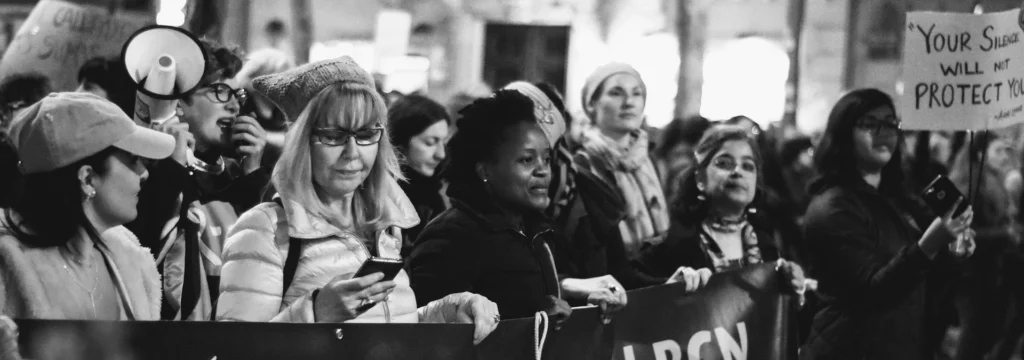
International Women’s Day, also known as World Women’s Day, is celebrated annually on March 8. This day serves to highlight the importance of gender equality and to strengthen the rights of women worldwide. Women’s Day has developed into one of the most significant events on the calendar, bringing people together across the globe to advocate for gender equality. In this article we take a look at the history, significance and impact of International Women’s Day. It is also important to consider the current challenges and advances that women experience around the world.
Ursprung und Geschichte des Internationalen Frauentages
The origin of International Women’s Day traces back to the early feminist movements of the 20th century. The first Women’s Day was celebrated on 19 March 1911 in Denmark, Germany, Austria and Switzerland, with thousands of women taking to the streets for equal rights and better working conditions. This day was inspired by the socialist labor movement and constituted a clear demand for women’s suffrage, better pay and improved working conditions for women.
The decision to place International Women’s Day on March 8 goes back to the political protest of women in Russia in 1917. On that day Russian women in Petrograd took to the streets to protest the First World War and to demand better living conditions. This strike led to a political revolution that marked the end of tsarist rule and the beginning of the Bolshevik Revolution. In 1921 March 8 was then officially established as International Women’s Day.
Bedeutung des Internationalen Frauentages
International Women’s Day is not only a day of celebration but also a day of reflection and action. It recalls the advances women have achieved in the past and the many challenges they still face. The day is a call to combat discrimination, violence and inequality and to promote the rights of women worldwide.
An important aspect of Women’s Day is the recognition of women’s achievements across all areas of life. Whether in politics, business, science, sports or the arts 6 women have made countless contributions to society. Yet despite these successes, women worldwide continue to face disadvantages, whether in terms of pay, access to education or political representation.
Die Rolle des Internationalen Frauentages in der heutigen Gesellschaft
Today International Women’s Day has a broader significance than ever before. In many countries the day is a public holiday, and it is used worldwide by organizations, governments and activists to raise awareness of women’s rights and to promote equality.
International Women’s Day 2025 carries the theme „#ChooseToChallenge“ (Choose to challenge), which aims to encourage both women and men to challenge prejudices, inequality and the social norms that reinforce gender roles. On social media this hashtag is frequently used to show solidarity and call for change. In many countries there are public demonstrations, panel discussions, film screenings and events where women and men come together to advocate for women’s rights.
Current challenges for women worldwide
Despite considerable progress in recent decades, many challenges affecting women worldwide persist:
1. Pay inequality
One of the biggest challenges for women is the persistent wage gap. Studies show that women worldwide still earn significantly less than their male colleagues, even for the same work. In Germany, for example, women earn on average 19% less than men. This gap varies by country and industry, but it remains a central issue for gender equality.
2. Gender-based violence
Millions of women around the world experience violence because of their gender each year. Whether domestic violence, sexual harassment or rape — gender-based violence remains one of the greatest obstacles to full gender equality. According to the United Nations, one in three women worldwide has experienced physical or sexual violence in her lifetime.
3. Lack of access to education
In many developing countries access to education for girls remains limited. According to UNESCO, there are more than 130 million girls worldwide who do not attend school. Education is a fundamental component of women’s empowerment and enables them to improve their living conditions and participate actively in society.
4. Political representation
Although women in many countries have the right to vote, they remain underrepresented in political positions. In many national parliaments and governments women are strongly in the minority. Greater political representation of women is essential for implementing policies that address the needs and rights of women.
Progress towards equality
Despite persistent challenges, there are many successes to celebrate. In recent decades, numerous initiatives have been launched to promote gender equality. The World Economic Forum has repeatedly emphasized that women are increasingly gaining access to equal rights and opportunities in areas such as education, health and political participation.
In many countries, women now have access to rights and freedoms that were previously unthinkable. Women can vote, they can go to work, they have access to education and can take on responsibility in many areas of life. These advances are the result of decades of commitment, protest and the work of feminists and activists.
Conclusion: International Women’s Day as a driver of change
International Women’s Day is more than an annual celebration of women’s rights. It is a powerful call to celebrate progress while also acknowledging the ongoing challenges women face worldwide. The day reminds us that the struggle for equality is not yet won and that it remains necessary to advocate for women’s rights.
Each of us can contribute to advancing gender equality. International Women’s Day gives us the opportunity to pause and ask what we can do to create a fairer, more equal world. The demand for equality should be heard not only on March 8, but throughout the year.