
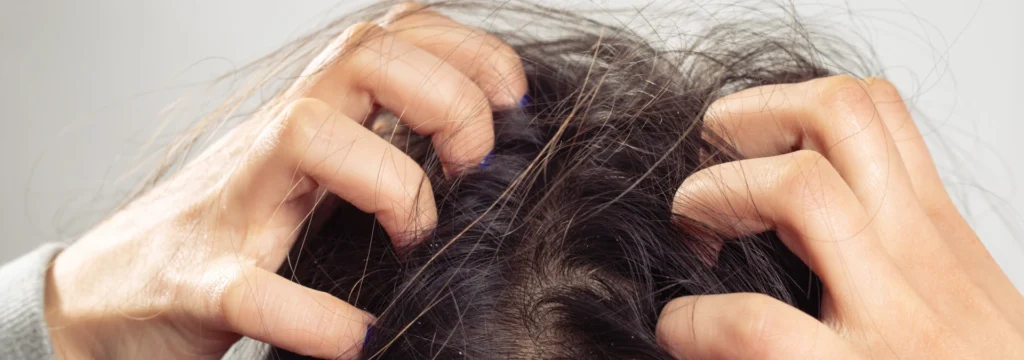
Causes of itchy scalp and what you can do about it
Do you have an itchy scalp? In most cases an itchy scalp is caused by dead or dried-out flakes that sit on the scalp. Your scalp regularly sheds by producing new cells and discarding old ones. However, this process happens very slowly and we hardly notice it. If you have dandruff, the situation is different.
Since our skin is an organ, it reacts very sensitively to foreign substances and can become irritated. In most cases washing your hair with a mild shampoo helps. Afterwards you have a refreshed scalp feeling again and the formerly itchy scalp has calmed down.
But what if the scalp still itches and doesn’t settle even after the shower? In the following text we deal with exactly this question and also provide some tips on how to best address the problem.
Dandruff causes scalp itching
What is dandruff?
Dandruff consists of dead scalp particles. If you spend a lot of time or extended periods in very dry indoor air or very close to a heater, dandruff can form on your scalp. In that case your scalp can become too warm, which can eventually lead to dandruff forming.
More dandruff as you age
The older you get, the drier your skin unfortunately becomes, because the sebaceous glands no longer work as quickly. Older people in particular should therefore try to avoid drying out their scalp. This naturally also applies to the hair.
Dry scalp in air-conditioned rooms
Another reason for dandruff and an itchy scalp is, for example, an air conditioner that runs continuously. The air conditioner removes the natural moisture from the air and as a result your skin can become drier. If you stay for hours a day over an extended period in an air-conditioned room, that is not particularly good for our health. Fully air-conditioned rooms unfortunately cannot replace fresh air.
Dry scalp from strongly degreasing shampoos
If you use strongly degreasing shampoos, this can also lead to dandruff problems. If the natural sebum on the scalp cannot form quickly enough, it will eventually dry out. This leads to dandruff formation.
Dry scalp from sunbathing and blow-drying
Do you like being in the sun and without headwear? Your scalp is particularly sensitive when hair is thin. You can quickly burn your scalp, which can also cause an itchy scalp. Let your hair dry in the open air if possible. If you do not want to forgo a hairdryer, set it to the lowest setting and try not to use it so often.
All these examples are realistic, but only so if some of them are done very excessively and incorrectly over a longer period. This applies in any case to most otherwise healthy people. Certainly there are also individuals who may expect dandruff after only a few scalp irritations.
Because genetics differ from person to person, the issue of skin irritation is, for example, quite extensive. While some can scratch their scalp for a long time without immediately getting dandruff, for others even a few seconds are enough to face days of dandruff.
Which measures help with an itchy scalp?
Keep the scalp moist
If your scalp regularly itches after washing with a mild shampoo, you should consider consulting a dermatologist to check whether it is a chronic problem. Care for your dry scalp with a few drops of olive oil or with specialized hair care products to keep it moist.
Avoid washing hair too frequently with a dry scalp
Sometimes frequent washing is even the cause of an itchy scalp. In such cases consider washing your hair less often. Frequent hair washing can cause the body to fall behind in sebum production, because each newly formed natural protective layer is immediately removed again by surfactants.
Use mild shampoos or hair soap
Use only mild shampoos or hair soap. Pay attention to the ingredients on the label when purchasing hair cleansing products. Avoid products with too many chemicals or silicones. Ideally, use shampoos or hair soap based on natural cosmetics.
Use lukewarm water for an itchy scalp
Do not use hot but lukewarm water to wash your hair. As already mentioned above, avoid the hairdryer if possible. Dry your hair preferably with a towel and let it air-dry.
Conclusion
In most cases you can treat an itchy scalp quickly and effectively. If the problem is not severe, you can follow the tips mentioned above. Applying olive oil to the scalp overnight once a week can already provide good relief. Rinse your hair and scalp thoroughly the next day. All in all, an itchy scalp can be treated quickly with a little care. In a few exceptional cases, however, there are chronic conditions that must first be identified by a specialist.