
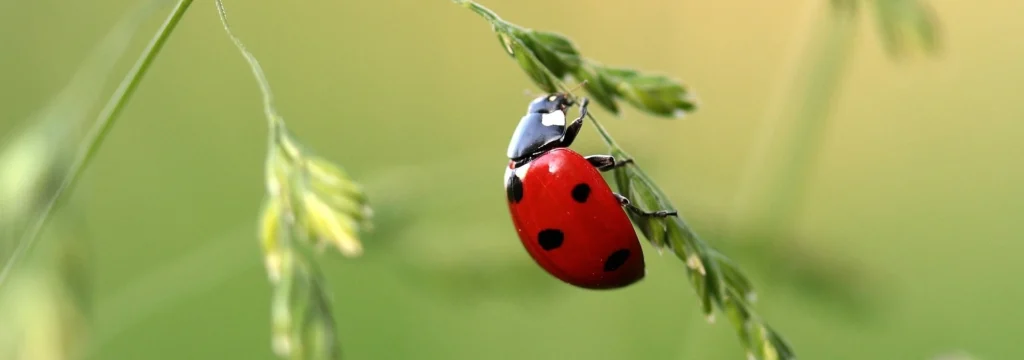
Ladybugs are not only pleasant to look at but also play an important role in nature and in the garden. As natural pest controllers they are welcomed in many gardens and agricultural operations. But what makes them so special? In this article you will learn everything you should know about these fascinating insects — from their biology and way of life to their benefits for horticulture.
Ladybugs
Ladybugs belong to the family Coccinellidae and are distributed worldwide in many different species. They are especially known for their striking coloration — most often red with black spots, but yellow, orange or even black variants also occur. The species most commonly encountered in Europe is the seven-spot ladybird (Coccinella septempunctata), which gets its name from the seven black spots on its red back.
The biology of ladybugs
They are beetles belonging to the order Coleoptera and are characterized by their semi-hard elytra (wing covers) that protect their true wings. The elytra are typically red or yellow and marked with black spots, although other color patterns exist. The actual wings are hidden under the elytra and enable the ladybugs to fly.
The size of ladybugs varies by species, but in general they are about 5 to 8 millimeters long. The larvae of ladybugs, which are also important for pest control, are often black and orange and look completely different from the adult beetles.
The life cycle
The life cycle of a ladybug consists of several stages: egg, larva, pupa and adult beetle. Female ladybugs lay their eggs near aphids, the larvae’s primary food source. The eggs hatch after about a week, and the larvae begin immediately to eat aphids and other small pests. In this phase they can destroy a large number of pests in a short time. After several weeks the larva pupates, and finally the adult ladybug emerges.
Ladybugs as natural pest controllers
They are known for combating pests in gardens and fields. Their main food is aphids, which can damage plants by sucking plant sap and transmitting diseases. A ladybug larva can eat up to 300 aphids per day. Adult ladybugs are also voracious consumers of aphids and other small pests such as mites and whiteflies.
For gardeners and farmers, ladybirds are therefore an environmentally friendly alternative to chemical crop protection products. They contribute to biological pest control by keeping pests in check while promoting plant health. This is particularly important in organic and sustainable gardens, where the use of chemical insecticides is avoided.
Vorteile von Marienkäfern im Garten
- Natürliche Schädlingsbekämpfung: As already mentioned, they are excellent predators of aphids and other pests. In doing so, they help reduce the need for chemical crop protection products and promote biodiversity in the garden.
- Förderung der Pflanzengesundheit: Because ladybirds consume pests, plants are protected from damage that could otherwise lead to growth disorders or disease infestation.
- Erhaltung der ökologischen Balance: They contribute to the natural regulation of pest populations and help maintain the ecological balance in the garden.
- Nützliche Larvenstadien: Ladybird larvae are also very effective in pest control. During their development they consume large numbers of aphids, which further increases the effectiveness of natural control.
How to attract them to your garden
If you would like to welcome ladybirds to your garden, there are some simple measures you can take to attract them:
- Provide a diverse habitat: They prefer gardens with a variety of plant species, as these provide a reliable food source of pests. Plants particularly favored include nettles, yarrow, clover and thyme.
- Avoid chemical insecticides: The use of chemicals in your garden can drive away ladybirds and other beneficial insects. Instead, rely on biological crop protection products or natural pest control methods. We recommend the products from ARIES Umweltprodukte.
- Create shelters: They look for sheltered places to overwinter. Native hedges, dry leaves or an insect hotel can help the beetles find a safe refuge.
- Purchase ladybirds: In some garden centers or online shops, ladybirds can be bought and released into the garden. This can be particularly useful if you already have an aphid problem.
Ladybirds and their significance in culture
They have a special significance not only in nature but also in culture. In many cultures they are considered omens of good luck. In Germany the ladybird is a symbol of prosperity and good fortune, and it is said that counting the spots on a ladybird brings luck in the coming year.
In Western folklore the ladybird is often associated with the Virgin Mary, which gave it its name. In some traditions the ladybird is regarded as a protective figure that shields against misfortune and evil forces.
Conclusion
Ladybirds are more than just pretty little insects – they are indispensable helpers in the garden and in agriculture. Through their role as natural pest controllers they contribute to the preservation of healthy plants and a balanced ecosystem. So the next time you see a ladybird in your garden, know that it is not only a pleasure to the eye but also makes an important contribution to protecting your plants.