
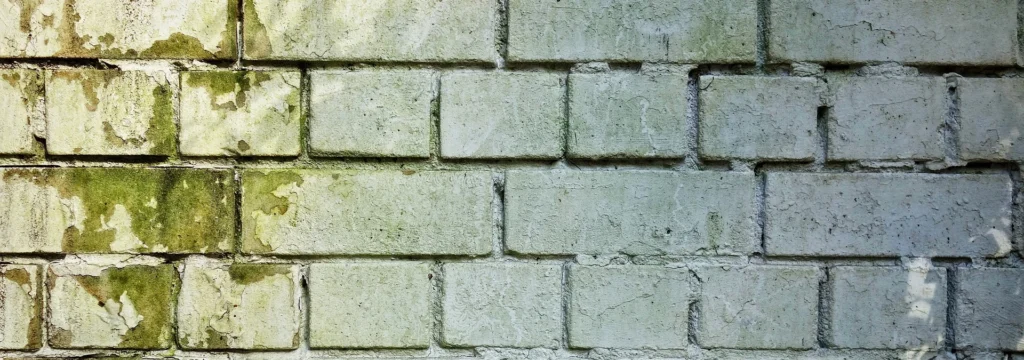
Mould removal made easy
Black, white, red, yellow, green, blue – mould fungi can have many colours and at best they are useful in the production of certain foods or pharmaceuticals, such as penicillin. However, if they settle on walls, they can quickly become a nightmare for apartment or house owners. Rooms affected by mould usually smell musty and stains form.
Which species of mould it actually is can realistically only be determined by a microbiologist in the laboratory from a collected sample. Different species of mould can also occur simultaneously – a precise assessment based on colour is therefore difficult. Furthermore, the colour also depends on the nutritional components available to the fungus.
Dangerous to health and building fabric
In principle, mould in living spaces should not be taken lightly – depending on the species it can cause respiratory problems, asthmatic attacks, headaches, nausea or even cancer. Some fungi such as Aspergillus flavus produce highly toxic substances, the so‑called aflatoxins. These toxins, in large quantities, can lead to heart or liver failure and kidney haemorrhages – any contact should therefore be strictly avoided. Rapid determination of the mould’s source, elimination of the cause and removal of the mould itself is essential, because in addition to health damage the building fabric is also endangered. In cases of extensive infestation, only specialists should remove the mould and its cause.
Mould removal – only with protective equipment
It is advisable to wear appropriate protective equipment in the affected rooms. At minimum an FFP3 mask to protect against inhalation of fungal spores. In addition, you should wear rubber, latex or nitrile gloves, safety goggles and possibly a disposable coverall with hood to protect clothing and hair. Before, during and after working you should open the windows so that the concentration of mould and spores in the room air is kept as low as possible. You should avoid transferring the contamination into mould‑free living areas wherever possible.
Infestation of interior furnishings
If upholstered furniture, carpets or wallpaper are affected, it is usually best to remove them carefully and dispose of them immediately. Mould can also have developed beneath wallpaper, which you must then treat as well. You should moisten the wallpaper before removing it to avoid dispersing spores into the air. Small‑area mould spots on wooden furniture, parquet floors or wooden window frames can be treated with a mould remover suitable for wood. After drying, sanding and re‑coating the wood may be necessary.
Infestation of the wall
If the wall beneath the wallpaper is already affected, you should call in a professional. They can assess the damage and determine the cause. In some cases, remediation of the building is necessary to prevent recurring mold caused by damp substrate. The cause can, for example, be incorrect insulation of the exterior walls. Experts have devices that can measure wall moisture. Indoor humidity should generally be between 40 and 60 percent.
If the mold stains resulted from a water damage that has already been remedied, for example a burst pipe, the remaining moisture can be extracted with a dehumidifier. Additionally, adequately heating the rooms can help.
For minor mold infestations, for example caused by a previous water damage, it’s best to carefully knock off the plaster. Do not forget appropriate protective equipment to avoid inhaling the hazardous spores or getting them on your skin. After removing the mold, you can treat the wall with a commercial mold remover. This strong disinfectant kills the mold so it can be removed more easily. It may then be necessary to sand the wall. Once you have removed the mold, you can apply anti-mold paint to the dry wall to prevent further mold stains.
Bathroom infestation
Damp rooms, such as bathrooms, are particularly susceptible to mold. In addition to a musty smell and the typical stains, silverfish are often found. They particularly like to settle where there is mold because they feed on it. Black mold often occurs because, alongside the essential moisture for the fungus, the bathroom contains a lot of organic material in the form of hair and skin flakes that serve as a food source for these unwelcome fungi. Grout lines in the shower or around the bathtub are repeatedly affected by reddish mold, which is somewhat less dangerous but, like any other type of mold, should be removed quickly in households with asthma sufferers.
In addition to standard commercial mold removers, you can use chlorine-based cleaning agents here; they are strongly disinfecting and bleaching. However, be careful when applying such agents to colored shower curtains, which—when the floor is damp—are particularly prone to mold. It is best to replace the old shower curtain after treating the mold in the bathroom with a new one and hang it on its rail to dry after showering so that it does not touch the wet floor — this keeps the new curtain free of mold!
Removing mold – Effective home remedies
Commercial mold removers are highly effective disinfectants specifically formulated for mold and its spores. However, there are also recommendations for home remedies that likewise have disinfecting properties and can be used for small-area mold infestations.
In pharmacies you can buy ethyl alcohol with an alcohol content of 70%. You can spray this, as well as a commercially available mold remover, onto the moulded areas with a sponge. You should always reseal the bottle, otherwise the alcohol will evaporate. This causes further dilution and reduces effectiveness. On walls that are already damp, the applied ethyl alcohol is likewise diluted further. This makes a higher concentration of the alcohol used (80%) necessary. Only diluted alcohol is effective, because due to its water content it can penetrate into the cells of the mold fungi and the alcohol then dries them out by withdrawing the available water, thereby killing them. Because alcohol evaporates rapidly, the treatment may need to be repeated. It is also important to ensure adequate protection from light; ethanol and hydrogen peroxide must be stored in brown glass bottles. Chlorine- and surfactant-free options are also possible.
Besides diluted alcohol and mold remover you can also use hydrogen peroxide with a concentration of 3%, which, however, has a strong bleaching effect and is therefore limited in application. In addition, these home remedies are flammable; hydrogen peroxide is also explosive and must therefore be handled with care. The use of vinegar essence is possible for individual, small mold spots, but the spores are not killed by this. It is ineffective on lime, because the alkaline substrate neutralizes the active acid of the vinegar.