
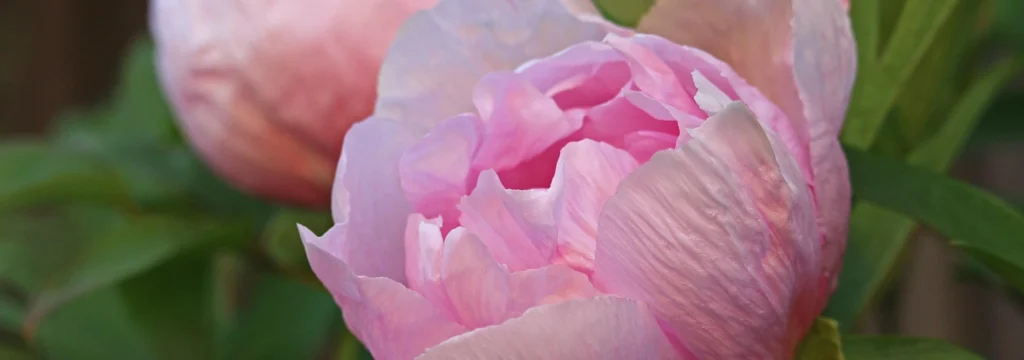
Peonies, also known by their botanical name Paeonia, are among the most popular garden plants in Europe. With their majestic blooms, vivid colours and fragrant scent they are a focal point in any bed. Whether as a perennial in the garden or as an impressive cut flower in a vase – peonies are highly versatile. In this article you will find everything you need to know about peonies: from correct planting and optimal care to the most attractive cultivars and propagation tips.
Peonies
Peonies are perennial flowering plants that belong to the peony family (Paeoniaceae). There are herbaceous peonies that die back above ground in winter, and shrub peonies that become woody and gradually grow into substantial ornamental shrubs. They are known for their large, luxuriant flowers, which can be single, semi-double or double depending on the cultivar.
The name peony derives from their flowering time: most varieties bloom around Pentecost, i.e. in late spring between May and June. During this period the plants are the undisputed centrepiece of the flower bed.
Planting peonies – the right site
If you want to enjoy your peonies for many years, you should consider a few important points when planting. The site plays a decisive role. They prefer sun – the more sun they receive, the more abundant their flowering. Partly shaded locations are possible, but plants usually flower less profusely there.
The soil should be deep, humus-rich and well-draining. Peonies do not tolerate waterlogging well, as it can lead to root rot. Before planting it is advisable to loosen the soil thoroughly and, if necessary, improve it with compost or some sand.
Another important point: peonies are loyal to their site. They do not tolerate being moved. Therefore it is important to choose a suitable, permanent location when planting for the first time. Once the right site is found, peonies can live for many decades and produce more beautiful blooms each year.
When is the best time to plant peonies?
The ideal time to plant peonies is autumn, specifically the months of September and October. At that time the soil is still warm enough for roots to establish, and the plant has sufficient time to become established before spring. Planting in early spring is also possible, but in that case special attention must be paid to adequate watering.
Peony care – minimal effort, significant impact
One major advantage of the peony is its modest care requirements. Once it has found a suitable location, it needs little maintenance. Nevertheless, there are several tips that can promote flowering and support the plant’s health.
Peonies prefer evenly moist but not waterlogged soils. Especially during extended dry spells in spring, additional watering can help support flower formation. Fertilize best twice a year: once in spring at shoot emergence with an organic complete fertilizer (e.g., the flower fertilizer from ARIES) or compost, and a second time after flowering to encourage the formation of new buds for the following year.
A common mistake is planting peonies too deep. The so-called ‚eyes‘ (the shoot buds) should lie only about three to five centimeters below the soil. If the plant is set too deep, flowering often fails.
Peony pruning – when and how?
Peonies do not require regular pruning, but a few maintenance measures are sensible. For herbaceous peonies, all foliage is cut back near ground level in autumn as soon as it has withered. This not only improves appearance but also prevents fungal diseases and rot.
Withered flower heads should be removed regularly to prevent seed formation – this directs the plant’s energy into root growth rather than seed production.
Shrub peonies are only pruned when necessary, for example to remove dead or damaged branches. A radical pruning is not recommended, as the shrub form grows very slowly.
Popular peony varieties
There are hundreds of peony varieties and cultivars that differ in flower form, color and height. Classic colors such as pink, white and red are particularly popular, but there are also yellow or even bicolored variants.
Among the best-known varieties are:
– Sarah Bernhardt: a pink, double peony with an intense fragrance
– Bowl of Beauty: semi-open flowers with a pink edge and yellow center
– Karl Rosenfield: deep-red, lush flowers with strong visual impact from a distance
– Shirley Temple: blooms white to pale pink, very popular in gardens and bouquets
– Festiva Maxima: classic white bloom with red flecks – noble and nostalgic at once
Propagating peonies – how to
Peonies are best propagated by division. For this, the plant is carefully dug up in autumn and a section of the rootstock is cut off with a sharp knife that contains at least three eyes. It is important that each division retains sufficient root mass. The pieces are then planted at their new location. Patience is required: it can take two to three years until the first bloom.
Peonies in the Vase – Cut Flowers with Style
Not only in the garden, peonies are also visually striking in a vase. To keep the flowers fresh for as long as possible, they should be cut when the buds are just beginning to open. A clean, angled cut and regularly changing the water are important.
Peonies pair particularly well with other romantic cut flowers such as lilac, lavender, or baby’s breath. Because of their symbolism – they represent love, prosperity and beauty – they are also popular wedding flowers.
Conclusion: Peonies are low-maintenance floral delights
Peonies are a genuine asset to any garden. They stand out with spectacular blooms, straightforward care, and impressive longevity. Whether as a classic herbaceous perennial in the border, as a fragrant cut flower, or as a majestic tree peony – the variety is extensive. Those who provide a sunny, well-drained location and avoid relocating them too often will enjoy these plants for decades.