
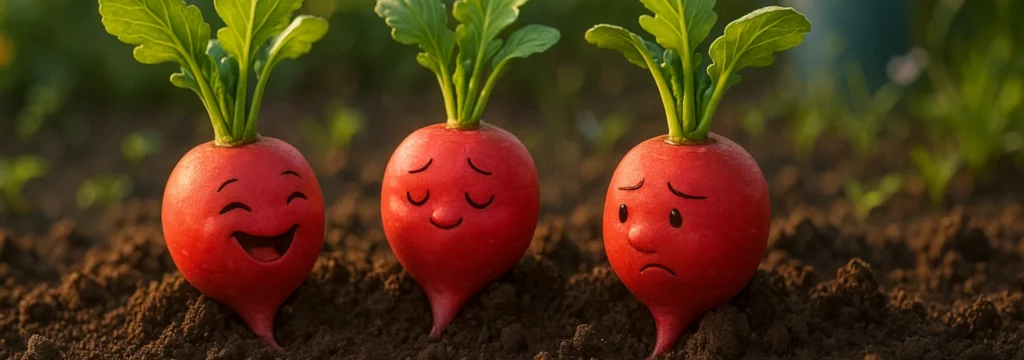
Radishes are among the most popular vegetables in the home garden — and for good reason: they are low-maintenance, fast-growing and versatile. Whether in a raised bed, in the greenhouse or in a pot on the balcony — planting radishes is straightforward even for beginners. In this guide you will find everything important about sowing, care, harvest and storage. In addition, we present popular varieties and provide practical tips for a successful harvest.
Radishes
Radishes (Raphanus sativus var. sativus) belong to the Brassicaceae family and are closely related to radish/daikon, cabbage and arugula. Most varieties are red with white flesh, but there are also yellow, purple or even white variants. Flavor ranges from mild to pleasantly sharp — depending on variety, location and care.
Why radishes are ideal for beginners
They are considered a fast‑growing vegetable that can be harvested 4 to 6 weeks after sowing. This short cultivation period makes them ideal for impatient gardeners and as so‑called „gap‑fillers“ in the vegetable bed.
Further advantages:
- Hardly susceptible to pests
- No need to start seedlings
- Also suitable for small areas or balconies
- Undemanding in terms of soil
The right location for radishes
To ensure radishes thrive, pay attention to the right location. They prefer:
- Sunny to partially shaded positions
- Loose, humus‑rich soil
- Consistent moisture, but no waterlogging
A well‑prepared soil, avoiding fresh compost or excessive nitrogen, prevents the plants from producing foliage without forming roots. Radishes in raised beds or in loose garden soil grow particularly well.
When should you plant radishes?
Sowing is possible very early in the year — in mild regions from March. The main season extends from spring to autumn, and the choice of variety should match the time of year. There are spring, summer and autumn varieties.
Sowing tips:
- Row spacing: approx. 10–15 cm
- Spacing within the row: approx. 3–5 cm
- Sowing depth: 1–2 cm
- Preferably resow every two weeks to enable continuous harvesting
Radishes care – simple but crucial
Caring for radishes is straightforward, but there are a few points to observe to harvest crisp roots:
- Water regularly so they do not become mealy or sharp
- Remove weeds regularly to avoid competition
- Do not sow too densely, otherwise the roots remain small or bolt
- Mulching can help retain moisture in the soil
Also ensure the plants do not dry out, as this can cause the roots to split. It is also advisable to occasionally feed radishes with a mild organic fertilizer (e.g., ARIES Universal Garten Dünger) to promote growth and support root formation.
When can radishes be harvested?
Depending on variety and weather conditions, radishes are ready to harvest after 4 to 6 weeks. A good sign for harvesting is when the roots are clearly visible above the soil and have developed a rounded shape.
Important: If radishes are left in the ground too long they become woody, sharp or mealy. It is therefore best to harvest them young and fresh.
Overview of popular radish varieties
Depending on the season and taste, you can choose from many different varieties. Here are some of the most popular:
- Sora – classic, round, red variety for spring and summer
- Eiszapfen – elongated, white roots with a mild flavor
- Rudi – early variety with consistent root formation
- Flamboyant – red-and-white, decorative variety
- French Breakfast – tender, elongated root with a mild flavor
Tip: By growing several varieties you can harvest a varied crop over a longer period.
Radishes in pots or raised beds
Even if you don’t have a garden, you can grow radishes on a balcony. They are well suited for cultivation in pots, balcony boxes or raised beds.
What to watch for:
- Pot depth at least 15 cm
- Good drainage to prevent waterlogging
- Consistent watering
- Preferably a sunny location
This way you can successfully harvest radishes even in a small space.
Pests and diseases affecting radishes
Radishes are relatively robust, but some issues can occur:
- Flea beetles: Small holes in the leaves – keeping the soil moist helps
- Downy mildew: Whitish coating on the leaves, especially in damp weather
- Root maggots: Particularly problematic in spring – intercropping with lettuce or onions can help
A crop rotation in the bed is important to prevent soil fatigue and pest infestation.
Storing and using radishes
Freshly harvested radishes taste best. However, you can also store them for a short time:
- In the refrigerator: Wrap radishes with their greens in a damp cloth
- Without leaves: Store the roots separately from the greens so they do not dry out
Radish greens are, by the way, edible – you can prepare them like spinach or use them for pesto.
Radishes are versatile in the kitchen:
- Raw in salads
- On buttered bread
- With quark or in dips
- Pickled in vinegar
- As a garnish for soups and cold platters
Conclusion: Radishes – quick, healthy and tasty
Radishes are an ideal beginner vegetable for anyone who wants quick results in the garden or on the balcony. With little effort you get crunchy, fresh produce in a short time that is not only healthy but also highly versatile. The wide range of varieties, the short growing period and the low maintenance make planting radishes a rewarding experience for young and old.