
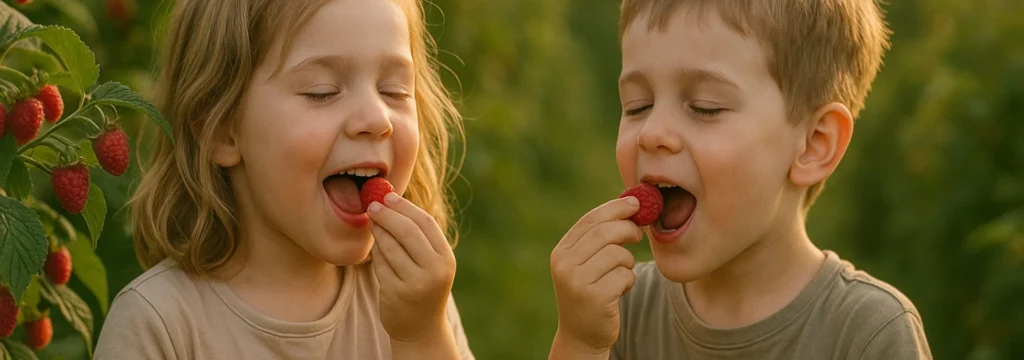
Raspberries are among the most popular summer fruits. With their sweet-tart flavor, bright red color and versatility in the kitchen, they are in demand both in home gardens and at markets and in supermarkets. Whether freshly picked, frozen or processed – raspberries convince with aroma and versatility. In this post you will find everything worth knowing about raspberries: from planting and harvesting to recipe ideas and storage tips.
Raspberries
The raspberry is a perennial plant in the rose family. It forms thorny or thornless canes and grows in many regions of Europe as well as parts of Asia. The fruits develop from small drupelets that fuse into an aggregate fruit – botanically the raspberry is therefore not a „true“ berry.
In the wild, raspberries are often found at forest edges or clearings. In the garden they are popular shrubs because they are relatively low-maintenance and can produce fruit for many years.
Planting raspberries – Simple tips for hobby gardeners
With a little preparation, raspberries can be successfully grown in your own garden. Variety selection, site, care and targeted fertilization are decisive.
1. The right site
Raspberries prefer a sunny to partially shaded spot in the garden. The soil should be loose, well-draining and rich in humus. Waterlogging must be avoided, as it can lead to root problems.
2. Summer or autumn raspberries?
There are two main types:
- Summer raspberries bear their fruit on the two-year-old canes, usually in June and July.
- Autumn raspberries fruit on the current year’s shoots, often from August into October.
Combining both varieties significantly extends the harvest season.
3. Planting
The best time to plant is autumn (October) or spring (March/April). Maintain a planting distance of about 40 to 60 cm between the bushes. Supports or stretched wires are recommended to give the long canes stability.
4. Care, pruning and fertilization
After harvest, summer raspberries have the harvested, two-year-old canes removed close to the ground so that young, fruit-bearing shoots receive sufficient space and light. Autumn raspberries, by contrast, are generally cut back completely because they only fruit on the new canes.
Fertilization: For healthy growth and good fruit set, a balanced supply of nutrients is important. Raspberries respond well to compost or organic fertilizer (universal garden fertilizer or the vegan fertilizer from ARIES). Ideally, apply a first feeding in spring as soon as the new shoots appear. A second, light application can be made after harvest to strengthen the plant for the next season. Be careful not to over-fertilize, as this can promote shoot growth while impairing fruit formation.
Harvest time – When are raspberries ripe?
Raspberries do not continue to ripen after harvest, so they should only be picked when they are fully colored and detach easily from the fruit receptacle. Ripe fruit have an intense aroma and a soft texture. Harvesting is best done in dry weather, as wet fruit can spoil more quickly.
Storage and shelf life of raspberries
Fresh raspberries are delicate and should be consumed or processed as soon as possible after harvest or purchase. Nonetheless, there are several ways to preserve them:
- Refrigerator: Unwashed raspberries keep in a shallow, well-ventilated dish for about 1–2 days.
- Freezing: Raspberries can be frozen without difficulty. To do this, freeze them side by side on a tray first, then transfer them to freezer bags.
- Preserving: Raspberries are excellent for making jam, compote or syrup. This allows them to be enjoyed for many months.
Use of raspberries in the kitchen
Raspberries can be used in a variety of ways in dishes and drinks – both sweet and savory.
1. Desserts
Classics like raspberry quark, yogurt with raspberries or fruit salad can be prepared in no time. Raspberries are also a popular ingredient in cakes, muffins or ice cream.
2. Breakfast ideas
In muesli, porridge or on pancakes, raspberries provide fresh flavor and a splash of color on the plate.
3. Beverages
Whether as an ingredient in a smoothie, in homemade lemonade or as a fruit addition to water – raspberries bring summery freshness to the glass.
4. Savory combinations
Less well known, but nonetheless popular: raspberries combined with goat cheese, in salads or as a fruit component in chutneys for meat dishes.
Raspberry varieties – diversity in the garden and retail
There are numerous raspberry varieties that differ in flavor, ripening time, growth habit and color. In addition to the well-known red raspberries there are also yellow or black varieties. Some examples:
- ‘Tulameen’ – very aromatic, popular in commercial cultivation
- ‘Autumn Bliss’ – robust autumn raspberry with a long harvest period
- ‘Golden Queen’ – yellow variety with a mild flavor
- ‘Black Jewel’ – dark variety with striking flesh
When purchasing, pay attention to the respective characteristics and the desired harvest time.
Buying raspberries – fresh or frozen?
Those who do not want to grow their own raspberries can find both fresh and frozen products in retail. Fresh raspberries are seasonally available, usually from June to September. In the frozen section they are available year-round and are excellent for smoothies, baked goods or desserts.
When shopping, look for plump, undamaged fruit. A damp package or mushy spots indicate overripe or spoiled goods.
Tips for growing on the balcony
Raspberries can be cultivated even without a garden. Some compact-growing varieties are suitable for cultivation in a large pot or planter. A stable container with good drainage and a support for training are important. Regular watering and occasional fertilizing promote growth and fruiting. Ideal varieties for the balcony include e.g. ‘Little Sweet Sister’ or ‘Ruby Beauty’.
Conclusion: Raspberries – naturally diverse
Whether as a snack straight from the bush, a refined ingredient in the kitchen, or a decorative element in the garden – raspberries offer an impressive variety. With some care they can provide enjoyment for many years. Those who appreciate regional and seasonal fruit will find raspberries an excellent choice.