
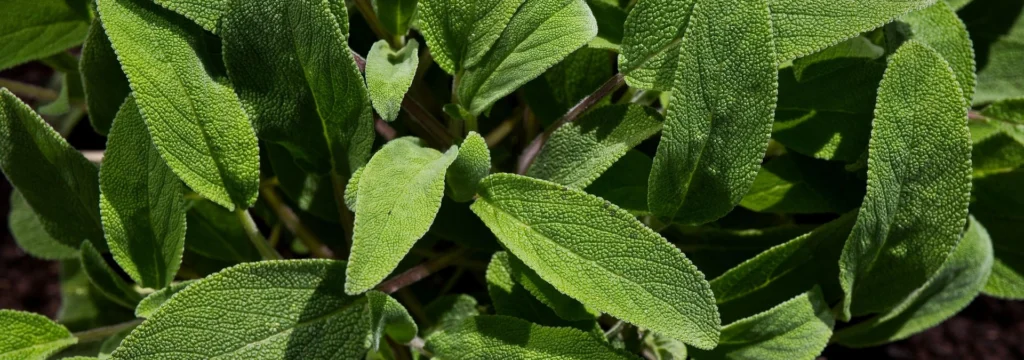
Sage is one of the oldest and best-known medicinal plants, with a long tradition in naturopathy and in the kitchen. Its valuable constituents have antibacterial, anti-inflammatory and antiperspirant effects, which is why it is often used in teas, mouthwashes and as a home remedy. In addition, it gives many dishes an intense aroma and is highly regarded in Mediterranean cuisine. In this article you will learn everything about the effects, possible uses and the cultivation of sage.
What is sage?
Sage (Salvia officinalis) belongs to the Lamiaceae (mint family) and originates from the Mediterranean region. The plant grows bushy, has silvery-gray leaves and produces violet to blue flowers. Due to its high essential oil content, sage emits a strong scent. The name „Salvia“ derives from the Latin word „salvare“, meaning „to heal“ — a reference to its long tradition as a medicinal plant.
Constituents and health benefits
The plant contains numerous valuable constituents that make it a natural remedy. These include essential oils such as thujone, camphor and cineole, bitter compounds, flavonoids and tannins. These act as anti-inflammatory, antibacterial, antiviral and antiperspirant agents.
1. Sage – Relief for sore throats and colds
It is antibacterial and antiviral, which is why it is often used to treat sore throats, coughs and colds. A tea or a gargle solution helps soothe the mucous membranes and inhibit inflammation.
2. Support for digestion
The plant’s bitter compounds promote digestion and help with bloating, feelings of fullness and stomach discomfort. After fatty or heavy meals, a tea can stimulate digestion.
3. Regulation of perspiration
The plant is known for its antiperspirant effect. People who suffer from excessive sweating can drink sage tea or take a foot bath to reduce sweat production.
4. Promotion of oral health
It has antiseptic properties and helps with gingivitis, bad breath and aphthae. Mouthwashes with the plant can alleviate gum problems and strengthen the oral flora.
5. Help with menopausal symptoms
Sage can help with menopausal symptoms through its hormone-regulating properties. It reduces hot flashes and excessive sweating, which is why it is often included in herbal preparations.
Sage in the kitchen
Beyond its medicinal effects, it is also popular as a seasoning. It gives many dishes a strong, slightly bitter aroma and is particularly valued in Mediterranean cuisine.
1. In meat and fish dishes
It pairs well with poultry, pork and fish. Particularly well known is the Italian dish “Saltimbocca alla Romana”, where veal is combined with sage and ham.
2. In pasta dishes and sauces
Fresh sage can be swirled in butter and served over gnocchi or pasta. Tomato sauces and cream soups also benefit from its savory flavor.
3. In herb butter and marinades
Fresh or dried, it is excellent for herb butter, marinades and dressings.
4. Sage tea and beverages
Sage tea is not only healthy but also a refreshing beverage. Combined with honey and lemon it can help prevent colds. It also provides a distinctive aroma in homemade lemonades or cocktails.
Sage as a home remedy
In addition to internal use, sage is also applied externally.
- Gargling for sore throats: An infusion made from the leaves is excellent for gargling for sore throats or inflammations in the oral cavity.
- Foot baths for excessive sweating: A foot bath with sage leaves helps against sweaty feet and refreshes tired feet.
- Sage steam baths for the skin: A steam bath can help with blemished skin, as it has anti-inflammatory effects and clears the pores.
Growing and caring for sage
Sage is a low-maintenance plant that is easy to cultivate in the garden or on the balcony.
1. Location
It prefers sunny, warm locations with well-drained, lime-rich soil. It thrives particularly well in herb beds, raised beds or in pots.
2. Watering
It needs little water and tolerates drought better than excessive moisture. Waterlogging should be avoided.
3. Fertilizing
The plant requires little fertilizer. Occasional applications of compost or organic fertilizer are sufficient. We recommend the ARIES vegan fertilizer.
4. Harvesting and storage
The leaves can be harvested year-round but are especially aromatic in spring and summer. For storage, sage can be dried or frozen.
Different types of sage
There are over 900 different species, which vary in taste, appearance and properties.
- Common sage (Salvia officinalis): The best-known variety with silvery-grey leaves and an intense aroma.
- Clary sage (Salvia sclarea): Used for essential oils and has a floral scent.
- Spanish sage (Salvia lavandulifolia): Mild aroma and a high concentration of essential oils.
- Pineapple sage (Salvia elegans): Has a fruity aroma and is suitable for teas and desserts.
Sage in natural cosmetics
It is frequently used in natural cosmetics for its anti-inflammatory and antibacterial properties.
- Shampoos and hair care: The plant helps with oily hair and soothes the scalp.
- Soap: Sage is also commonly used in soaps.
- Facial toners and creams: It has a clarifying and anti-inflammatory effect on blemished skin.
- Oral care: Many natural toothpastes include it to support oral health.
Conclusion
Sage is a versatile medicinal and culinary herb that offers both health benefits and culinary uses. Whether as a tea, a gargle solution or a seasoning in the kitchen — the plant should be present in every household. It is easy to cultivate, sustainable and a valuable plant for naturopathy and cosmetics. Those who use it regularly benefit from its many positive properties and can integrate it into daily life in various ways.