
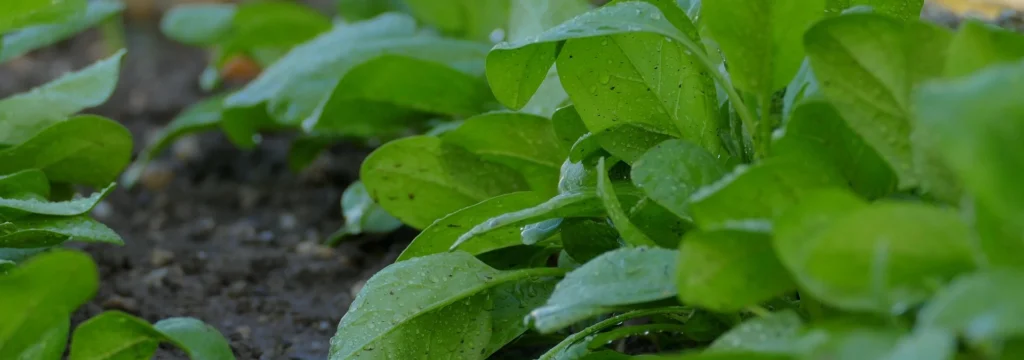
Spinach is one of the most well-known and versatile vegetables worldwide. It is common in many cuisines and valued for its mild flavor and nutritional properties. Originally native to Persia, it has since established a firm place in the kitchens of many cultures. This article covers all essential information about spinach — from its origin and nutrients to advice on preparation and cultivation.
Origin
Spinach originally comes from Persia, today’s Iran. In the Middle Ages it was brought to Europe by Arab traders, where it spread quickly and became an important component of European cuisine. It found early use particularly in Spain and Italy. Today, spinach is cultivated and consumed worldwide in many different varieties and forms. In Europe it is mainly available in the cooler months, as it prefers a cool climate.
Nutrient profile
Spinach is not only tasty but also especially nutrient-dense. The following components are particularly noteworthy:
- Vitamins: It contains a range of vitamins, notably vitamins A, C and K. These vitamins are important for various physiological functions.
- Minerals: Spinach contains minerals such as iron, calcium, magnesium and potassium. These are important for numerous physiological functions.
- Dietary fiber: It is rich in dietary fiber, which can contribute to healthy digestion. These fibers help regulate intestinal activity and support balanced digestion.
- Folic acid: It is a good source of folic acid, particularly relevant for pregnant women, as folic acid plays a role in cell formation.
In summary, spinach provides a variety of nutrients that can enrich the diet. Whether raw in a salad, as a side dish or in other preparations — it can be enjoyed in many ways.
Preparation
Spinach can be used in various ways in the kitchen. Fresh, it can be incorporated into salads, soups, smoothies or served as a side to main dishes. It also performs well in hot dishes such as stews, pasta or curries.
A notable advantage is its versatility. Especially in spring, when fresh spinach is in season, it is available at many supermarkets and markets. However, note that it shrinks considerably when cooked because it has a high water content. Therefore you need more fresh spinach than ready-to-eat spinach that has already been cooked.
Fresh vs. frozen spinach
Both variants have their advantages. When fresh it has a delicate, tender flavor and is excellent for salads or quick side dishes. However, when cooked it loses its structure and shrinks considerably in size.
Frozen spinach, by contrast, offers a convenient and long-lasting alternative. It is processed quickly after harvest, which preserves most of the nutrients. Especially for preparing soups, curries or smoothies, frozen spinach is a practical choice.
In Smoothies
Spinach is a popular vegetable in green smoothies. Due to its mild flavor it pairs well with a variety of fruits and other ingredients. Especially in combination with bananas, apples or berries, spinach provides a tasty and nutrient-rich addition. So if you want to prepare a green drink, spinach is an excellent choice.
Tips for cultivation
Spinach is an easy-to-grow vegetable that thrives particularly well in cooler months. It is a so-called ‚cold-germinating vegetable‘ and prefers temperatures of about 10 to 15 degrees Celsius. In milder regions it can be sown as early as spring or even in autumn. It can also be grown without issues in a greenhouse or on a balcony.
An important tip for cultivation is to prepare the soil well. Spinach grows best in well-drained soils that are rich in nutrients. We recommend the fertilizers from ARIES. If you grow it on the balcony or in pots, you can also use soil specifically formulated for vegetables.
Spinach is also a fast-growing vegetable that can typically be harvested within 6 to 8 weeks. The leaves can be harvested regularly, so that fresh spinach is consistently available as growth continues.
Seasonal spinach: spring and autumn
Spinach is a seasonal vegetable that can be cultivated in both spring and autumn. In spring it is harvested as the first crop after the cold winter months and then has a particularly tender flavor. In many regions it is planted and harvested from March to May.
In autumn it is also possible to sow spinach, although yields are usually somewhat lower. Autumn spinach, however, is also suitable for winter harvesting because it can thrive in milder winter conditions.
Conclusion
Spinach is a versatile and nutritious vegetable that can be used in many ways in the kitchen. Whether fresh in a salad, cooked in stews, or as an ingredient in a smoothie – spinach brings not only flavor but also a variety of nutrients to the diet. Thanks to its simple cultivation requirements, it is also a good choice for hobby gardeners who want to grow their own supply of vegetables. Whether fresh or frozen – this vegetable is a valuable addition to any balanced diet and offers numerous preparation options.