
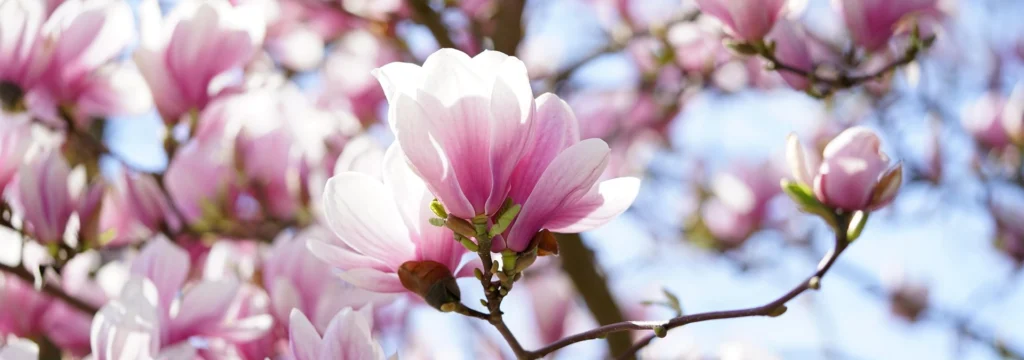
The magnolia is one of the oldest and most fascinating plant species in the world. With its majestic flowers and intoxicating fragrance, the magnolia is a true highlight in gardens and parks. Its splendid blooms occur in a variety of colors and forms, making it one of the most popular ornamental plants worldwide. In this article you will learn everything you need to know about the magnolia — from its history and significance to tips on care and propagation.
What is a magnolia?
The magnolia belongs to the family Magnoliaceae and comprises more than 200 species of trees and shrubs. These plants are known for their striking flowers, which often appear in white, pink, purple or even yellow. It is native to many parts of the world, including North America, Asia and South America. The different species and cultivars vary in size, form and flower color, which makes it an extremely versatile plant for gardens and landscapes.
History
The magnolia has a long history and is one of the oldest plant genera on Earth. Fossil evidence indicates that they existed more than 20 million years ago. The name „magnolia“ derives from the French botanist Pierre Magnol, who named the plant in the 17th century. In many cultures it is associated with symbols such as purity, beauty and renewal. In Japan the magnolia is often regarded as a symbol of strength and love.
Meaning
Magnolias are valued not only for their beauty but also for their symbolic meaning. In Western culture they often represent beauty and delicacy. In Chinese culture magnolias symbolize purity and feminine beauty. The magnolia’s blossoms are also a symbol of spring and renewal, since they are often among the first flowers to appear after winter.
In some countries, for example the USA, the magnolia is esteemed as the state flower of Mississippi and Louisiana. Its presence in gardens and public green spaces brings a certain elegance and calm that is appreciated by many gardening enthusiasts.
The different species
There is a wide variety of magnolia species that differ in size, flower color and growing conditions. Here are some of the best-known species:
1. Star magnolia (Magnolia stellata)
The star magnolia is a small to medium-sized plant that produces beautiful, star-shaped white or pink flowers in spring. It is ideal for smaller gardens or as a shrub in larger landscapes. This species is particularly known for its early flowering period and its winter-hardy characteristics.
2. Kobushi magnolia (Magnolia kobus)
The Kobushi magnolia is a species native to Japan that produces white flowers with a light fragrance. This species is a large shrub or small tree that unfolds an impressive display of flowers in spring. It is one of the earliest magnolia species to bloom and draws attention with its delicate blossoms.
3. Saucer magnolia (Magnolia x soulangeana)
The saucer magnolia is one of the best-known and most widely cultivated magnolia species. It produces large, striking flowers in pink, purple or white. This magnolia is a hybrid between the Yulan magnolia (Magnolia denudata) and the tulip magnolia (Magnolia liliiflora) and is known for its beautiful spring bloom.
4. Tulip magnolia (Magnolia liliiflora)
The tulip magnolia is characterised by its exceptionally elegant flowers, which resemble the shape of tulips. The flowers appear in strong pink to purple tones and provide a contrasting view against the green surroundings. This species is often used as a specimen plant in larger gardens.
5. Ivory magnolia (Magnolia grandiflora)
The ivory magnolia is an evergreen tree that produces large white flowers with an intense fragrance in summer. It is particularly known for its glossy green leaves, which provide year-round structure in the garden.
Magnolia care
Care is relatively straightforward but requires some basic measures to maximize flowering and maintain its health. Here are some important tips:
1. Site selection
They prefer a sunny to partially shaded location. They thrive best in well-drained soils that are rich in organic matter. It is important to protect the tree from cold winds and extreme weather conditions, as magnolia flowers are sensitive to late frosts.
2. Watering
Magnolias require regular watering, especially during the flowering period and in the hot summer months. However, it is important to avoid waterlogging, as a magnolia’s roots are sensitive to excessive moisture.
3. Fertilization
Magnolias benefit from regular fertilization during the growing season. A dedicated magnolia or rhododendron fertilizer is ideal because it supplies the specific nutrients these plants need. One application in spring and possibly another in summer is sufficient. The houseplant fertilizer from ARIES is suitable for this purpose.
4. Pruning
Pruning a magnolia is generally only necessary when the plant has damaged or dead shoots. A severe pruning should be avoided, as it can impair flowering the following year. A light shaping and maintenance prune, however, is helpful to keep the tree healthy.
Propagation
Magnolias can be propagated in several ways. The most common method is propagation by cuttings. This can be done in late spring or summer by taking a healthy shoot and placing it in a well-draining substrate. It is important to keep the cuttings moist until they form roots.
Another option is propagation by seed. In this method, magnolia seeds are stratified in a cold, moist medium for several months to promote germination.
The Magnolia as an ornamental plant in the garden
They are ideal for large gardens and landscapes, where they can be planted as solitary specimens or in groups. Due to their size and beauty they make an excellent focal point or can be part of a larger flower garden. They can also be used as hedge plants if you want to create a private atmosphere in the garden.
Conclusion
The magnolia is one of the oldest and most beautiful plant species in the world. With its impressive flowers, symbolic significance and elegant appearance it is a true asset in any garden. Whether as a stately tree or a delicate shrub – the magnolia enhances every garden and attracts admiring looks.
If you have a magnolia in your garden or are considering planting one, you can be confident that this plant is a long-term and worthwhile investment. With proper care and a suitable location, your magnolia will surprise you year after year with a wonderful floral display.