
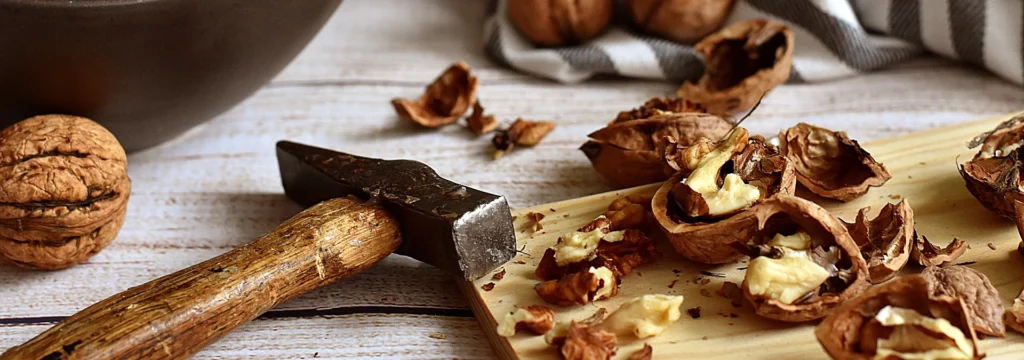
Walnuts are among the oldest and most popular nuts in the world. They are not only delicious but also offer numerous health benefits that make them an indispensable part of a balanced diet. Whether as a snack, in salads or as an ingredient in baked goods – they can be enjoyed in many ways and are real powerhouses for body and mind. In this article you will learn everything about the health benefits of walnuts, their nutrients, the various uses and why you should regularly incorporate them into your diet.
What are walnuts?
Walnuts come from the walnut plant (Juglans regia) and are botanically not „true“ nuts but stone fruits. The walnut develops inside a green, round fruit husk that later opens and exposes the hard shell that protects the nut. The edible kernel itself is covered by a brown, thin skin and consists of two lobes that resemble the two hemispheres of the brain – an interesting fact that earned it the nickname „brain nut“.
Walnuts are available in various forms, including raw, roasted, salted or as walnut oil. The main benefit of walnuts comes from their high content of healthy fats, vitamins and minerals, which bring numerous health advantages.
The nutrients in walnuts
Walnuts are nutrient-dense and provide a wide range of vitamins, minerals and healthy fats. The most important nutrients include:
- Healthy fats: Walnuts are particularly rich in polyunsaturated fatty acids, especially omega-3 fatty acids.
- Protein: They contain a considerable amount of plant-based protein, which is essential for building and maintaining muscle mass as well as for cell regeneration.
- Fiber: They provide a good amount of fiber, which supports digestion and contributes to satiety.
- Vitamins: Walnuts are a good source of vitamin E. They also contain B vitamins that support metabolism.
- Minerals: Notably high in magnesium, potassium and zinc, which are important for muscle function, the immune system and bone health.
How walnuts can be incorporated into the diet
Walnuts are highly versatile and can be incorporated into the diet in many ways. Here are some ideas for how to include them in your daily routine:
1. As a snack
Walnuts are excellent as a healthy snack between meals. You can enjoy them plain or combine them with a little honey or dried fruit.
2. In salads and mueslis
They pair perfectly with salads, adding a crunchy texture and a nutty flavor. Also in muesli or yogurt they provide an energy-rich start to the day.
3. Baking with walnuts
They are ideal for baking. You can work them into bread, cakes or muffins to give the doughs a nutty note. They work particularly well in combination with chocolate.
4. Walnut oil
Walnut oil is an excellent ingredient for dressings and sauces. It has a mild, nutty flavor and contains many healthy fatty acids. It is also excellent for enhancing salads or as an ingredient in smoothies.
5. Walnuts in smoothies
Walnuts can also be incorporated into smoothies. Simply add a few of them together with other ingredients such as bananas, berries and oats to a blender to create a creamy, nutrient-rich meal.
Ingredients for a walnut smoothie
- 30 g walnuts
- 1 banana
- 200 ml plant-based milk (e.g. almond milk or oat milk)
- 1 tablespoon honey or maple syrup (optional)
- 1 teaspoon cinnamon (optional)
- 1 teaspoon chia seeds (optional)
- 3–4 ice cubes (optional)
Preparation of the walnut smoothie
Prepare walnuts
Walnuts are an excellent source of omega-3 fatty acids, antioxidants and vitamins. To get the most out of the walnuts, you should lightly toast them first. Place the walnuts in a pan and toast them over medium heat for about 3-5 minutes, until they release a light aroma. Take care not to burn them. Toasting enhances the nutty flavor of the walnuts. After toasting, let the walnuts cool slightly before adding them to the smoothie.
Peel and prepare the banana
The banana provides natural sweetness and a creamy texture to the smoothie. Peel the banana and cut it into small pieces. Bananas are rich in potassium and fiber, making them an excellent ingredient for a healthy smoothie.
Blend the smoothie
Place the prepared walnuts, the banana pieces and the plant-based milk into a high-performance blender. If you prefer the smoothie sweeter, you can add one tablespoon of honey or maple syrup. Cinnamon provides a pleasant spice and pairs perfectly with walnuts, so we recommend adding one teaspoon of cinnamon. If you want an extra portion of fiber and omega-3 fatty acids, you can also add one teaspoon of chia seeds to the blender.
Add ice cubes
If you like your smoothie cold and refreshing, add 3-4 ice cubes. These provide a pleasantly cooling texture and make the smoothie especially refreshing, particularly on hot days.
Blend well
Now blend all ingredients at the highest setting until the smoothie is nicely creamy and the ingredients are well combined. Depending on the consistency, you can add a little more plant-based milk if the smoothie is too thick, or a little more ice if you prefer it colder.
Serve and enjoy
Pour the finished walnut smoothie into a glass and enjoy it immediately. For a decorative touch, you can sprinkle the smoothie with a few extra walnuts or a pinch of cinnamon.
Conclusion
Walnuts are not only tasty but also highly nutritious. They provide a range of nutrients that can support the heart, the brain, the immune system and digestion. The combination of healthy fats, proteins, fiber and antioxidants makes walnuts a valuable component of any balanced diet. Whether as a snack, in salads, smoothies or in baking – they are versatile and can be incorporated into daily nutrition in many creative ways. If you want to take care of your health, walnuts are an indispensable part of your diet.