
Autumn is a season full of color, when many gardens come into full bloom once more before winter sets in. While most flowers fade, autumn flowers offer a good way to enliven the garden scene with strong colors. There are numerous varieties specifically suited to autumn. They adorn the garden, balcony, or terrace. In this article you will learn which autumn flowers are particularly suitable and what care they require.
1. The significance of autumn flowers
Autumn flowers are not only decorative but also have an important ecological function. They provide valuable food for insects such as bees and butterflies that are still active in late autumn. In addition, they help to enhance the garden’s appearance beyond the summer months.
Many autumn flowers are particularly resilient to cooler temperatures. They often bloom in vivid colors such as yellow, orange, red and violet, which harmonize well with the autumn foliage.
2. Popular autumn flowers
There is a wide range of flowers that are particularly well suited to the autumn season.
a) Chrysanthemums
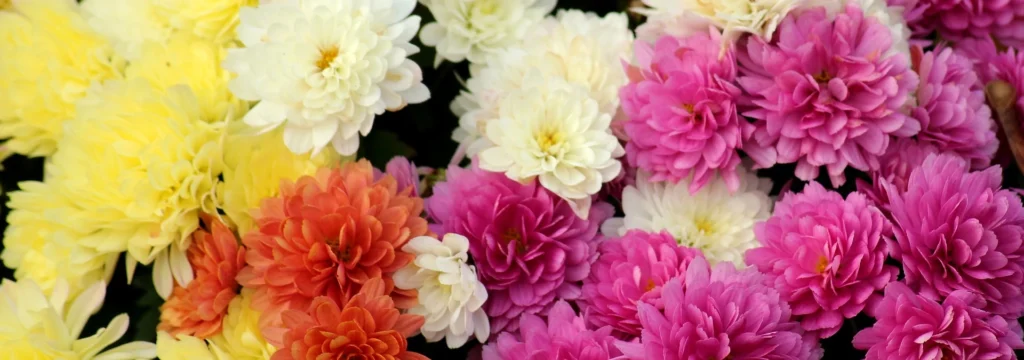
Chrysanthemums are among the classics of autumn flowers and are available in many colors, including white, yellow, pink, red and purple. They often bloom into late autumn and are frost-resistant. Chrysanthemums are suitable for both the garden and the balcony and combine well with other autumn plants.
- Care: They prefer sunny to partly shaded locations and require regular watering without waterlogging.
b) Autumn asters (Aster)
Autumn asters are low-maintenance perennials that turn the garden into a sea of blooms. Flower colors range from white through pink to deep violet. Autumn asters attract many insects and provide valuable food for bees and butterflies.
- Care: They prefer sunny locations and need well-draining soil. Pruning after flowering promotes growth in the following year.
c) Coneflower (Rudbeckia)
The coneflower brings warmth to the autumn garden with its bright yellow or orange flower heads. It blooms until the first frost and attracts many insects. The robust plants are also suitable for garden beds and naturalistic gardens.
- Care: Coneflower needs a sunny position and regular watering. It should be pruned in late autumn.
d) Ornamental kale
Ornamental kale is an exceptional plant for autumn, notable for its decorative, colorful leaves. It is available in white, pink and purple and retains its color even at cooler temperatures.
- Care: Ornamental kale prefers sunny to partly shaded positions and also tolerates frost. Regular watering is necessary, but waterlogging should be avoided.
e) Cyclamen (Alpenveilchen)
Cyclamen is a beautiful potted plant that also thrives outdoors. With its bright pink, red or white flowers and its heart-shaped leaves, it is an eye-catcher in the autumn garden or on the balcony.
- Care: Cyclamen prefer partly shaded locations and require well-draining soil. Waterlogging should be avoided.
3. Proper care for autumn flowers
Proper care of autumn flowers is essential to extend their flowering period and keep them healthy. Here are some care tips for autumn flowers:
a) Watering
Even in autumn, flowers need sufficient water, especially during extended dry periods. Ensure the soil is moist but not wet to avoid root rot.
b) Fertilizing
A final fertilization in early autumn can help the flowers store sufficient nutrients for the cold months. Use an organic long-term fertilizer that strengthens the plants naturally. Good fertilizers are available from ARIES.
c) Pruning
Many autumn flowers benefit from pruning after flowering. This not only promotes growth in the following year but also keeps the garden tidy and well maintained.
d) Protection from frost
While some autumn flowers are frost-hardy, others require additional protection, especially during severe frost. Potted plants should be moved to a sheltered location on colder nights. For garden flowers you can use mulch or brushwood to insulate the roots.
4. Combining autumn flowers effectively
Combining different autumn flowers can give your garden or balcony structure and color. You should rely on contrasts to create a varied appearance. Here are some combination ideas:
a) Colorful beds
Combine chrysanthemums, coneflowers and ornamental cabbage for a vividly colored bed. The bright hues of the chrysanthemums and coneflowers harmonize perfectly with the intense leaves of the ornamental cabbage.
b) Pots and balcony boxes
Alpine cyclamen and chrysanthemums in large pots are suitable for the balcony or terrace. You can complement these with grasses or ornamental cabbage to create height and structure.
c) Natural garden
For a more natural look, you can plant autumn asters and coneflowers in loose beds. These attract many insects and provide a lively, naturalistic garden.
5. The ecological value of autumn flowers
In addition to their aesthetic impact, autumn flowers also have a high ecological value. They provide insects such as bees, butterflies and bumblebees with an important food source even in late autumn. By planting autumn flowers in your garden, you contribute to the preservation of biodiversity and help extend the food supply for pollinating insects.
Additionally, many autumn flowers are very low-maintenance and require less water and fertilizer than summer flowers. This makes them an environmentally friendly choice for garden enthusiasts.
Conclusion
Autumn flowers bring color and life to the garden when many other plants have already finished flowering. With proper care and the selection of hardy varieties such as chrysanthemums, autumn asters, coneflowers and ornamental cabbage, you can keep your garden or balcony in full bloom into late autumn. Combining different autumn flowers provides variety and structure, while their colors harmonize perfectly with the autumn foliage. At the same time, autumn flowers help provide valuable food for insects even in colder months. With these tips you can enjoy the beauty of autumn in your garden while doing something good for the environment.