
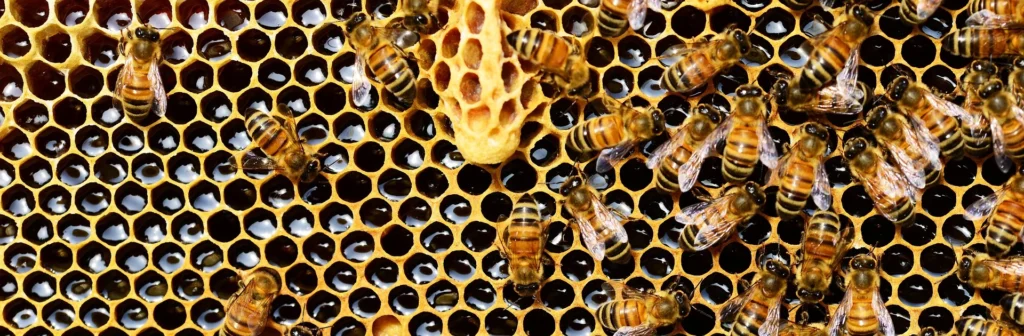
What is Bee Day?
The international Day of the Bee, also called the World Bee Day, is celebrated annually on 20 May. It was officially established in 2018 by the United Nations (UN) to draw global attention to the enormous importance of bees and other pollinators for our ecosystem and our food security.
The date was chosen deliberately: it is the birthday of the Slovenian beekeeper Anton Janša, who is regarded in the 18th century as a pioneer of modern beekeeping. Bee Day is intended to raise awareness of the threats faced by bees and to trigger concrete measures to ensure their protection in the long term.
The role of the bee in the ecosystem
Bees are more than just honey suppliers. They play an indispensable role in nature, particularly through their activity as pollinators. Over 80 % of native cultivated and wild plants depend on pollination by insects — above all by honey bees and wild bees.
Through their pollination services, bees contribute significantly to biodiversity and fruit set. Without them there would be less fruit, vegetables and flowering plants. Many forage crops for livestock would also be limited in their development without bees.
What bees pollinate:
- Fruit trees such as apple, pear, cherry
- Vegetables such as pumpkin, zucchini, beans
- Berries, shrubs
- Wildflowers and herbs
- Oil crops such as rapeseed or sunflowers
The honey bee – more than just a livestock animal
The honey bee is the best-known among bee species. It lives in large, well-organized colonies and has been cultivated by humans for centuries. Honey bees are particularly efficient at pollination because they work in large numbers in a confined area and transport pollen purposefully.
But wild bees — of which around 580 species are found in Germany alone — are also important pollinators. Many of them are specialized on certain plants, thereby fulfilling an indispensable ecological function.
Threats to bees – why they are at risk
The number of bees is declining worldwide. The decline affects both honey bees and wild bees. The causes are diverse:
- Pesticides and chemical fertilizers in agriculture
- Monocultures, that offer little food or habitat
- Changing climate that shifts flowering times
- Loss of nesting sites due to construction projects
This decline has not only ecological but also economic consequences. Without bees many food products would be significantly more expensive or unavailable.
Wild bees – pollinators and quiet heroes of nature
Wild bees are fascinating and highly important insects that often live in the shadow of the well-known honeybee. In Germany there are over 580 wild bee species, many of which are seriously endangered. Unlike honeybees, wild bees mostly live solitary lives and do not form colonies. Some nest in the ground, others in deadwood, walls, etc.
Wild bees play a crucial role in the ecosystem, as they pollinate a wide range of native plants—often even more efficiently than honeybees. They therefore contribute significantly to biodiversity, the preservation of natural habitats and the security of our food supply. Without wild bees there would be less fruit, vegetables and flowering landscapes.
But conditions for wild bees are increasingly deteriorating. Causes of their decline include intensive agriculture, pesticides, and the loss of flower-rich meadows and nesting sites. Over 50% of wild bee species in Germany are already listed on the Red List of endangered animal species.
How everyone can help
Protecting bees starts with ourselves. Everyone—whether in the city or the countryside—can achieve a lot through small measures.
Tips for everyday life:
- Plant bee-friendly plants on balconies or in the garden
- Avoid chemical plant protection products
- Allow wild corners where bees can nest
- Install insect hotels for wild bees
- Provide water sources for thirsty bees
Even small flowering areas or herb pots with lavender, sage, thyme or borage are valuable food sources for bees.
Activities for World Bee Day
Around May 20th many cities host events, information days, participatory activities and workshops. These focus on environmental education, beekeeping, species conservation and sustainability. Many schools, day-care centers and environmental centers use the day to craft, garden or build bee hotels with children.
Online campaigns and fundraising initiatives for bee-friendly projects are also launched around World Bee Day.
Importance of Bees for Agriculture and Food Supply
Bees are critical to our food security. About one third of global food production depends directly or indirectly on pollination by bees. Without them, many fruit and vegetable varieties would no longer be available in their usual form.
Agriculture benefits enormously from pollinators:
- Higher yields and better fruit quality
- More uniform growth
- Stable ecosystems through healthy plant diversity
As noted, without bees food prices would also be significantly higher, because yields would fail and manual pollination is not economically viable.
The Bee – Friendly Garden – How to Do It
Those who want to support them on a lasting basis should design their garden deliberately. A bee-friendly garden provides nectar and pollen throughout the season – from early bloomers to late bloomers.
Tips for a Bee-Friendly Garden:
- Plant early bloomers such as crocuses, snowdrops, lungwort
- Wildflower meadows instead of decorative lawns
- Herb beds with thyme, sage, lemon balm
- Fruit trees and shrubs such as apple, raspberry, elderberry
- Deadwood and open soil to provide nesting sites for wild bees
A nature-oriented garden does not require expensive purchases – it thrives on diversity and respect for nature.
Sustainable Consumption – What to Consider?
Honey is a popular natural product – but not all honey is produced in a bee-friendly way. Many products come from large-scale apiculture or are imported and contain blends from different countries.
When buying honey, pay attention to the following points:
- Regional honey from a local beekeeper
- Organic honey with seals such as Bioland, Demeter or Naturland
- Transparent sourcing and species-appropriate beekeeping
- Avoiding overseas honey imports
Less, but higher-quality honey is not only better for the bees, but often also more aromatic and healthier.
Education about bees
They are an ideal topic to make ecological interrelationships understandable to children and adolescents. Many schools and daycare centers now run their own bee projects, e.g. with school apiaries, garden projects or cooperations with beekeepers.
The aim is to raise awareness of the bee’s importance and biodiversity protection – long-term and hands-on.
Conclusion: Bee Day reminds us of responsibility and opportunities
Bee Day is more than an entry in the calendar. It reminds us how closely our lives are connected to nature – and how important it is to protect the small helpers of our ecosystems.
Whoever protects bees also protects biodiversity, the climate, the food supply and the natural balance. Protecting bees is not an option but a necessity. And each of us can be part of the solution – with flowers, with awareness and with heart.