
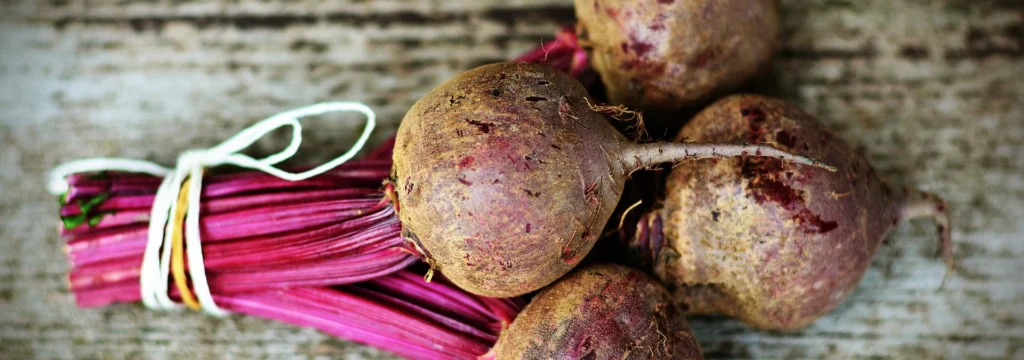
Beetroot, also known as red beet, is a versatile root vegetable characterized by its bright red color and sweet-earthy flavor. It has been valued for centuries both as a food and as a medicinal plant. In this article you will find everything worth knowing about beetroot, from its health benefits and culinary uses to practical tips for preparation.
What is beetroot?
Beetroot belongs to the amaranth family and is closely related to Swiss chard and sugar beet. Its origins lie in the Mediterranean region, but it is now cultivated worldwide. The spherical tuber is the plant’s most recognizable feature, but the leaves are also edible and nutrient-dense. The intense color comes from betanin, a natural dye used in both the food industry and natural cosmetics.
Nutrients and health benefits
Beetroot is nutrient-dense and contains important vitamins such as vitamin C, folate and B vitamins, as well as minerals like potassium, iron and magnesium. In addition, it is rich in antioxidants, fiber and secondary plant compounds that provide a range of health benefits.
Preparation
Beetroot is a versatile and nutrient-rich root vegetable that is becoming increasingly popular in the kitchen. Whether raw, boiled, baked or pickled – beetroot can be prepared in many different ways.
Preparation: Proper handling of beetroot
Before preparing beetroot, you should handle it correctly. The tubers can be processed raw or cooked before further preparation. To avoid stains from the red juice, it is advisable to wear disposable gloves and use a dedicated cutting board.
- Cleaning: Wash the tubers thoroughly under running water to remove dirt and soil. The skin should not be removed before cooking, as it protects the color and flavor.
- Peeling: For raw preparation, peel the tubers with a vegetable peeler. After cooking, the skin can be easily rubbed off by hand.
Methods of preparation
Boiling
Boiling is one of the most common methods to prepare the vegetable. It makes the tubers tender and preserves the intense flavor.
- Place the unpeeled tubers in a pot with enough water. Optionally, you can add a little vinegar or lemon juice to preserve the color.
- Bring the water to a boil and simmer the beetroot for 30 to 50 minutes, depending on size, until tender.
- Cool the tubers under cold water, then peel them by hand.
Baking
Baking intensifies the sweet flavor and produces a distinctly aromatic character.
- Wrap the washed tubers individually in aluminum foil, or place them in an ovenproof dish with a lid.
- Bake the beetroot at 200 degrees Celsius for about 40 to 60 minutes, until tender. Exact cooking time depends on the size of the tubers.
- Allow the beetroot to cool slightly before removing the skin.
Steaming
Steaming is a particularly gentle method that preserves many nutrients and the beetroot’s intense color.
- Cut the tubers into quarters or slices to reduce cooking time.
- Place the beetroot in a steamer basket and steam over boiling water for about 20 to 30 minutes, until tender.
Raw
Beetroot can be eaten raw and is particularly crisp and fresh in flavor. It is ideal for salads or smoothies.
- Peel the tubers with a vegetable peeler.
- Grate or slice the beetroot thinly and dress it with lemon juice, olive oil and salt.
Pickling
Pickled beetroot is a way to extend shelf life and impart a sweet-and-sour flavor.
- Cook the beetroot first and slice it.
- Prepare a brine of vinegar, water, sugar and spices such as bay leaves, cloves and mustard seeds.
- Layer the beets in sterilized jars and pour the hot brine over them. Seal the jars immediately.
Popular recipes with beetroot
Beetroot Soup (Borscht)
A traditional Eastern European soup that is rich in flavor and nutrients.
Ingredients
- 3 large beetroots
- 2 carrots
- 1 onion
- 1 potato
- 1 liter vegetable broth
- 2 tbsp lemon juice
- Salt and pepper to taste
- Fresh sprigs of dill for garnish
Preparation
- Peel and dice the beetroots, carrots, onions and potatoes.
- Sauté the vegetables in a pot with a little oil, then add the vegetable broth.
- Simmer until the vegetables are soft. Season with lemon juice, salt and pepper.
- Puree the soup until smooth and garnish with fresh dill.
Beetroot Carpaccio
A light, elegant dish ideal as a starter.
Ingredients
- 2 large beetroots, cooked
- 2 tbsp olive oil
- 1 tbsp balsamic vinegar
- Salt and pepper to taste
- Fresh arugula and walnuts for garnish
Preparation
- Slice the beetroots thinly and arrange on a plate.
- Drizzle with olive oil, balsamic vinegar, salt and pepper.
- Garnish with fresh arugula and chopped walnuts.
Beetroot Smoothie
A refreshing, healthy start to the day.
Ingredients
- 1 raw beetroot
- 1 apple
- 1 carrot
- 250 ml water or orange juice
- a piece of ginger
Preparation
- Peel the beetroot, apple and carrot and cut into small pieces.
- Place all ingredients in a blender and blend until smooth.
Tips for preparation
- Protection against staining: The intense color can stain hands and surfaces. Use disposable gloves and a cutting board that is easy to clean.
- Storage: Store beetroot in a cool, dark place to preserve its freshness. Remove the leaves, as they draw moisture from the root.
- Use the leaves: The leaves of beetroot are edible and can be prepared like spinach.
Conclusion
Beetroot is a nutrient-rich, versatile and flavorful vegetable that offers advantages both in the kitchen and for health. With its notable nutrient profile and flexibility in preparation, it enhances any meal. Whether raw, cooked or pickled — beetroot can be enjoyed in countless ways and should be part of a healthy diet. Try the recipes presented and discover the range of this remarkable root vegetable.