
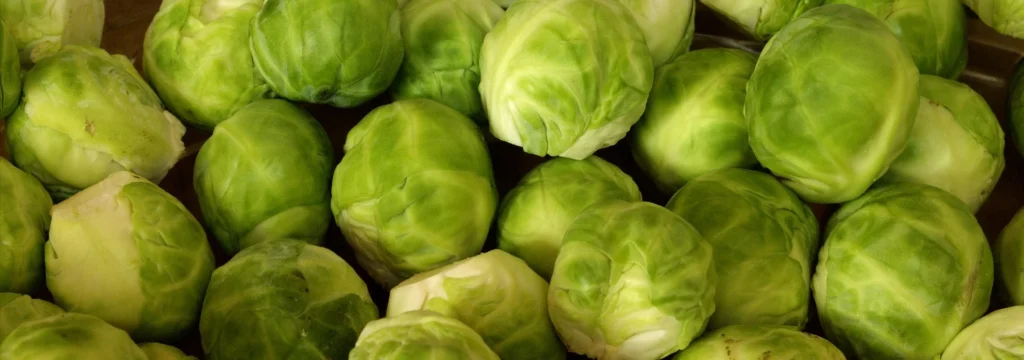
Brussels sprouts are one of the classic winter vegetables and are valued for their numerous nutrients and distinctive flavor. The small, compact heads are rich in vitamins and minerals and can be prepared in a variety of ways in the kitchen. Whether as a side dish, in casseroles or as the main component of a dish – the vegetable is tasty, regional and nutrient-dense. In this article you will learn everything about origin, health benefits and preparation options.
What are Brussels sprouts?
Brussels sprouts (Brassica oleracea var. gemmifera) belong to the Brassicaceae family and are closely related to other cabbage varieties such as white cabbage, broccoli and kale. The small green heads grow on a long, sturdy stalk and develop along its sides. They are particularly popular in the winter months because they tolerate frost and even develop a sweeter flavor at low temperatures.
History
The vegetable’s origin lies in Belgium, where it was first cultivated in the 16th century. For that reason it is called “Brussels cabbage” in some regions. From Belgium, cultivation of the vegetable spread across Europe and eventually worldwide. Today it is primarily grown in temperate climates such as Germany, the Netherlands and the United Kingdom.
Nutritional values and health benefits
Brussels sprouts are not only a culinary highlight, but also a true nutrient powerhouse. They contain:
- Vitamins
Brussels sprouts are particularly rich in vitamin C, which strengthens the immune system and acts as an antioxidant. With just 100 g they already cover the daily requirement for vitamin C. They also contain vitamin K. - Dietary fiber
With around 4 g of fiber per 100 g the vegetable promotes digestion and provides lasting satiety. - Antioxidants
The secondary plant compounds they contain, such as glucosinolates, can have anti-inflammatory effects. - Low in calories
With only about 40 calories per 100 g it is a light and healthy addition to any meal. - Minerals
Brussels sprouts contain important minerals such as potassium, magnesium and iron.
Tips for buying and storage
- Recognizing freshness
Fresh Brussels sprouts have tightly closed, deep-green heads without yellow or brown spots. The sprouts should be small to medium-sized, as these are more tender in flavor. - Storage
It should be kept in the refrigerator, preferably in the vegetable drawer. There it will stay fresh for up to one week. For longer shelf life it can be blanched and frozen.
Preparation
Preparation is versatile and simple. To allow it to develop its full flavor and avoid bitterness, a few basic rules should be observed:
- Preparation
Remove the outer, damaged leaves and cut the stem crosswise so it cooks evenly. - Blanching
Blanch it in boiling salted water for 3–5 minutes to reduce the bitter taste and preserve the green color. - Roasting
Brussels sprouts roast very well in the oven. Cut the sprouts in half, toss them with olive oil, salt, pepper and spices of your choice, and bake at 200 °C for 20–25 minutes. - Steaming or boiling
Steam them in a little water or vegetable broth until tender but still al dente. Alternatively, you can cook them in a pot with water and a knob of butter. - Enjoy Brussels sprouts raw
Finely shaved Brussels sprouts can also be enjoyed raw as a salad. Combine them with apples, walnuts and a dressing of olive oil and lemon juice.
Recipes
1. From the oven
- Ingredients: 500 g Brussels sprouts, 2 tbsp olive oil, salt, pepper, paprika powder
- Preparation: Halve the Brussels sprouts, toss with olive oil and spices and spread on a baking sheet. Roast at 200 °C for about 20 minutes until golden brown.
2. Brussels Sprout Gratin
- Ingredients: 500 g Brussels sprouts, 200 ml cream, 100 g grated cheese, nutmeg, salt, pepper
- Preparation: Blanch the Brussels sprouts, place them in a baking dish, pour over the cream and sprinkle with cheese. Bake at 180 °C for about 25 minutes.
3. Brussels Sprout Salad
- Ingredients: 300 g Brussels sprouts, 1 apple, 50 g walnuts, 2 tbsp olive oil, 1 tbsp lemon juice, honey, salt, pepper
- Preparation: Finely shred the Brussels sprouts, combine with apple pieces and walnuts. Add a dressing of olive oil, lemon juice, honey and seasonings.
Sustainability
Brussels sprouts are an environmentally friendly vegetable that is available regionally and seasonally during the winter. Cultivation requires comparatively few resources, and short transport times when purchased locally minimize the ecological footprint. When buying, opt for organic quality to make a sustainable, pesticide-free choice.
Conclusion
Brussels sprouts are a nutrient-dense winter vegetable that is not only healthy but also highly versatile in the kitchen. Whether roasted, steamed, gratinated or served in a salad — the small sprouts appeal to every palate. With the right preparation methods, Brussels sprouts develop their mild, slightly nutty flavor and become the highlight on your plate. Try the recipes presented and enjoy the benefits of this superfood.