
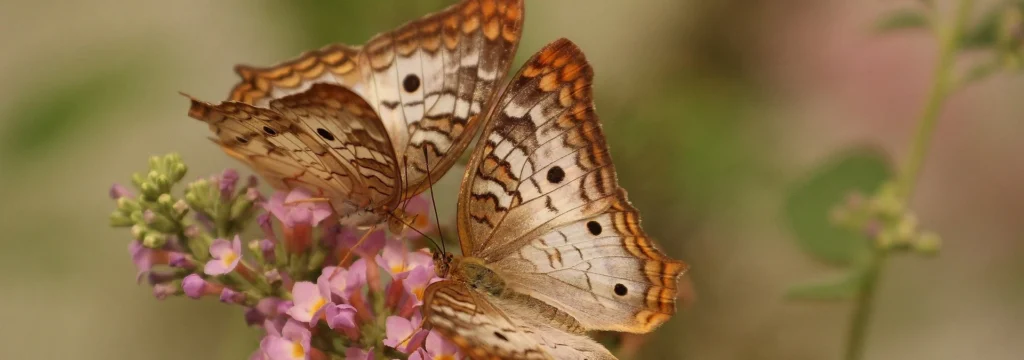
Butterflies are among the most fascinating insects in the world. Their vivid colors, graceful flight movements and their remarkable transformation from egg to caterpillar and finally to the delicate winged insect make them a symbol of change and beauty. Yet behind their fragile appearance lies a complex way of life that goes far beyond what is apparent at first glance.
Butterflies
Butterflies belong to the order Lepidoptera, which means “scale-winged”. This name comes from the tiny scales that cover their wings and produce the colorful variety. More than 180,000 species are known worldwide; in Germany alone there are around 3,700 different species – both diurnal butterflies and nocturnal moths.
The life cycle
The metamorphosis of a butterfly is one of the most remarkable biological processes in the animal kingdom. The life cycle consists of four main phases:
- Egg: Female butterflies lay their eggs on specific host plants. This selection is critical, because the caterpillars can feed only on certain plants.
- Caterpillar (larva): After hatching the caterpillar immediately begins feeding. In this phase it grows rapidly and molts several times.
- Pupa (chrysalis): After the final molt the caterpillar pupates. Inside the protective casing the complete transformation into the adult butterfly takes place – a process that can take days to weeks depending on the species.
- Imago (adult butterfly): Finally the finished butterfly emerges from the pupa. After its wings have dried it begins searching for food and a mating partner.
Habitats and distribution
Butterflies live in almost all regions of the planet – from tropical rainforests through alpine mountain landscapes to our domestic gardens and meadows. They are particularly species-rich in warm, flower-rich areas. Each species, however, has specific habitat requirements – for example with regard to temperature, humidity and the presence of particular plant species.
In Central Europe many butterflies depend on flower-rich meadows, forest edges, wetlands and traditional orchard meadows. But due to intensive agriculture, the disappearance of wild herbs and the use of pesticides, many of these habitats are threatened.
Importance of butterflies in the ecosystem
Butterflies are not only beautiful to look at – they also play an important role in nature. As pollinators they help many plants reproduce, similar to bees. They are also a significant part of the food chain: their eggs, caterpillars and adult stages serve as food for birds, bats and other insects.
In addition, butterflies are considered bioindicators. This means that their presence or disappearance reveals much about the condition of an ecosystem. Where there is a high diversity of butterflies, the natural environment is usually still intact.
Threats to and protection of butterflies
Unfortunately, the number of butterflies is declining sharply in many regions. Causes for this include:
- Loss of habitats due to development, monocultures and road construction
- Use of pesticides and herbicides in agriculture
- Light pollution, which particularly disturbs nocturnal species
- Climate change, which disrupts the balance in many ecosystems
Targeted measures are necessary to protect them. These include the preservation and restoration of near-natural habitats, refraining from chemical plant protection products and the promotion of wild plants.
What can individuals do?
Much can be done for butterflies even in your own garden or on the balcony:
- Plant native wildflowers such as meadow sage, viper’s bugloss or knapweed. They provide food for many species.
- Avoid pesticides – many chemical agents are lethal to caterpillars and adult butterflies.
- Let a corner go „wild“, where nettles and thistles are allowed to grow. These plants are important food sources for caterpillars.
- Create flowering meadows instead of ornamental lawns, as they favour diversity over monoculture.
- Provide water spots and sunny places, since butterflies prefer warm and dry conditions.
Fascinating diversity – a brief overview
Some well-known butterfly species in Germany:
- Red Admiral (Vanessa atalanta): A migratory butterfly with a striking red-and-black pattern.
- Peacock butterfly (Aglais io): Known for its eye-like spots, which are intended to deter predators.
- Small Tortoiseshell (Aglais urticae): A widespread species whose caterpillars feed almost exclusively on nettles.
- Swallowtail (Papilio machaon): One of the largest and most impressive native diurnal butterflies.
- Brimstone (Gonepteryx rhamni): One of the first species in spring, often already visible in February.
Conclusion
Butterflies are far more than colorful beauties – they are indispensable components of our environment. Their decline is a warning signal and demonstrates how urgently we must act. With small changes in everyday life, anyone can help provide habitat and food for butterflies. Only in a diverse, flowering landscape can future generations experience the presence of these delicate creatures.