
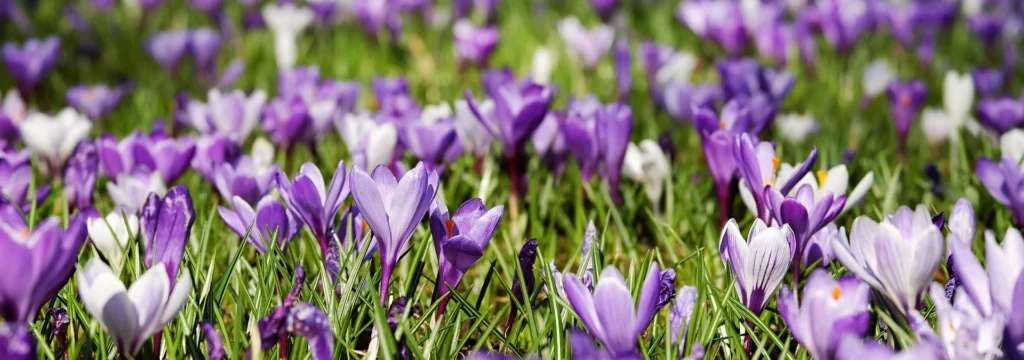
Early bloomers are plants that flower in early spring and therefore provide the first splashes of color in nature. These plants have adapted over the course of evolution to the still-cool temperatures and often damp soil conditions. Below you will find a selection of well-known early bloomers.
Snowdrops: The delicate harbingers of spring
Snowdrops are among the first flowers to bloom each year and are therefore often referred to as „harbingers of spring.“ These delicate blooms are not only attractive but also have an interesting history and significance.
Appearance and distribution
Snowdrops belong to the Amaryllis family and are native to Europe, Asia and North Africa. The flowers consist of six white petals shaped like small bells. The stem is thin and flexible, and the leaves are narrow and elongated. Snowdrops prefer to grow in deciduous woodlands and on damp meadows and typically bloom between January and March.
History and significance
Snowdrops have a long history and are associated with various meanings in many cultures. In ancient Greek mythology, snowdrops were linked with Persephone, the goddess of the underworld and of spring. It was said that the flowers grew from the ground each year when Persephone left the underworld to bring spring to the earth.
In Christianity, snowdrops also hold a particular significance. The flowers are often associated with Mary and symbolize purity and innocence. There is also a legend that snowdrops arose from the tears Adam shed after the Fall.
Care and use
Snowdrops are relatively low-maintenance plants and require little attention. They prefer moist soil and partially shaded locations. Snowdrops can be grown both in the garden and in pots and are well suited for spring plantings.
Snowdrops are also used in floristry, particularly in bouquets and arrangements. The delicate flowers provide a pleasing contrast to other spring blooms such as daffodils and tulips.
Overall, snowdrops are a valuable addition to any garden or balcony and delight us each year with their delicate flowers. They are a symbol of the start of spring and a reminder that nature is continually renewed and regenerates.
Colorful Crocuses
Crocuses also bloom early in spring and are among the best-known spring flowers. The blossoms are usually lilac, violet or white and open as soon as the sun shines. Crocuses are well suited for planting in beds and lawn areas.
Crocuses are among the most popular spring flowers and are a reliable sign that winter is over. These colorful flowers are not only pleasant to look at but also have an interesting history and significance.
Appearance and Distribution
Crocuses belong to the iris family and are native to Europe, Asia and North Africa. The flowers consist of six petals in various colors, including purple, yellow and white. The stem is thin and flexible, and the leaves are narrow and grass-like. Crocuses prefer meadows, gardens and parks and usually bloom between February and April.
History and Significance
Crocuses have a long history and are associated with various meanings across many cultures. In ancient Greece crocuses were linked to the goddess Persephone, who embodied spring and growth. In Persia crocuses were used to produce saffron, one of the world’s most expensive spices.
In the Christian tradition crocuses hold particular significance as a symbol of resurrection and new life. The color purple represents mourning and penitence, while white stands for purity and innocence.
Care and Use
Crocuses are relatively low-maintenance plants and require little attention. They prefer a sunny to partially shaded location and well-draining soil. Crocuses can be cultivated both in the garden and in pots and are excellent for spring plantings.
In floristry crocuses are often used for spring bouquets and arrangements. The colorful blooms provide a pleasing contrast to other spring flowers such as daffodils and tulips.
Overall, crocuses are a wonderful addition to any garden or balcony and delight us each year with their colorful blooms. They are a symbol of the start of spring and a reminder that life renews and blossoms again and again.
Daffodils: Attractive early bloomers with symbolic significance
Narcissi are one of the best-known spring flowers and are popular in gardens and parks. However, there are also narcissi in other colors, such as white or orange. The plant prefers sunny locations and should not be kept too wet. These beautiful flowers not only have an impressive appearance but also an interesting history and meaning.
Appearance and distribution
Narcissi belong to the Amaryllis family and are native to Europe, Asia and North Africa. The flowers consist of six petals in various colors, including white, yellow and orange. The stem is straight and robust, and the leaves are long and narrow. Narcissi usually bloom between March and April and are particularly popular in Great Britain and the Netherlands.
History and meaning
Narcissi have a long history and are associated with different meanings across many cultures. In ancient Greece, narcissi were linked to the story of Narcissus, who fell in love with his reflection and eventually transformed into a narcissus. In Christian tradition, narcissi symbolize the resurrection and new life and are often used at Easter.
Care and use
Narcissi are relatively low-maintenance plants and require little attention. They prefer a sunny to partially shaded location and well-drained soil. Narcissi can be grown both in the garden and in pots and are well suited for spring plantings. Be aware, however, that narcissi are toxic to pets, particularly cats and dogs.
In floristry, narcissi are frequently used in spring bouquets and arrangements. The colorful flowers provide an effective contrast to other spring blooms such as tulips and hyacinths.
Overall, narcissi are a valuable addition to any garden or balcony and return each year with their colorful display. They are a symbol of the beginning of spring and a reminder that life is continually renewed and flowers again.
Tulips: One of the best-known early bloomers
Tulips are one of the best-known spring flowers and are popular in gardens, parks and as cut flowers. Flower forms range from single to double, and tulips are available in various sizes. Tulips prefer sunny locations and should be watered regularly.
They not only have an impressive appearance but also an interesting history and meaning.
Appearance and distribution
Tulips belong to the lily family and are primarily found in Europe and Asia. Tulip flowers are available in many colors, including red, yellow, orange, pink and white. The flower form ranges from single to double and can also be ruffled or fringed. The stems are long and sturdy, and the leaves are long and narrow.
History and significance
Tulips have a long history and are associated with various meanings in many cultures. In the Ottoman Empire, tulips were revered in the 16th and 17th centuries as a symbol of beauty and wealth. Tulips were later associated with Holland, where they became a national emblem. In the language of flowers, tulips signify love and affection.
Care and use
Tulips are relatively easy to care for and require a sunny to partly shaded location and well-drained soil. They are planted in autumn and bloom in spring. Tulips can be grown both in the garden and in pots and are well suited for spring plantings. In floristry, tulips are often used for spring bouquets and arrangements.
Overall, tulips are a wonderful addition to any garden or balcony and delight us year after year with their colorful blooms. They are a symbol of the beginning of spring and a reminder that life is continually reborn and blossoms.
Conclusion: Early spring bulbs
Early spring bulbs are a wonderful way to welcome spring and enjoy nature. They provide an important food source for bees and other insects and can help promote biodiversity. Plant a few early spring bulbs in your garden or on your balcony and enjoy the first splashes of color in spring.