
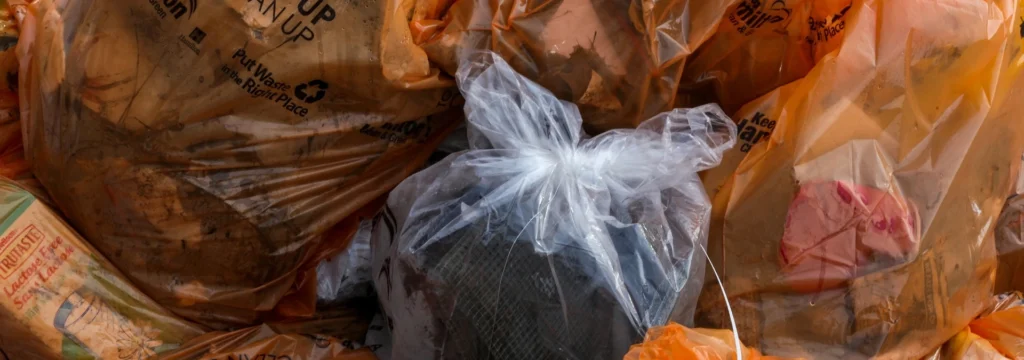
Residual waste, also referred to as residual refuse, is waste that cannot be recycled or otherwise reused. It comprises materials that are neither paper, glass, plastics nor organic waste. However, there are some limitations regarding what may be placed in residual waste and what may not.
What may go into residual waste?
Examples of items that belong in residual waste include:
- Diapers
- Cat litter
- Hygiene items such as tampons and sanitary pads
- Cigarette butts
- Ash and barbecue charcoal
- Vacuum cleaner bags
- Chewing gum
- Candle remnants
- Pacifiers
- Disposable razors
In general, any waste that is not recyclable or that interferes with waste processing can be placed in residual waste.
What does not belong in residual waste?
There are also wastes that should not go into residual waste because they are hazardous or do not decompose completely:
- Batteries
- Solvents
- Medications
- Paints and varnishes
- Electronic waste
- Fluorescent tubes
- Oil and fats
- Chemicals
- Acids and alkalis
- Asbestos
These wastes must be disposed of properly to avoid environmental damage. They can, for example, be taken to the hazardous waste collection vehicle or to a hazardous waste collection point.
Residual waste reduction: How you can reduce waste in everyday life
Residual waste is a burden on the environment and strains resources. An important step in reducing residual waste is therefore to handle waste consciously and to reduce waste in everyday life. Below are some tips that can help you reduce your waste:
1. Avoid unnecessary packaging
Many products are unnecessarily packaged in plastic and other materials. Therefore, try to buy products without or with minimal packaging. Bring your own reusable bags, nets or containers to avoid purchasing plastic bags and packaging.
2. Compost organic waste
Composting biowaste is a simple and effective way to reduce waste while producing nutrient-rich fertilizer for the garden or agriculture. Organic waste such as kitchen waste, garden waste and leaves often make up the largest share of household waste and can pose an environmental burden if stored in landfills or incinerated.
What is biowaste?
Biowaste is organic waste that is biodegradable and composed of plant or animal materials. The most common biowaste includes:
- Kitchen waste such as fruit and vegetable scraps, coffee grounds, eggshells and food leftovers
- Garden waste such as grass clippings, leaves and branches
- Non-edible plant residues such as flowers or potted plants
- Small pet bedding such as straw or hay
Why compost biowaste?
Composting biowaste provides several benefits:
- Reduction of household waste volume
- Reduction of greenhouse gas emissions from landfilling or incineration of biowaste
- Production of nutrient-rich fertilizer for the garden or agriculture
- Cost savings by reducing the need for commercial fertilizer
How is biowaste composted?
Biowaste can be composted in several ways, including:
- Open composting in the garden
- Closed composting in a container
- Vermicomposting in a dedicated worm composter
Regardless of the method, the compost pile must be turned regularly to ensure sufficient aeration and mixing. It is also important to maintain the correct carbon-to-nitrogen ratio to produce healthy compost.
Composting organic waste is a simple and effective way to reduce waste while producing nutrient-rich fertilizer. By composting our organic waste we can lower our environmental footprint and contribute to sustainability.
3. Use recycling options
Recycling is an effective way to reduce waste and conserve resources. Place your recyclable materials in the recycling container and ensure they are correctly separated. Also inform yourself about the recycling options available in your municipality and make use of them — recycling is an important component of environmental protection and sustainability. By reusing materials we can preserve valuable resources and reduce waste.
Why use recycling options?
There are several reasons to use recycling options:
- Conservation of resources through the reuse of materials
- Reduction of waste volumes by avoiding landfilling
- Lower greenhouse gas emissions by reducing energy and raw material consumption when manufacturing products from recycled materials
- Protection of the environment and natural resources
Which materials can be recycled?
There is a wide range of materials that can be recycled, including:
- Paper and cardboard
- Glass
- Plastics
- Metals such as aluminum and steel
How can recycling options be used?
There are many ways to make use of recycling options and thereby contribute:
- Sorting waste and placing it in the appropriate containers
- Using neighborhood recycling containers
- Participating in recycling programs offered by municipalities and companies
- Using products made from recycled materials, such as recycled paper, glass, or aluminum
Using recycling options is an important way to contribute to environmental protection and sustainability. By reusing materials and reducing waste we can save resources and protect the environment.
4. Repair or donate items
Before you throw something away, consider whether it can be repaired or donated. Often items such as clothing, electronics or furniture can be repaired and reused. Instead, give these items to charitable organizations or second-hand shops.
5. Use reusable products
By using reusable products such as water bottles, coffee cups and shopping bags, you can help reduce waste. Therefore avoid single-use products and choose durable, reusable alternatives instead.
6. Avoid single-use items
Single-use items such as plastic bags, disposable tableware and single-use bottles are a growing environmental problem and contribute to pollution of oceans and landscapes. A simple way to protect our environment is to avoid single-use items and use reusable alternatives instead.
Why avoid single-use items?
There are several reasons why we should avoid single-use items:
- Reducing waste volume
- Reducing pollution of oceans and landscapes
- Saving money by using reusable alternatives
- Reducing the use of limited resources such as oil and gas in the production of single-use items
How can single-use items be avoided?
There are many ways to avoid single-use items and use reusable alternatives instead:
- Use reusable shopping bags made of cotton or jute when shopping
- Use reusable water bottles made of glass or stainless steel instead of single-use bottles
- Use reusable tableware and cutlery instead of single-use items at events or picnics
- Use reusable coffee cups instead of disposable cups
In summary, avoiding single-use items is a simple and effective way to protect our environment and contribute to sustainability. By using reusable alternatives instead, we can reduce waste and conserve limited resources. It is time to rethink our habits and move toward more sustainable choices.