
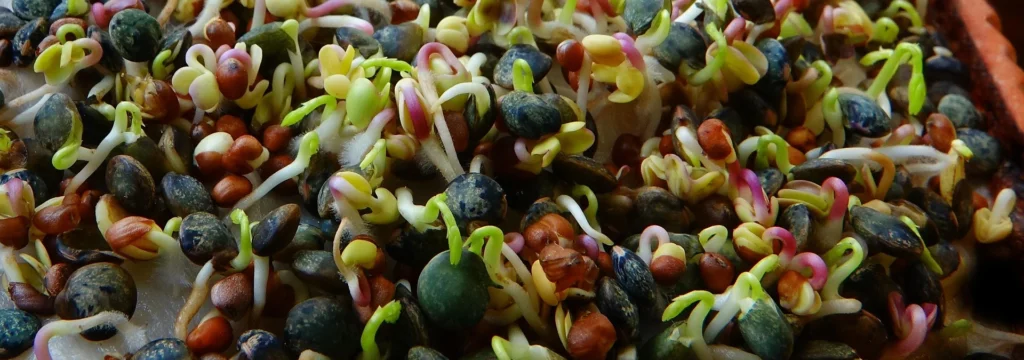
Growing sprouts is one of the simplest and most sustainable methods to produce fresh, nutrient-rich food directly at home. Especially for those with limited space or no garden, growing sprouts is an excellent way to enrich your diet. In this article you will learn how to grow sprouts at home, what benefits they offer for your health, and which different types of sprouts you can cultivate.
Why grow sprouts?
Sprouts are true nutrient-dense foods. They contain many vitamins, minerals and antioxidants that may not be as concentrated in other fresh foods. What is remarkable about sprouts is that they multiply their nutrients during germination. In the process they contain more protein, fiber, vitamins and minerals than the mature seeds or plants from which they originate. Sprouts are therefore an excellent addition to your diet.
Another advantage of sprouting is that it is a very fast method of food production. In just a few days you can harvest and enjoy your own fresh sprouts — without elaborate gardening or long waiting times. Sprouts are also ideal for preparing salads, sandwiches or as a healthy snack between meals.
Which sprouts can you grow?
There are a variety of sprouts you can grow at home, and each variety offers its own health benefits. Among the most popular sprouts are:
- Alfalfa sprouts (Luzerne-Sprossen): These sprouts are particularly rich in vitamin K, folate, iron and calcium. Alfalfa sprouts have a mild, slightly nutty flavor and are well suited to salads, sandwiches and wraps.
- Radish sprouts: Radish sprouts have a piquant, slightly sharp flavor similar to that of mature radishes. They contain many vitamins and minerals, particularly vitamin C and potassium.
- Cress sprouts: These sprouts are known for their sharp, peppery flavor. They contain a lot of vitamin C and aid digestion.
- Fenugreek sprouts: These sprouts have a somewhat bitter taste but are rich in iron, vitamin C and other important nutrients. They are especially popular in Indian cuisine.
- Mung bean sprouts: Mung bean sprouts are widespread in Asian cuisine. They are rich in protein, fiber and antioxidants and have a mild flavor that pairs well with various dishes.
How do you grow sprouts at home?
Growing sprouts is simple and does not require any special prior knowledge. The basic steps are always similar, regardless of which variety you choose. Here is a detailed step-by-step guide on how to successfully grow sprouts at home:
- Preparing the seeds: First you need sprouting seeds. You can buy these at organic food stores, health food shops, or online. Make sure the seeds are suitable for sprouting and have not been treated. Many seed brands offer dedicated sprout mixes that are particularly practical for beginners.
- Soaking: Place the seeds in a jar or a bowl and cover them with water. The water level should be approximately three times the height of the seeds. Let the seeds soak for 8 to 12 hours — this helps them to germinate. For larger seeds, such as mung beans, soaking can take up to 12 hours.
- Rinsing: After the soaking period, drain the water and rinse the seeds thoroughly under running water. This helps remove any dirt or bacterial residues from the seeds.
- Germination: After the seeds have been soaked and rinsed, place them in a sprouting jar or on a germination device. A dedicated sprouting jar or a sprout sieve is ideal because it allows good ventilation and lets excess water drain. If you do not have a dedicated sprouting jar, you can also cover a regular jar with a fine sieve or a cloth to promote air exchange.
- Water and air: Place the germination jar in a warm location, but not in direct sunlight. An ideal temperature is about 18 to 22 degrees Celsius. Rinse the seeds daily with fresh water to prevent mold growth and to support germination.
- Harvest: Depending on the variety, the sprouts require between 3 and 7 days to grow. When they have reached the desired size — about 2 to 5 cm — they can be harvested. Be careful not to let the sprouts grow too long, as they will become less tender and may turn bitter.
- Storage: After harvest, the sprouts should be rinsed thoroughly and stored in an airtight container in the refrigerator. This will keep them fresh for several days.
Benefits of sprouting
Growing sprouts at home offers many advantages, both nutritionally and practically:
- Nutrient-dense: Sprouts are highly nutrient-dense and provide a range of vitamins, minerals, antioxidants and fiber. They are particularly rich in vitamin C, iron, magnesium and potassium.
- Quick and simple: Sprouting is one of the fastest ways to obtain fresh food. In just a few days you can already harvest and enjoy them.
- Space-saving: Sprouts do not require a garden or large space. You can grow them in small containers or sprouting jars on the windowsill, making them an ideal option for small flats or homes without a garden.
- Cost-effective: Sprouting seeds are relatively inexpensive, and once purchased they can be used repeatedly, as the seeds last for many harvests. They therefore provide a cost-effective way to obtain fresh food.
- Sustainable: Growing sprouts is a sustainable method of food production. They require little water, no pesticides, and can even be grown in recycled containers or jars.
Conclusion
Sprouting is a simple, healthy and sustainable way to enrich your diet. It requires little space and time, yet delivers numerous health benefits and fresh, nutritious food. Whether for salads, sandwiches, or as a snack – sprouts are versatile and tasty. If you have not started sprouting yet, now is the perfect time to try it and enjoy the many advantages of these green powerhouses.