
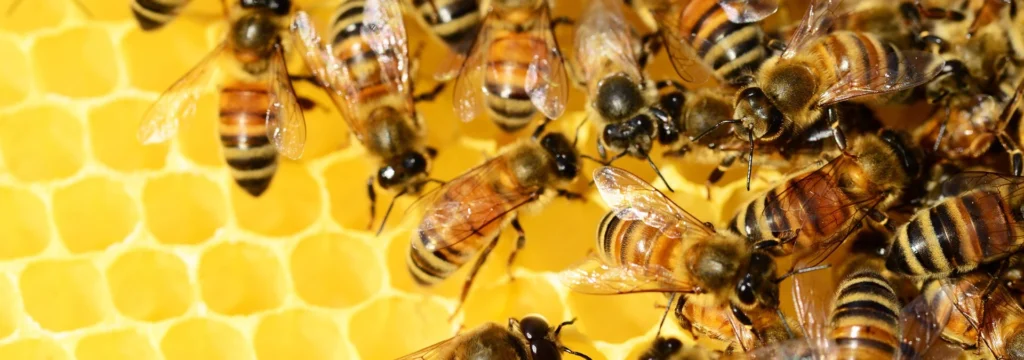
The honey bee is far more than a mere supplier of honey. It is a central component of our ecosystem and plays a critical role in pollinating plants, securing harvests and maintaining biodiversity. In a world increasingly burdened by environmental stressors, the importance of the honey bee is coming into sharper focus. This article provides a comprehensive overview of the honey bee, its way of life, its benefits for nature and people, and how we can actively support its protection.
What are honey bees?
Honey bees belong to the family Apidae and are domesticated insects originally native to Europe, Africa and Asia. The best-known species is the Western honey bee (Apis mellifera), which is distributed worldwide. Honey bees live in large, well-organized colonies led by a queen. Their tasks include collecting nectar and pollen, pollinating flowering plants, and producing honey, wax and royal jelly.
A bee colony can consist of up to 50,000 individuals during the peak season. Each member assumes a specific role: workers collect food, clean the hive, feed the brood and defend the colony. Drones, the male bees, have the task of mating with a queen. The queen’s sole role is to lay eggs, thereby ensuring the colony’s survival.
Life cycle and structure of a bee colony
The life cycle of the honey bee is complex and closely linked to the seasons. In spring the queen begins to lay eggs from which workers emerge. These perform duties inside the hive during the first days and later act as foragers in the field. Drones hatch in late spring and are needed in summer to mate with new queens. In autumn most drones die, and the colony prepares for winter.
A healthy hive consists of:
A queen that can lay up to 2,000 eggs per day
Thousands of workers that take on different tasks depending on age
Several hundred drones during the breeding season
In winter the colony forms a winter cluster, in which the bees warm each other by muscular shivering to withstand temperatures down to -20 °C.
The importance of the honey bee for the environment
Honey bees are the most important pollinators for many wild and cultivated plants. Without them, the yields of many fruit, vegetable and oilseed crops would be drastically reduced. Studies estimate that around one third of our food depends on insect pollination — and the honey bee plays a significant role in this.
Pollination of fruit trees such as apples, cherries and pears
Support for agriculture in the cultivation of vegetables and oilseed crops
Promotion of biodiversity through the pollination of wild-growing plants
Contribution to the preservation of habitats for numerous animal species
Without honeybees, the ecological balance would be severely disrupted and the diversity of our food supply significantly reduced.
The products
Honeybees are known for their products, which are valued both in nutrition and in medicine.
Honey:
The best-known and oldest natural substance produced by bees. Honey contains sugars, vitamins, enzymes and minerals. It has antibacterial and anti-inflammatory properties and supports the immune system.
Beeswax:
A natural product used for candles, cosmetics, personal care items and as an environmentally friendly alternative to plastic packaging.
Propolis:
The bees‘ propolis has strong antibacterial, antiviral and anti-inflammatory effects. We recommend the Bergland Propolis tincture.
Royal jelly:
The feeding secretion for queens contains a high concentration of proteins, vitamins and minerals and is valued in naturopathy as a vital nutrient.
Bee pollen:
A natural source of protein, rich in vitamins and minerals.
Threats to the honeybee
Despite their enormous importance, the honeybee is highly threatened today. The causes are varied:
Loss of habitats due to intensive agriculture, urbanization and monocultures
Use of pesticides that harm or kill bees
Parasites such as the Varroa mite, which weaken entire bee colonies
Climate change, which affects plant flowering behavior and the availability of food
Diseases and viral infections that spread more rapidly
The consequences are dramatic: in some regions there are already significant losses in pollination, which could endanger food security in the long term.
How can we protect honeybees?
Protecting the honeybee is an important task. Each individual can make a significant contribution with small measures.
Create Flowering areas:
In gardens, on balconies or public spaces, insect-friendly flowers, herbs and wild plants can be planted that serve as a food source.
Avoid pesticides:
Forego chemical plant protection products and rely on biological alternatives.
Create bee-friendly gardens:
Choose native plants. Pay attention to diversity. Preserve structures such as dead wood.
Support beekeepers:
Buy regional honey and support initiatives that promote beekeeping.
Promote education:
Share knowledge about the importance of bees, support projects in schools, or take on bee sponsorships.
Urban Beekeeping – Keeping bees in the city
More and more cities are discovering the honeybee for themselves. Urban Beekeeping, the keeping of bees in urban areas, is gaining importance. Hives are placed on roofs of offices, schools or in gardens. The advantage: cities often offer a varied supply of flowering plants and have fewer pesticides than agriculturally used land.
Urban Beekeeping:
Promotes biodiversity in cities
Raises urban awareness for nature and environmental protection
Produces urban honey
Myths about the honeybee
There are many myths about honeybees:
Do honeybees sting often?
Only if they feel threatened. Compared with wasps, honeybees are very peaceful.
Would there be no pollination without honeybees?
Wild bees, bumblebees and butterflies also contribute to pollination. Nevertheless, the honeybee remains the most important contributor.
Do honeybees live alone?
No, honeybees are social beings that cooperate in complex colonies.
Conclusion: The honeybee – small insect, big impact
The honeybee is an important species in our natural environment. Its contribution to pollination, to securing our food supply and to preserving biodiversity is invaluable. However, it is threatened and needs our protection.
Through deliberate choices in everyday life, bee-friendly gardens, avoiding pesticides and supporting sustainable agriculture, we can help secure the future of the honeybee. Every flower pot, every conscious purchasing decision and every instance of sharing information helps to ensure the survival of these wonderful insects — and thus our own future.