
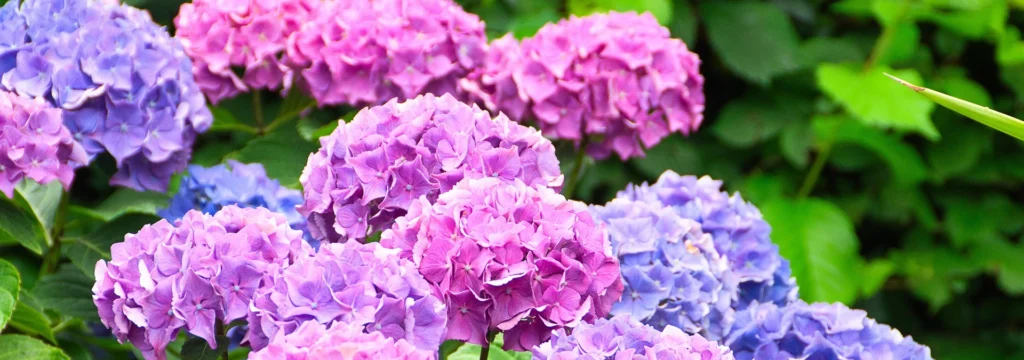
Hydrangeas are among the most popular ornamental plants in European gardens. With their lush, often spherical flower heads and their long flowering period they enhance beds, terraces and balconies. Originally native to East Asia, hydrangeas have today become established in many temperate climate zones. In this article you will learn everything essential about hydrangeas: from the most popular species through site selection and care to the correct pruning technique.
What are hydrangeas?
Hydrangeas (botanical: Hydrangea) are deciduous shrubs or climbing plants from the hydrangea family (Hydrangeaceae). There are about 70 species worldwide, only some of which are cultivated in gardens. Most hydrangeas bloom from June to September and, depending on the cultivar, display impressive color tones – from white and pink through violet to intense blue.
The most common cultivars in our region are:
- Bigleaf hydrangea (Hydrangea macrophylla)
- Panicle hydrangea (Hydrangea paniculata)
- Smooth hydrangea (Hydrangea arborescens)
- Oakleaf hydrangea (Hydrangea quercifolia)
- Climbing hydrangea (Hydrangea petiolaris)
Location and soil – Where do hydrangeas thrive?
Hydrangeas prefer partial shade to shaded locations, sheltered from intense midday sun and strong winds. They perform particularly well under light tree cover or on the north or east sides of buildings. A site that is too sunny can cause leaf scorch, while a site that is too dark can weaken flower formation.
Ideal soil:
- humus-rich
- consistently moist but well-drained
- slightly acidic to neutral (pH 5.5–6.5)
Particularly interesting is the color change in some cultivars: in slightly acidic soils (e.g. with aluminium and a low pH) cultivars that normally bloom pink can appear blue.
Planting hydrangeas correctly
The best planting time for hydrangeas is spring (April to May) or early autumn (September). This allows the plants to take root well before winter demands their resources.
Planting instructions:
- Planting hole dig to about twice the width of the root ball.
- Improve the soil – mix in compost or a special hydrangea soil.
- Place the plant, fill with soil and firm well.
- Water thoroughly and, if necessary, cover with mulch to retain moisture.
Care tips – Helping hydrangeas bloom beautifully
Hydrangeas are relatively easy to care for when their basic needs are met:
Watering:
Hydrangeas have a high water demand. Regular watering is important, especially during hot and dry periods – ideally in the morning or evening using low‑lime water.
Fertilizing:
In spring a dedicated hydrangea fertilizer or an organic all‑purpose fertilizer is recommended (alternatively, the flower fertilizer from ARIES or the ARIES Universal garden fertilizer is also suitable). A second application in July is possible – after that do not fertilize further, to avoid impairing winter hardiness.
Pruning:
There are differences in pruning depending on the species:
- Mophead hydrangeas: remove only spent flowers and frost‑damaged shoots – do not cut back hard!
- Panicle and smooth (snowball) hydrangeas: cut back hard in early spring – they bloom on new wood.
- Climbing hydrangeas: require little pruning, only for shaping or rejuvenation.
Overwintering hydrangeas – frost protection made easy
Most hydrangeas are winter‑hardy, yet some varieties need winter protection in exposed locations. Young plants and mophead hydrangeas especially benefit from a protective layer of leaves or mulch around the root zone. Container plants should be overwintered frost‑free but in a cool, bright place.
Propagation – how to succeed with new plants
Those who wish to propagate hydrangeas can do so in summer by taking cuttings. Simply cut a non‑flowering shoot with several pairs of leaves, remove the lower leaves and place it in moist potting medium. In a shady spot with high humidity, roots will form within a few weeks.
Common problems and solutions
Yellow leaves: Often an indication of lime in the irrigation water or nutrient deficiency (iron). Water with rainwater and use a specialized hydrangea fertilizer.
No blooms: Possible causes are incorrect pruning, late frost, or nutrient deficiency. Prune only varieties that flower on new wood.
Dry leaves despite watering: Avoid waterlogging and check whether the root zone is too compact – loosen the soil if necessary.
Hydrangeas in containers – flowering display on balconies and terraces
Hydrangeas also thrive in pots or containers. A sufficiently large container with good drainage is important. Use high-quality hydrangea soil or rhododendron soil. Regular watering and fertilizing are especially important for container plants, as nutrient availability is limited.
For winter, a protective wrapping with fleece or jute is recommended, and placing the pot on wood or styrofoam.
Conclusion
Hydrangeas are true flowering marvels that, with their range of colors, growth habits and long flowering period, elevate any garden. Whether in beds, as a screen, in hedges or in containers – their diversity makes them genuine all-rounders. Those who match location, soil and care to the plant will be rewarded year after year with impressive blooms.