
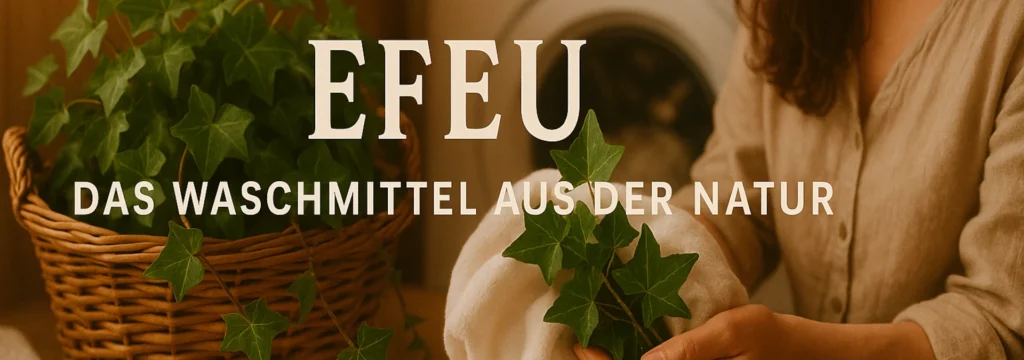
At a time of growing environmental awareness, more and more people are looking for natural detergents such as ivy. A popular, environmentally friendly and cost-effective option is washing with ivy. The leaves of Common Ivy (Hedera helix) contain natural saponins — soap-like compounds that can effectively remove dirt from clothing.
In this article we explain how you can use ivy as a detergent, what advantages it offers and what you should pay attention to.
What is ivy? And why is it suitable for washing laundry?
Common Ivy (Hedera helix) is an evergreen climbing plant native to Europe that grows in many gardens, forests and on house walls. What many do not know: the leaves of ivy contain saponins, which are natural soap substances that develop a foaming, cleansing effect when they come into contact with water. This characteristic is precisely what makes ivy an excellent alternative to industrial detergents.
Saponins dissolve dirt and grease from textiles without the use of aggressive chemicals. Since ivy is abundant in nature, this method is not only sustainable but also free of cost. In addition, ivy is biodegradable and therefore particularly environmentally friendly.
Benefits of washing laundry with ivy
Washing with ivy offers numerous advantages. It is not only an ecological and inexpensive alternative to conventional detergents, but also particularly gentle on the skin. People with sensitive skin or allergies benefit in particular, since ivy does not contain artificial fragrances, dyes or preservatives. Families with infants also often use this method to protect the delicate skin of the youngest.
Another advantage: using ivy as a detergent significantly reduces packaging waste. The purchase of plastic bottles and detergent cartons is eliminated, which actively contributes to environmental protection. In addition, the production of the detergent can be adjusted individually — according to need and quantity.
Making ivy detergent yourself — how to proceed
There are two main methods to use ivy as a detergent: direct application in the washing machine and the production of a liquid ivy detergent. Both variants are easy to implement and do not require any special prior knowledge.
Method 1: Put ivy leaves directly into the washing machine
This method is particularly quick and straightforward. You only need fresh ivy leaves and a small laundry bag or mesh, or an old sock.
- Pick about 10 to 15 medium-sized, healthy ivy leaves.
- Make sure to collect leaves away from busy roads to avoid pollutant contamination.
- Rinse the leaves under running water and tear them roughly.
- Place the leaves in a sachet, a sock or a piece of cloth and tie it securely.
- Put the sachet directly in the drum with the laundry and start the wash cycle as usual.
Method 2: Make liquid ivy detergent
This variant is particularly suitable for delicate fabrics or if you prefer a well-dosable detergent.
- Pick about 15 to 20 ivy leaves.
- Chop the leaves with a knife or tear them into small pieces.
- Put the leaves into a pot and pour 500 to 700 ml of water over them.
- Bring the mixture to a boil and let it simmer for about 10 minutes on low heat.
- After cooling, strain the liquid through a sieve.
- Pour the finished detergent into a clean bottle or jar.
Application: Use approximately 200 ml of the liquid ivy detergent per load, adding it to the detergent compartment. It keeps for 2 to 3 days in the refrigerator. For longer shelf life you can dry or freeze the leaves and reboil them as needed.
Tips for improved washing results
When you wash with ivy, there are some simple tricks that improve washing performance and adapt the wash process to your needs:
- Consider water hardness: In areas with hard water it is advisable to add a little citric acid, apple cider vinegar or a water softener such as the one from Sonett. This protects the washing machine from limescale and results in softer laundry.
- Pre-treat stains: For stubborn stains you can additionally use gall soap, stain gel, stain spray or, if appropriate, a paste of baking soda and water. This will also clean heavily soiled clothing.
- Essential oils for a fresh scent: Ivy has no strong inherent odor. Those who prefer subtly scented laundry can add a few drops of essential oil (e.g. ARIES Bio Lavender oil or ARIES Bio Orange oil) to the wash.
Important notes on safety and compatibility
Although ivy is a natural product, you should observe some precautions. The plant contains mildly toxic substances that can be harmful to health in larger quantities. The berries are particularly poisonous, but the leaves also contain so-called Hederine. Therefore take care to avoid direct contact with the plant sap when preparing the detergent. Wash your hands thoroughly after preparation and store the detergent out of the reach of children.
For delicate materials, it is advisable to test the detergent first on a small area. Alternatively, we recommend the Sonett olive detergent for wool and silk (sensitive). For normal everyday laundry made of cotton or linen, however, ivy is very well suited.
When and where can you collect ivy?
Ivy is a hardy plant that is available year-round. It is best to pick the leaves in spring or summer when they are fresh and succulent. Avoid plants that grow in heavily polluted locations or have been treated with pesticides. Ivy prefers to grow on house walls, in parks, forests and gardens – but please observe the legal regulations regarding picking plants in public or private areas.
Planting ivy in the garden – your own detergent supply
Want to be independent and have your own ivy in the garden? No problem. Ivy is low-maintenance and is excellent as ground cover or for greening facades. The best time to plant is in spring. Choose a semi-shaded to shaded location with humus-rich soil. In the first years you should water regularly; later ivy is very undemanding. Occasional pruning prevents it from becoming too vigorous.
Conclusion: Natural laundry washing with ivy is simple, effective and environmentally friendly
Washing with ivy is more than just a sustainable trend – it is a proven method to get clothing clean, protect the environment and save money. Preparing the detergent is uncomplicated, the ingredients are purely plant-based, and the effectiveness is convincing in everyday use. Whether you use ivy directly in the washing machine or cook a liquid detergent from it – in any case you are making a good choice for your health, your laundry and nature.
Just try it and discover how easy it can be to wash sustainably – completely without chemicals.