
The cockchafer is a well-known insect that is particularly noticeable in spring and has fascinated people for generations. With its distinctive appearance, its interesting life cycle and its important role in the ecosystem, it is more than just a harmless beetle. In this article you will learn everything essential about the cockchafer: from its biology and way of life to its significance for nature and the garden.
The cockchafer
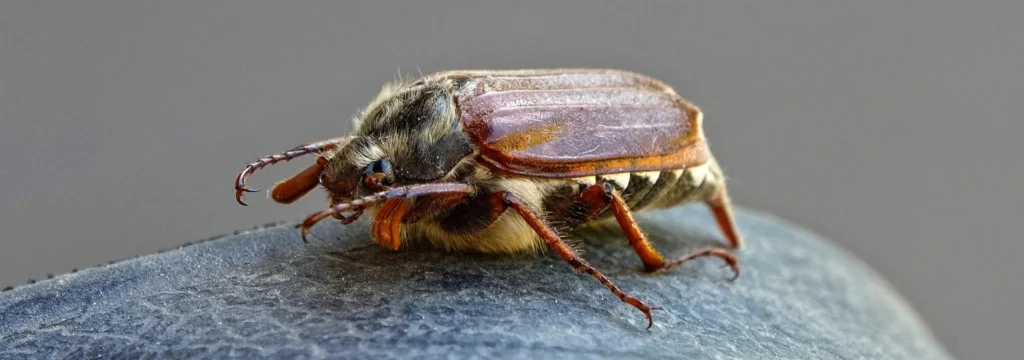
The cockchafer, also known as „Melolontha“, belongs to the family of scarab beetles (Scarabaeidae) and is widespread in Europe. The best-known species is the common cockchafer (Melolontha melolontha). It is easy to recognize by its brown to chestnut body, its large antennae and the conspicuous, fan-shaped antennal clubs.
Its name derives from the fact that the beetles are mainly active in May and fly especially in the evening and at night. It reaches about 2.5 to 3.5 cm in length, making it one of the larger native beetles.
Biology and life cycle
The life cycle of the cockchafer is fascinating and spans several years:
- Egg: Females lay their eggs in June into the soil, typically in sandy substrates.
- Larva: The larvae, also called grubs, develop in the soil over three to four years. They feed on plant roots, which in some cases can lead to damage to agricultural crops or lawns.
- Pupa: After the larval stage, the grubs pupate in the soil.
- Adult beetle: In the late spring of the fourth or fifth year, the adult cockchafers emerge from the soil. They fly mainly in May and June to mate.
Why are cockchafers important?
Despite occasional damage to plants, they perform important functions in the ecosystem:
- Food for other animals: Cockchafers are an important food source for birds, hedgehogs and other animals.
- Soil aeration: The larvae move through the soil and thereby contribute to soil aeration and the nutrient cycle.
- Part of the natural balance: Cockchafers help maintain ecosystem balance by feeding on plants while also serving as prey for other animals.
Their impact on agriculture and gardens
Cockchafer larvae (white grubs) can occur in large numbers and damage the roots of crops and turf. This causes economic damage, particularly in agriculture and horticulture. Young trees and lawns are especially affected by root feeding.
Nevertheless, it is important not to eradicate the cockchafer population completely, as they play a natural role in the ecosystem. Biological control measures and natural predators such as birds help regulate their numbers.
Too many cockchafers in the garden – what to do?
Those who have problems with them in the garden should act carefully so as not to disturb the ecological balance. Some helpful tips:
- Encourage natural predators: Birds such as thrushes or woodpeckers eat cockchafers and grubs.
- Soil care: Healthy soil with good humus supports natural predators and makes it harder for grubs to proliferate.
- Mechanical measures: Collecting cockchafers during flight can help reduce the population.
Chemical pesticides should be avoided, as they also endanger other beneficial insects!
In culture and tradition
The cockchafer also plays a role in culture. It appears in fairy tales, stories and childhood memories. Many people associate sighting a cockchafer with the awakening of spring and a connection to nature.
In the past they were collected by children and often regarded as lucky charms. In some regions there are even popular proverbs and songs about the cockchafer.
Observing cockchafers – tips for nature enthusiasts
May is the best time to observe them in the wild. Especially on mild evenings the beetles are active and often fly around. Those who want to spot cockchafers should look near meadows, forest edges or gardens.
When observing them: cockchafers are useful insects and should not be disturbed unnecessarily. Photography is permitted, but catching and taking them should be done only with care.
Conclusion
The cockchafer is an impressive insect that offers many interesting aspects through its life cycle and its role in nature. Although its larvae can occasionally cause problems in the garden, the cockchafer is a valuable part of the ecosystem and a symbol of spring.
Those who learn to understand and respect it can also contribute in their garden to the protection of this useful beetle — thereby supporting the ecological balance.