
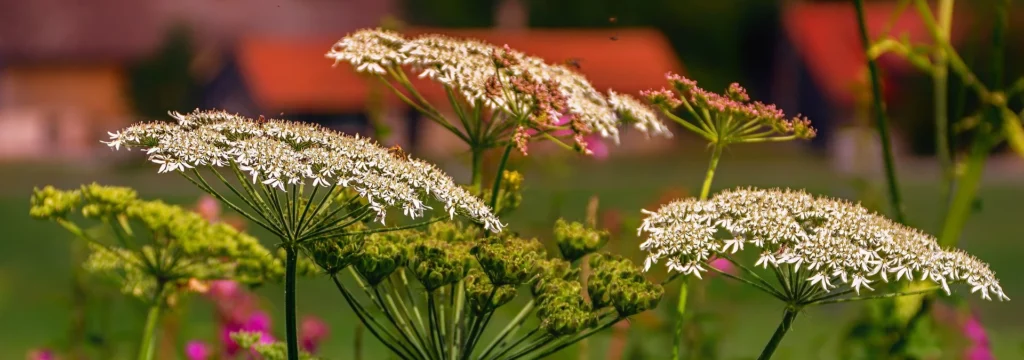
Yarrow (Achillea millefolium) is one of Europe’s oldest medicinal plants and ranks among the most versatile wild herbs in herbal medicine. Its delicate, feathery leaves, white to pinkish flowers and scent make it an eye-catcher not only in meadows and along paths but also in the home garden. In addition to its beneficial properties, it also serves decorative purposes. This text provides everything important about yarrow — from its effects and applications to its care and use in the garden.
Yarrow
It is an herbaceous plant from the daisy family (Asteraceae). It reaches a height of 30 to 80 cm and is native to Europe, Asia and North America. Characteristic are its pinnate, finely textured leaves and the flat, umbel-like inflorescences that bloom from June to October. The botanical name “Achillea” refers to Achilles, who according to legend used the plant for wound healing of his soldiers.
Yarrow in herbal medicine
Yarrow has been an established element in herbal medicine for centuries. It is used particularly frequently for gastrointestinal complaints, menstrual problems, skin conditions and wound healing.
Active constituents
Yarrow contains a variety of active constituents, including:
- Essential oil (including azulenes, camphor)
- Bitter compounds
- Flavonoids
- Tannins
- Coumarins
- Potassium, zinc, magnesium
Thanks to these substances, yarrow acts:
- anti-inflammatory
- antibacterial
- antispasmodic
- diuretic
- hemostatic
- promotes digestion
It is used internally and externally — as a tea, tincture, bath additive or compress.
Yarrow Tea — proper preparation
A yarrow tea is quick and easy to prepare:
Pour 1 teaspoon dried yarrow (flowers and leaves) over 250 ml of hot water
Let steep, covered, for 10 minutes, then strain
Drink 1–3 cups daily
The tea tastes mildly bitter to aromatic. Pregnant women should consult a doctor before use.
In the kitchen
It is also used in wild herb cuisine. Its young, tender leaves have a mildly piquant flavor and are suitable for enhancing:
- Salads
- Quark
- Soups
- Omelettes
- Butter
Due to its intense aroma, it should be used sparingly. Especially in combination with other herbs such as dandelion or ground elder it develops its flavor.
Recipes — wild herbs with spice and effect
Yarrow is not only a proven medicinal plant but also an interesting wild herb for the kitchen. With its slightly bitter, spicy aroma it gives many dishes a distinctive note. The tender leaves and flowers of yarrow can be used in many ways — raw, cooked or dried.
Wild herb quark
A quick and healthy recipe is wild herb quark: Mix 250 g quark with a splash of milk or yogurt, a pinch of salt and chopped yarrow leaves. Combine them with other herbs such as daisies, ground elder or dandelion for a piquant mix. Perfect as a spread or side for potatoes.
Yarrow butter
For a tasty herb butter, mix 100 g soft butter with finely chopped yarrow leaves, some lemon zest, salt and pepper. If desired, flowers can also be stirred in as decoration. This butter pairs well with vegetables, meat or fresh bread.
Herb salad with yarrow
Fresh young leaves of yarrow can be mixed into salads in small quantities. They pair well with lamb’s lettuce, arugula and radishes. A dressing of olive oil, apple cider vinegar and honey completes the flavor.
Yarrow tea
Yarrow is also popular as a tea: simply pour 250 ml hot water over 1 tsp of dried leaves and flowers, steep for 10 minutes. The tea aids digestion and is relaxing.
Whether savory or medicinal — yarrow brings natural flavor and health to the plate.
In the garden — ecological and decorative
Yarrow is an ideal plant for naturalistic gardens, rock gardens and wildflower meadows. It is low-maintenance, drought-resistant and a valuable plant for bees and insects. It is also popular in wildflower bouquets.
Site and care in the garden
- Light: Sunny to partial shade
- Soil: Well-drained, nutrient-rich, rather dry
- Sowing: March to May or September
- Planting: Sow seeds directly in the bed or start them indoors
- Care: Hardly necessary; occasional pruning stimulates flowering
- Propagation: By division in spring or autumn
Once established, yarrow is extremely undemanding. It tolerates dry periods well and does not require fertilization.
Drying and storing yarrow
For use as a medicinal plant or tea, yarrow should be harvested at flowering time (June to August). Cut the top 20–30 cm of the plant. Bundle loosely and hang upside down in a shaded, airy place to dry. After drying, store in dark, airtight containers.
Its significance
In folk belief, yarrow was an important protective and divinatory plant. It was regarded as magical and used in love omens or against the “evil eye”.
Botanical diversity
Besides the classic Yarrow there are numerous varieties that differ in striking colors and growth heights:
- Gold yarrow – yellow flowers, up to 1.20 m tall
- Marsh yarrow – white, larger flowers, prefers wetter sites
- Achillea millefolium hybrids – available in colors such as pink, red, orange or salmon
These varieties are particularly popular in perennial beds and as components of wildflower mixes.
Yarrow and sustainability
It is an ecologically valuable plant. It provides food for bees and other insects. In addition, its deep roots improve soil structure and it acts as a natural ground cover.
Conclusion: Yarrow – time-tested medicinal plant with a future
It is a genuine all‑rounder among medicinal herbs. Its medicinal effects, culinary versatility and ecological significance make it a valuable plant – in nature, in the garden and in everyday life. Anyone who gets to know yarrow more closely will not want to be without it as a garden companion. Whether as a tea for stomach complaints, as a wild herb in the kitchen or as an insect magnet in the garden – yarrow combines herbal medicine, sustainability and beauty in a unique way.