
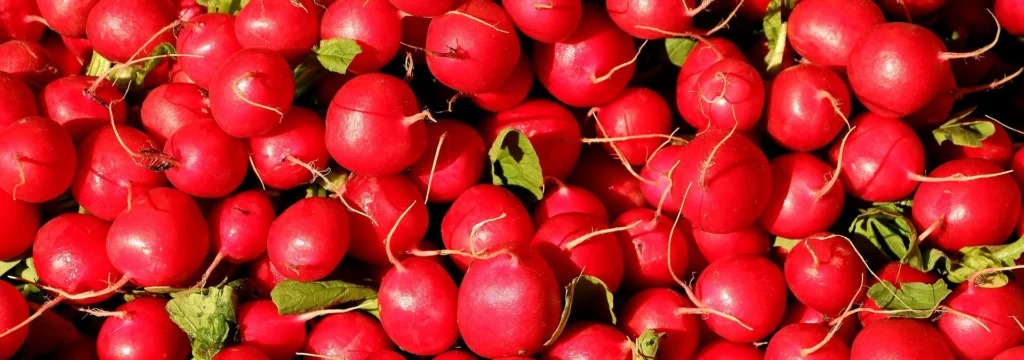
Radishes (Raphanus sativus) are a commonly cultivated garden crop. They are not only easy to grow but also offer a rapid harvest, making them suitable for both novice and experienced gardeners. This guide discusses the various aspects of radish sowing and harvesting in detail.
1. Introduction to radishes
Radishes belong to the Brassicaceae family and are known for their crisp texture and mildly peppery flavor. There are several varieties that differ in shape, size and color. The best-known types include round red radishes, elongated varieties and those with white or purple skin.
2. Soil and site requirements
Radishes prefer well-drained, humus-rich soils with a pH between 6.0 and 7.0. A sunny to partially shaded site is ideal, as excessive shade can inhibit growth. The soil should be well prepared by loosening and clearing it of stones and weeds. Light fertilization with compost or organic fertilizer improves soil fertility and supports plant development.
3. The right time for sowing
Radishes can be sown almost year-round depending on climatic conditions. In temperate regions sowing starts in early spring (March to April) and can continue until autumn (September to October). In mild areas sowing in winter is also possible. It is important that the soil temperature is at least 8°C to ensure good germination of the seeds.
4. Sowing
Radishes can be sown directly outdoors. First, draw seed furrows 1 to 2 cm deep, maintaining a row spacing of about 10 to 15 cm. Sow the seeds thinly into the furrows, cover with soil and press lightly. Then water thoroughly to promote germination.
Consistent moisture is particularly important during the first days because radish seeds can dry out quickly. It is advisable to repeat sowing at intervals of 1 to 2 weeks to ensure a continuous supply of fresh radishes.
5. Care of radish plants
Radishes require little maintenance to thrive. Regular watering is, however, crucial, especially during dry periods. The soil should be kept evenly moist, since irregular watering can lead to cracking and reduced root quality.
Weeds should be removed regularly to avoid competition for nutrients and water. A light mulch can help retain moisture and reduce weed growth.
6. Pests and Diseases
Radishes are relatively robust, but remain susceptible to certain pests and diseases. The most common pests include flea beetles and cabbage flies, which can damage leaves and roots. Regular inspections and the use of insect netting can help prevent an infestation.
Diseases such as clubroot and various fungal infections can also occur. Good crop rotation and avoidance of waterlogging are important preventive measures. In the event of an infestation, affected plants should be removed and disposed of immediately to prevent further spread.
7. Harvesting radishes
Radishes grow quickly and can be harvested as early as 3 to 6 weeks after sowing, depending on variety and conditions. Harvest when the roots have reached a diameter of about 2 to 3 cm. Radishes harvested too late tend to become woody and less flavorful.
To harvest, pull the radishes gently from the soil. A light tap removes excess earth. Radishes can be harvested with their leaves, which are also edible and can be used in salads or as a garnish.
8. Storage and Use
Freshly harvested radishes are at their best and should ideally be consumed immediately. If necessary, they can be stored in the refrigerator where, wrapped in a damp cloth or placed in a plastic bag, they will stay fresh for up to a week.
Radishes are versatile in the kitchen. They work well as a snack, in salads, on sandwiches or as a garnish. The greens can also be used, for example in soups, pestos or as an addition to green smoothies.
9. Special Tips and Tricks
- Intercropping: Radishes are well suited as an intercrop between slower-growing plants such as carrots or onions. They loosen the soil and help protect more sensitive plants from pests.
- Test seed viability: Older seeds can be checked for viability by pre-germinating a few seeds on moist kitchen paper.
- Use varietal diversity: Different radish varieties have different flavor profiles and maturity times. By combining several varieties, you can enjoy fresh radishes throughout the year.
10. Conclusion
Radishes are an ideal crop for gardeners of all experience levels. Their rapid growth cycle and minimal care requirements make them a worthwhile addition to any garden. With the right preparation, care and attention, you can consistently harvest and enjoy fresh, crisp radishes. Whether in open ground, a raised bed or even in a pot – radishes are an asset to every garden and kitchen.