
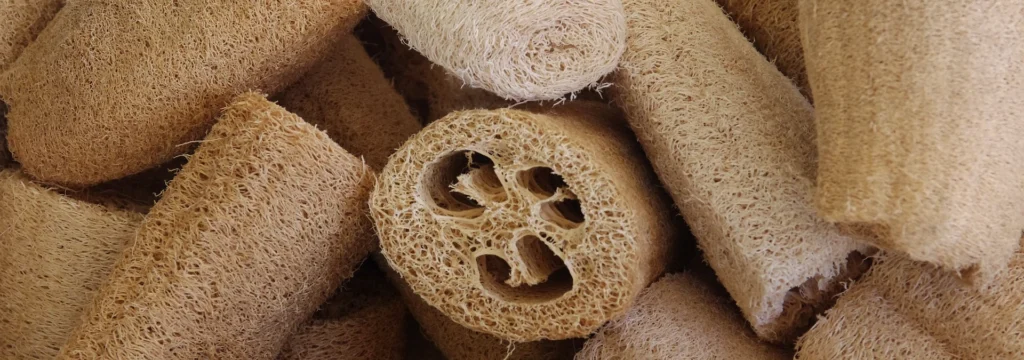
The luffa sponge, also known as the luffa gourd, has gained popularity in recent years. This is primarily due to the growing awareness of sustainability and environmentally friendly products. The luffa sponge is a natural product that is versatile in use and offers numerous advantages. This text addresses the origin, the benefits and the sustainability of the luffa sponge.
Origin and Production
The luffa sponge comes from the luffa plant, which belongs to the family of gourds (Cucurbitaceae). This plant grows in tropical and subtropical regions, primarily in Asia and Africa, and produces large, cucumber-like fruits.
The production of a luffa sponge is carried out in several steps:
- Harvest: The ripe fruits are picked from the plant.
- Drying: The fruits are air-dried until they are hard and fibrous.
- Removal of the outer skin: Removing the outer skin to expose the internal fibrous structures.
- Cleaning: Washing the exposed fibers to remove seeds and any remaining fruit pulp.
- Cutting and packing: Cutting the cleaned luffa sponges into various sizes and preparing them for sale.
Advantages of the Luffa Sponge
The luffa sponge offers numerous advantages that make it an attractive alternative to synthetic sponges and other cleaning products.
- Natural and chemical-free: Luffa sponges are a 100% natural product and contain no harmful chemicals. This makes them particularly suitable for people with sensitive skin or allergies.
- Versatility: Luffa sponges are versatile. They can be used as body and facial sponges to gently exfoliate the skin and remove dead skin cells. In addition, they are well suited as cleaning tools in the kitchen or around the home, as they effectively remove dirt and grease.
- Environmentally friendly and Biodegradable: Unlike synthetic sponges, which often consist of plastic and take a long time to decompose, luffa sponges are biodegradable because they fully break down and do not leave harmful waste.
- Reusability: Luffa sponges are durable and can be used multiple times. With proper care they can last for several months, which further increases their sustainability.
Sustainability of the luffa sponge
The sustainability of the luffa sponge can be viewed from several perspectives:
- Cultivation and production: Cultivation of Luffa plants requires comparatively few resources. The plants do not need intensive fertilizers or pesticides, which reduces the ecological footprint. Furthermore, luffa sponges are grown on fields unsuitable for other crops, enabling efficient land use.
- Biodegradability: One of the greatest advantages of the luffa sponge is its complete biodegradability. After use, the sponge can be composted. It breaks down into natural components that enrich the soil. Thus the amount of waste sent to landfills is reduced.
- Packaging and transport: Many luffa sponges are sold in minimal or plastic-free packaging, further reducing the ecological footprint. They are also lightweight and compact, making transport more efficient and environmentally friendly.
- Lifespan and reusability: Through their durability and reusability, luffa sponges help reduce consumption of single-use products. Less waste and a longer service life mean lower resource use and reduced environmental impact.
Care and disposal
Proper care of a luffa sponge is crucial to maximize its lifespan and avoid hygiene issues. Here are some care tips:
- Allow to dry: After each use, rinse the luffa sponge thoroughly and hang it in a dry place. This prevents mold and bacterial growth.
- Regular cleaning: The sponge should be cleaned regularly with hot water and soap or washed in the washing machine. Alternatively, you can sterilize it in the microwave.
- Replace when worn: Replace the sponge as soon as it shows signs of wear or develops unpleasant odors. Old luffa sponges can be composted or used as garden fertilizer.
Conclusion
The loofah sponge is a sustainable and environmentally friendly alternative to conventional cleaning and care products. Due to its versatility, biodegradability and reusability, it offers numerous benefits for the user and the environment. In addition, the cultivation of luffa plants supports local agriculture and promotes economic development in rural regions.
In light of global efforts to reduce environmental impact and promote more sustainable lifestyles, the loofah sponge represents a simple yet effective way to make a positive contribution. Whether in the bathroom, the kitchen or around the home – the loofah sponge is a valuable addition for anyone who opts for environmentally conscious and sustainable products.