
Replacement products for plastic
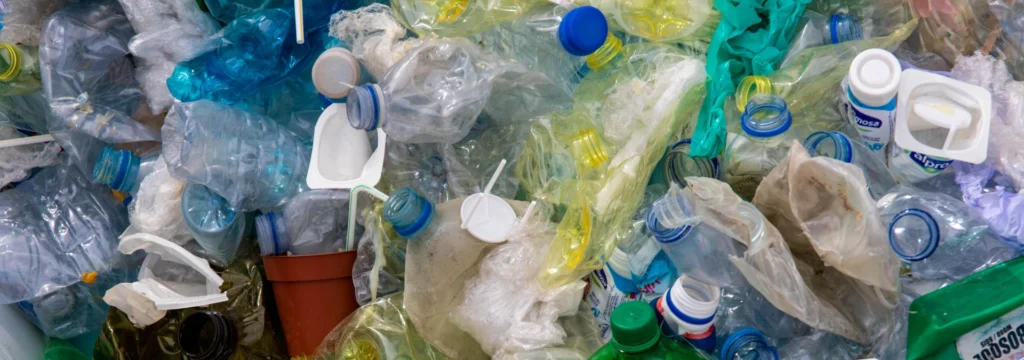
Plastic is increasingly becoming an environmental problem. Every year, countless tonnes of plastic waste end up in the world’s oceans. However, there are sensible and promising alternatives in research, and some are already available on the global market. The path leads away from single-use plastic products toward reusable plastic products to relieve the oceans. On a small scale, plastic can be relatively easily avoided or reduced in the household. Here we show you ways and options for the use of plastic replacement products.
Reasons for plastic replacement products
– Plastic is not biodegradable and is difficult to recycle
– Plastic is produced from petroleum and is therefore a limited raw material
– It is a toxic material and contains plasticizers
– Plastic poses a lethal threat to nature, the world’s oceans and thus to many animals
Microplastics in the sea in particular cause enormous damage to marine life. Rivers just as often serve as collection basins for plastic waste and thereby contaminate vital drinking water. If plastic enters the food chain, it carries unforeseen risks and dangers for humanity itself. The insidious aspect is that many everyday products contain plastic without us, the consumers, always being aware of it. This so-called hidden plastic has even been found in beer and chewing gum.
Plastics can be recycled to a certain extent, but mixed forms often cannot be further processed and additionally burden the environment when incinerated. And this despite the high energy demand required during their production. Because plastic is not all the same: one distinguishes thermoplastics, thermosets and elastomers.
Therefore it is important to draw attention to the disadvantages of plastic products and plastic packaging, to anchor this awareness in people’s minds and to replace them through increased use of plastic replacement products. Above all, every consumer can make a personal contribution. Even separating waste in one’s own home falls under this.
What are promising alternatives to plastic?
Particularly suitable are glass, bamboo, sugarcane, straw, wood and other natural sources, or in short bioplastics. Beeswax wraps are also suitable for keeping goods fresh, as they are biodegradable and breathable, and they also repel bacteria.
Tableware made from sugarcane
Plastic tableware is essentially unnecessary. Although it can be reused several times, it often ends up in the waste. Therefore an EU-wide ban on single-use plastic tableware came into force in 2021. Sugarcane or bagasse is an excellent substitute, as it is obtained from the fibrous residues of sugarcane production. In terms of quantity this by-product can easily match plastic. Its natural composition makes it an ideal starting material for disposable tableware such as cups, bowls and plates.
Transparent wood
Originally developed in electronics, transparent wood is chemically treated so that it achieves a light transmittance of 98 percent and a haze of 71 percent. That makes it comparable to frosted glass. Research into transparent construction timber continues. The breakthrough was achieved in 2016 by researchers at the Royal Institute of Technology in Stockholm. Researchers at the Indian Institute of Technology in New Delhi are also setting new standards. The material can be produced in almost any size and, despite its lightness, is as strong as the original wood. It can therefore also replace petroleum-based plastics. It could become very important in fighting climate change.
Bio-polyethylene
Another option is bio-based polyethylene compounds such as Terralene®. These are derived from renewable raw materials and are fully recyclable. By means of injection molding and other processes these sustainable components can be further processed and formed into cups, cans or tubes. An important incentive for this is the EU ban on many plastic products. Bio-polyethylene or bio-based polyethylene compounds (PE) are, among other places, produced in Brazil from non-GM sugarcane. So far these recyclable bioplastics are not legally approved in Germany for food packaging. Therefore they must be further modified. The main advantages of PE are resistance to polar solvents and good temperature resistance. Nevertheless, to date there is only one notable manufacturer of this sustainable material.
How can plastic products be replaced by environmentally friendly alternatives?
Several factors determine whether environmentally friendly alternatives to plastic products ultimately prevail. First, the ecological aspect: land use and environmental compatibility are considered alongside disposal and the final life-cycle assessment. Second, cultivation and further processing must be socially acceptable. National, international, and private-sector standards can apply here. A third criterion concerns safety for end consumers. Finally, quality plays a key role. The requirements for the packaging material must be defined precisely in advance. And the products should be accepted by end customers.
Which replacement products for plastic are already used on a large scale?
Paper bags are already being used on a large scale. Likewise, many products made from sugarcane are already available. Reusable glass has proven effective for beverage bottles and spreads. Glass does not necessarily have a better energy balance than plastic in every case. Both consume a lot of energy in the production process.
Straws and drinking cups are increasingly no longer made of plastic, since many single-use plastic products are now banned. There is no shortage of alternatives, but in many countries around the world there still is no way around plastic. Countries such as Kenya, Rwanda and Costa Rica, for example, have implemented measures against excessive plastic consumption.
However, going without plastic entirely is not possible, because it is simply present in too many items, from credit cards to computers. Especially in the bathroom and when shopping for food there are already many sensible ways to avoid it. Ultimately, like many other materials, it has both advantages and disadvantages.
Which alternatives to conventional plastics are being researched further?
Several companies and institutes are researching fully dissolvable or even edible packaging. Algae and the milk protein Casein represent promising approaches. Algae and seaweed are widespread and grow very quickly, which is why various scientists and companies have made this their mission. The material derived from algae does not release pollutants and can extend the shelf life of foods packaged in it. While some researchers use microalgae, others rely on macroalgae. Nevertheless, research into bioplastics is still in its infancy. Deployment at large scale in cooperation with industrial recycling firms will, however, take time.
In 2022 researchers in Leipzig also discovered that the enzyme PHL7 decomposes plastic in a record time of less than 24 hours. They found this enzyme on a compost heap. PET is broken down into its components in this way. This does not apply to stretched PET. This recycling method is intended to be further developed in the coming years.
Are all substitute products for plastic also biodegradable?
Many substitutes for plastics are made from biodegradable materials, but by no means all. Even stainless steel is used as a substitute in some cases. Many types of bioplastic are only organically produced; high temperatures are required to break them down. Most waste treatment systems are also not yet adapted to bioplastics.
Ultimately, plastic substitutes form only part of the solution. Equally important is reducing plastic packaging and avoiding plastic waste where possible. Unpackaged foods have proven best. For that, simply bring a Tupper container or shopping bag from home, as is already practiced in many places.
Conclusion
Substitute products for plastics offer promising opportunities to significantly reduce the amount of plastic waste generated and to make the world’s oceans cleaner. However, this requires all states around the globe to act in concert and to replace plastic products in many areas with sustainable, biodegradable alternatives. Research in this field needs to be further accelerated.