
Silverfish: How you can get rid of these nuisance insects
Don’t be fooled by the name: silverfish are not like the goldfish you fed as a child. While the latter swim peacefully in their aquarium, the former hide in dark, damp corners of the home and feed on, for example, food scraps, paper, clothing, mould or even dust. Another characteristic of these animals is that they leave droppings everywhere. And not only that: these insects reproduce very quickly, so the risk of an infestation is always present!
What are silverfish?
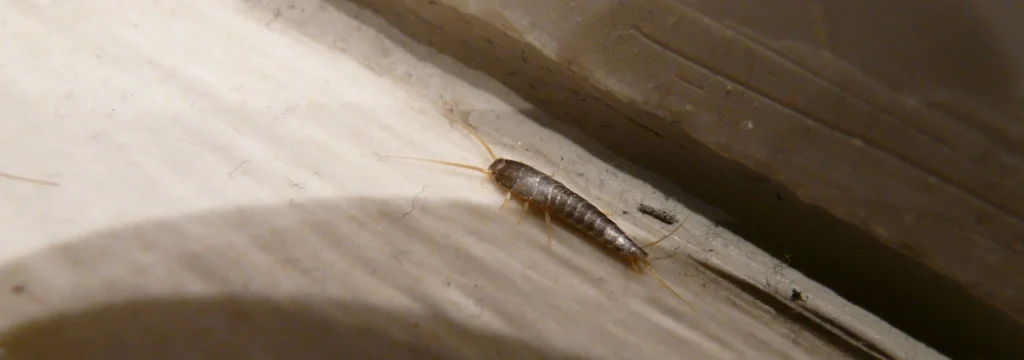
The silverfish or Lepisma saccharina is an insect of the order Zygentoma and the family Lepismatidae. It is 1 to 1.5 cm long and can be recognised by its silvery, carrot-shaped, scale-covered body. The silverfish has no wings, long antennae, short legs and three hairy tail filaments.
These insects are nocturnal and stay in warm, humid areas of houses. They move like fish in water—hence the name—and flee from light sources, which makes them difficult to catch or even spot.
Why do these crawling insects come into the home?
Silverfish need only two things to live: moisture and darkness. They seek areas in the home that provide these conditions: kitchens, bathrooms, basements, cabinets, cracks in walls or furniture.
The feeding ability of silverfish is remarkable. Starch and cellulose are regularly on their menu, although they are not averse to other polysaccharides found in adhesives such as silicone.
They often nest near their food sources and eat pretty much anything: old paper, sugar, hair, skin flakes, dirt, dead insects, their own shed skin, food scraps, fabrics (both natural and synthetic).
Are silverfish dangerous?
Silverfish are not dangerous to humans: they do not sting, do not bite, do not cause allergic reactions and do not transmit diseases. However, their presence in the home is disturbing and can be genuinely annoying. It is unpleasant when they move around in groups in the bathroom at night or when they nest in pantry items in cupboards. Although their presence is unhygienic, you would have to ingest a large number of them to be truly at risk. The greatest danger is to your books, which may end up being nibbled by the insects.
Prevent silverfish from entering!
An effective prevention measure is to limit their habitat:
• Combat moisture. Silverfish do not reproduce in dry environments. You can use a dehumidifier in rooms such as basements or closets.
• Clean the premises regularly and remove any residues that can serve as food for silverfish. Pay particular attention to bathrooms, kitchens and floors.
• Do not collect paper or cardboard.
• Ventilate your home daily: this is the best way to let light in and moisture out.
• Seal cracks in walls with cement, because silverfish eat silicone and other adhesives.
• When you clean and tidy your home, make sure to move all furniture, as they like to hide in furniture that is never moved.
How do you get rid of silverfish?
It is strongly recommended to eliminate these crawling insects as soon as you see them. The longer you wait, the harder it becomes to remove the infestation. There are methods and chemical products that can eliminate the pest, such as boric acid, although its use has drawbacks, not least that it can be toxic to pets.
Diatomaceous earth
Diatomaceous earth is a highly absorbent product that prevents the environment from remaining moist. When applied directly to the insect, it dries out the outer cuticle and the insect eventually dies. You should also have no issues using it in the house, as it is a product considered harmless to humans and animals. It is sufficient to apply a layer to the area where the silverfish are present, and they will disappear within a few days.
Cedar oil
Red cedar oil, applied to trim, pipes and other places where silverfish move, as well as cedarwood blocks that emit a naturally pleasant scent to us but which these insects detest. It is natural and controls these pests without containing toxic substances.
Vinegar
Just as silverfish hate the smell of cedarwood, they are strongly repelled by vinegar. Place small bowls of vinegar next to the locations where the silverfish are found.
Essential oils
In addition to cedarwood oil, other essential oils can be effective against the insects because of their strong scent. Essential oils of lemon, lemongrass, eucalyptus, lavender or citrus can be used neat or diluted in a spray bottle with water (15-20 drops of essential oil per 75 cl of water). Then spray the areas, cracks or small crevices infested with silverfish. Repeat the procedure daily until the insects are completely gone.
Spices
If you place spices in your cupboards, you keep silverfish away and at the same time give your cupboards a pleasant scent. Strong-smelling spices such as cloves, cinnamon, garlic, basil and other pungent spices repel these crawling insects.
Newspaper
Here is a homemade trap that is easy to make and very effective. Roll up newspaper and secure it with a rubber band at each end. Dip the newspaper rolls in water or hold them under the tap until they are damp. Place the rolls in your house where the silverfish gather before nightfall. The moisture, the food and the shelter will draw them in. Collect the traps in the morning and dispose of them or burn them. If you unroll the newspaper beforehand, they will flee.
Mixture of baking powder and sugar
Mix equal parts baking powder and sugar and place it where the insects go. Attracted by the sugar, they will eat the piles indiscriminately and die from it.
The jam jar trap
To make a trap, line the outside of a jam jar with coarse tape. Then fill it with some sugar. This attracts the insects and consequently they climb into the trap. However, they cannot get back out because they cannot move on a smooth surface like glass.
Another alternative is this ARIES silverfish trap — it is non-toxic and odorless.