
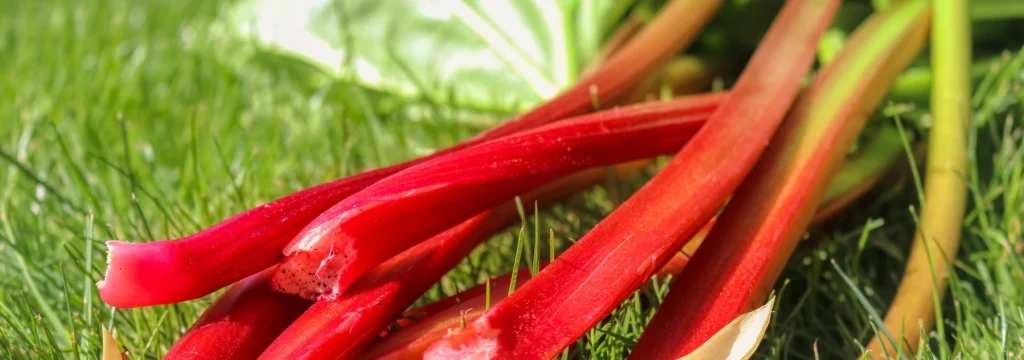
Rhubarb – a nutrient-rich plant
Rhubarb is a plant originally native to Asia and cultivated in Europe since the 18th century. The plant has long, thin stalks with large green leaves. The stalks can be red, green, or red-green striped and have a tart flavor.
Rhubarb is rich in vitamin C and also contains vitamin K, calcium, potassium, and dietary fiber. It also contains anthraquinones, which can have a laxative effect.
How to clean rhubarb?
Rhubarb is a tasty and healthy ingredient often used in desserts and baked goods. Before preparing it, however, it must be cleaned and trimmed to remove dirt and inedible parts. Cleaning rhubarb is straightforward and requires only a few steps. First, the plant should be thoroughly rinsed under running water before the skin is peeled. Then remove the leaves and trim the ends. Depending on how you plan to use it, you can cut it into pieces. Once the rhubarb is cleaned and trimmed, it is ready to be used in dishes and desserts. Here is a guide on how to clean rhubarb:
Step 1: Wash
Begin by rinsing the rhubarb thoroughly under running water to remove dirt and residues.
Step 2: Peel the skin
Rhubarb has a tough outer layer that must be removed before cooking or baking. Use a sharp knife or a vegetable peeler to strip off the outer layer. Start at the stem end and work slowly toward the top.
Step 3: Remove the leaves
Rhubarb leaves contain oxalic acid and should not be eaten. Therefore remove all leaves from the stalks and cut them off. You can add the leaves to compost or use them as fertilizer in the garden.
Step 4: Trim the ends
Cut off the ends of the stalks to remove the dry, woody tips. Use a sharp knife and cut the ends at an angle to create a larger surface.
Step 5: Cut into pieces
Depending on how you want to use the rhubarb, you can cut it into pieces. To do this, cut it into 2-3 cm long pieces. If you want to use it for a cake or a dessert, cut it into thinner slices.
Use of rhubarb in the kitchen
Rhubarb is often used in sweet dishes such as cakes, tarts and jams. The acidic stalks can also be used in savory dishes such as soups and stews to add an extra note of acidity.
Rhubarb cake
A popular recipe is rhubarb cake. Here is a simple recipe you can try:
- Preheat the oven to 180°C.
- Peel and cut 500 g rhubarb into small pieces.
- Mix it with 100 g sugar and let it macerate for 10 minutes.
- Line a baking tin with baking paper.
- Beat 200 g butter and 200 g sugar until creamy.
- Gradually add 4 eggs and stir well.
- Mix 250 g flour and 1 teaspoon baking powder in a separate bowl.
- Fold the flour mixture into the butter-and-egg mixture gradually, stirring well.
- Place the rhubarb in the baking tin and pour the batter over it.
- Bake the cake for 45–50 minutes or until golden brown.
Rhubarb-strawberry smoothie
Rhubarb can also be enjoyed in a refreshing smoothie. Here is a simple recipe:
- Cut 200 g rhubarb into small pieces and put them in a blender.
- Add 150 g strawberries, 1 banana and 200 ml milk.
- Blend all ingredients until smooth and creamy.
- Pour the smoothie into a glass and serve immediately.
Rhubarb chutney
The plant can also be used as an ingredient in a savory chutney. Here is a simple recipe:
- Cut 500 g rhubarb into small pieces and put them in a pot.
- Add 100 g brown sugar, 1 onion (finely chopped), 1 teaspoon ginger (grated), 1 teaspoon mustard seeds, 1 teaspoon turmeric and 150 ml apple cider vinegar.
- Cook the chutney over medium heat for 30–40 minutes or until the rhubarb is soft and the chutney is thick.
When is rhubarb in season?
Rhubarb is in season from April to June. When you buy it, make sure the stalks are fresh and firm. The stalks should not be limp or pale.
How healthy is rhubarb?
Rhubarb is not only a tasty vegetable but also a good source of various vitamins and minerals. Here are some reasons why it is healthy:
High fiber content
Rhubarb is rich in fiber, which is important for healthy digestion. One cup of rhubarb contains about 2.2 grams of fiber, which can help stabilize blood sugar levels and lower cholesterol.
Contains Vitamin K
Rhubarb is a good source of Vitamin K, which is important for blood clotting and bone health. One cup of rhubarb contains about 26% of the recommended daily intake of Vitamin K.
Contains Vitamin C
Rhubarb also contains Vitamin C, which is important for the immune system and collagen production. One cup of rhubarb contains about 16% of the recommended daily intake of Vitamin C.
Low in calories
Rhubarb is low in calories and contains only about 26 calories per cup. This makes it a good choice for people who want to lose weight or maintain their weight.
Contains antioxidants
Rhubarb also contains antioxidants such as anthocyanins and polyphenols, which can help reduce inflammation in the body and lower the risk of chronic diseases such as cancer, diabetes, and heart disease.
Conclusion
Rhubarb is a plant with tart stalks that can be used in the kitchen in sweet and savory dishes. It is rich in vitamin C, vitamin K, calcium and potassium as well as in fiber and anthraquinones. Rhubarb is in season from April to June and should be fresh and firm when you buy it. Rhubarb is a healthy and tasty ingredient that is rich in fiber, vitamins and antioxidants. It is also low in calories and can be a good choice for people who want to maintain or lose weight. However, excessive consumption requires caution, as rhubarb contains oxalic acid, which can be harmful.