
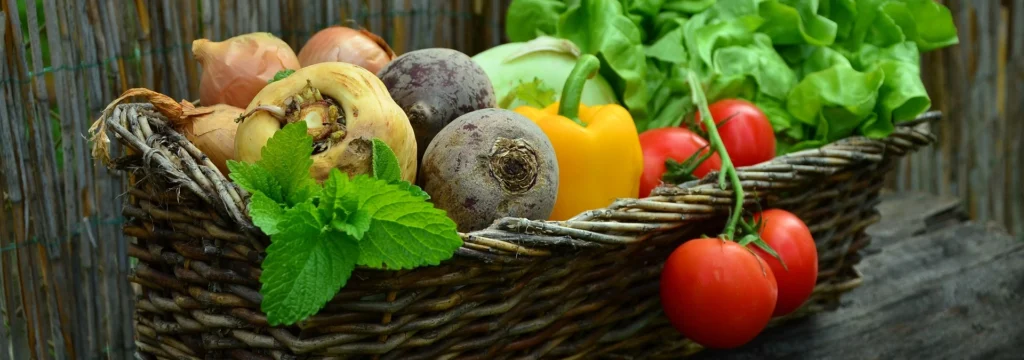
A seasonal calendar is an excellent way to understand when certain fruits and vegetables are fresh and locally available. Knowing which vegetables and fruits grow in which season not only helps you live healthier, but also protects the environment and eases the burden on your wallet. Buying seasonal products ensures the consumption of fresh, nutrient-rich foods and reduces the CO2 emissions caused by the transport of imported goods. A seasonal calendar can assist with this.
In this article we show you which vegetables and fruits are in season during the different seasons. This allows you to ensure that your diet is both seasonal and sustainable.
Spring: The season for fresh greens
Spring is the time when the year’s first fresh vegetables and fruits arrive on the market. After winter has passed, nature begins to wake up again. The first fresh green leaves and fruity delights are harbingers of warmer weather.
Spring – Fruit:
- Apples (late varieties): Although harvested in the fall, many apple varieties, such as „Boskoop“ or „Elstar“, are still fresh and available in spring.
- Rhubarb: In spring, rhubarb is one of the first plants to be harvested. It is ideal for compote, cakes, or savory dishes.
- Strawberries (from May): Early varieties begin to ripen as early as May in warm years and are a highlight of spring.
- Cherries (from May): From the end of May, cherries make their way into the fruit basket and are particularly tasty in the early summer months.
Spring – Vegetables:
- Asparagus: A classic of spring, harvested from April to June depending on the region. White asparagus is particularly popular and holds high cultural importance in many regions of Germany.
- Radishes: These small, sharp root vegetables begin to sprout as early as April and are popular in many salads and on bread.
- Spinach: Fresh spinach is particularly tender in spring and is excellent for salads and green juices.
- Spring onions: These onions are milder in flavor than common onions and enhance many spring dishes.
Summer: Full enjoyment in the peak season
Summer is undoubtedly the season for a wide variety of fruits and vegetables. The warm weather allows many plants to thrive, and there is a large selection of fresh, ripe produce. This is the ideal time for colorful, vitamin-rich meals, as shown in the seasonal calendar.
Summer – Fruit:
- Strawberries (until June): Strawberries are at their peak in summer and provide an abundance of sweet, juicy fruit.
- Raspberries: These berries are available from June into autumn and can be enjoyed fresh or processed into jam.
- Blackberries: These berries are found in many gardens in July and August and can also be used for jam or desserts.
- Peaches and nectarines: The stone fruits appear on the market in June and are available through September.
- Apples (early varieties): Also early apple varieties such as „Gravensteiner“ or „James Grieve“ are available in summer.
Summer – Vegetables:
- Tomatoes: Tomatoes are the quintessential summer vegetable. From June to October they are available fresh and juicy.
- Peppers: In the summer months peppers come in all colors and varieties. They can be eaten raw in salads or cooked in various dishes.
- Cucumbers: Harvest begins in June, and fresh, crisp cucumbers are an important component of many salads during the warm months.
- Zucchini: Zucchini are especially popular in summer and versatile—whether in casseroles, pan dishes, or as a stuffing.
Autumn: Harvest time and abundance
Autumn is a time of harvest. Many fruit and vegetable varieties now reach their peak. Even though the days grow shorter and temperatures fall, autumn still offers a wide range of fresh, regional produce. This is also reflected in the seasonal calendar.
Autumn – Fruit:
- Apples (main season): In autumn the main season for apples begins. Many varieties such as „Jonagold“ or „Elstar“ are now fully ripe and offer a sweet, fresh flavor.
- Pears: Pears are available fresh from September to November and can be prepared as compote, in cakes, or in savory dishes.
- Grapes: In autumn grapes reach their peak and can be eaten fresh or processed into juice.
- Plums: Plums are especially sweet in autumn and are excellent for jams or as an ingredient in pastries.
Autumn – Vegetables:
- Pumpkin: The season for pumpkins begins in September. There are many different varieties that are well suited for soups, stews and for preparing pumpkin dishes.
- Carrots: Carrots are fresh and nutrient-rich in autumn. They appear in many autumn dishes such as stews and salads.
- Kale: Kale begins to grow in autumn and is often harvested through the winter. Especially during winter it is a valuable ingredient in many traditional dishes.
- Parsnips: Parsnips are a typical autumn vegetable, harvested fresh in October and November, and are excellent for hearty stews.
Winter: Stored vegetables and winter fruits
Winter is the season for stored vegetables and fruits that can be kept and still provide tasty meals during the cold months. During this period many of the autumn fruits and vegetables are stored or processed.
Winter – Fruit:
- Apples (storage varieties): Even in winter many apple varieties, such as „Braeburn“ or „Elstar“, remain available fresh because they store well.
- Kiwis: Kiwis are fresh in winter and rich in vitamin C. They are a valuable ingredient in smoothies or as a snack.
- Citrus fruits: Oranges, mandarins, lemons and grapefruits peak in winter. They are packed with vitamins and bring fresh energy to the cold season.
Winter – Vegetables:
- Cabbage (savoy, white cabbage, red cabbage): Cabbage is an indispensable winter vegetable. Especially white cabbage and savoy are commonly found in winter dishes such as stews or as sauerkraut.
- Brussels sprouts: In winter Brussels sprouts are in season and are one of the most popular winter side dishes.
- Leeks: Leeks are available during the winter months and are frequently used in soups and stews.
- Potatoes: Potatoes are available year-round, but in winter they are particularly common in autumn stews and oven dishes.
Conclusion: Buy Regionally and Seasonally
The seasonal calendar shows that each season has its own fresh fruit and vegetables. Buying seasonally and regionally contributes not only to personal health but also to environmental protection. Awareness of the seasonal calendar helps to enjoy fresh products while simultaneously reducing CO2 emissions. Consuming seasonal foods is simple, tasty and sustainable!