
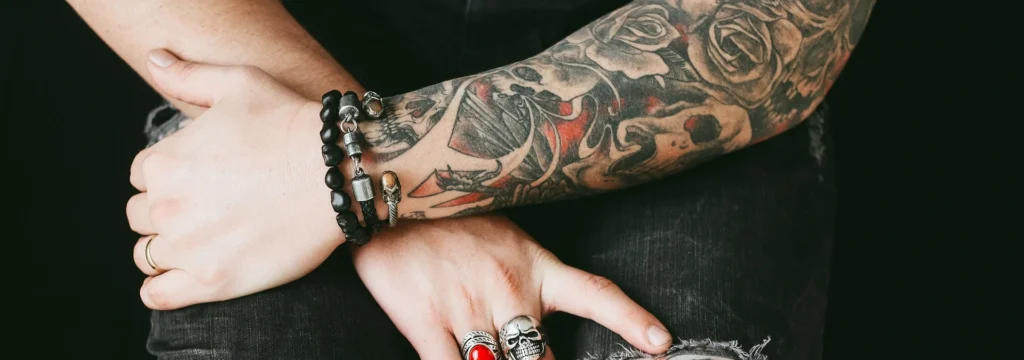
A freshly inked tattoo is not only a work of art on the skin but also a wound that requires specific care to ensure rapid healing and long-lasting color intensity.
Skin reaction during tattooing
During tattooing the skin is injured by the needle punctures and the body reacts to this injury. The skin initially responds with swelling and redness, which usually subsides after a few hours or days.
In addition, the skin forms a scab that supports the healing process. This scab should not be removed, as it serves as an important protective layer for the underlying skin.
It is normal for the skin at the tattoo site to itch during the healing process. However, you should avoid scratching the skin, as this can lead to infections and unsightly scarring.
If the skin becomes markedly swollen, reddened, or painful after tattooing, this may indicate an infection. In that case you should consult a physician.
It is important to maintain proper tattoo aftercare during the healing process to minimize the risk of complications. This includes regularly washing the tattooed area, avoiding friction and sunlight, and applying an appropriate ointment or cream.
What to consider before the tattoo appointment
A tattoo is a decision for life, so you should properly inform and prepare yourself before the appointment to avoid future regret. Here are some things to consider before your tattoo appointment:
1. Research and consultation
It is important to find the right tattooist and to review their work. Online portfolios and customer reviews are good resources. Before the appointment you should arrange a detailed consultation with the tattooist to discuss the tattoo’s details such as size, placement, colors and style.
2. Health conditions
If you suffer from health conditions such as diabetes, cardiovascular disease, or immunodeficiency, you should consult a physician beforehand to minimize the risk of complications. Also postpone the appointment in case of acute infections or skin conditions.
3. Alcohol and blood thinners
Avoid alcohol before the appointment, as it can make the skin more sensitive. Blood thinners such as aspirin should also be avoided to prevent bleeding during tattooing.
4. Sufficient Sleep and Sobriety
It is important to get enough sleep and to arrive sober for the appointment in order to be physically and mentally fit. You should also allow sufficient time, as a tattoo can often take several hours.
5. Appropriate Clothing
You should choose comfortable clothing that makes the area to be tattooed easily accessible. Also keep in mind that ink and blood can get on clothing.
By observing these points you can best prepare for the tattoo appointment and achieve a result you can wear with pride.
How a Typical Tattoo Appointment Proceeds
A tattoo appointment can be exciting and a little intimidating for many people, especially if it is their first tattoo. Here is a brief summary of what will happen during an average tattoo appointment:
Greeting and Paperwork
At the start of the appointment your tattoo artist will typically greet you and ask some questions to ensure you understand everything and to discuss your expectations. There will also be some forms for you to sign to confirm that you have been informed about all risks and possible complications.
Design Discussion
After the greeting your tattoo artist will discuss the design and may make final adjustments. It is important that you feel comfortable at this stage and that the design fully reflects your wishes.
Preparation of the Skin
Before starting, the area where the tattoo will be applied will be thoroughly cleaned and disinfected. Your tattoo artist may also recommend shaving to make the design more visible.
Tattooing
Once everything is prepared, the tattoo artist will transfer the design onto your skin and begin tattooing. It can be somewhat uncomfortable or even painful, but your tattoo artist will help you manage the situation and make you as comfortable as possible.
Aftercare and Care
After the tattoo has been fully completed, your tattoo artist will apply a layer of a special ointment or cream and inform you how to care for the tattoo at home and support healing. It is important that you follow your tattoo artist’s instructions to ensure the tattoo heals optimally and remains in the best possible condition.
These were the most important steps for a tattoo appointment. Keep in mind that every appointment can be slightly different, and it is important that you discuss any questions you have with your tattoo artist. This way you can ensure you are optimally prepared and that your tattoo will be a success.
Here are some important tips to follow for tattoo aftercare:
1. Cleaning
Cleaning the tattoo is the most important step in aftercare. Use mild soap and lukewarm water to gently clean the tattoo. Avoid rubbing or scratching the tattoo, as this can damage the skin.
2. Moisturizing
Keep the tattoo consistently moist to promote rapid healing and to prevent drying out. Apply a thin layer of a specialized tattoo cream and avoid oily or greasy products, as these can clog the pores.
3. Sun protection
Avoid direct sunlight on the tattoo during the healing phase. If necessary, wear loose clothing or cover the tattoo with a plaster to protect it from harmful UV radiation.
4. Avoiding friction
Avoid tight clothing or objects that could rub against the tattoo, as this can cause irritation and skin damage.
5. Avoiding water
Avoid submerging the tattoo in water — for example when bathing or swimming — until it is fully healed, to prevent infections.
Leave the tattoo alone
After your tattoo has been applied, it is important that you do not touch or scratch it. Doing so can introduce bacteria into the wound, delaying healing or even causing infections. Also avoid tight-fitting clothing that rubs or chafes the tattoo.
Avoid sports and swimming
During the healing phase, the tattoo should not come into contact with sweat or chlorinated water. Therefore avoid physical exertion and swimming pools or sauna visits until the tattoo is fully healed. By following these tips you can ensure that your new tattoo heals quickly and without complications. If, however, you notice signs of an infection or have questions about aftercare, you should consult your tattoo artist or a doctor.
Conclusion
By following these tips and maintaining a consistent aftercare routine, you can ensure your new tattoo heals faster and lasts longer. If you have concerns or questions about caring for your tattoo, always consult your tattoo artist or a medical professional.