
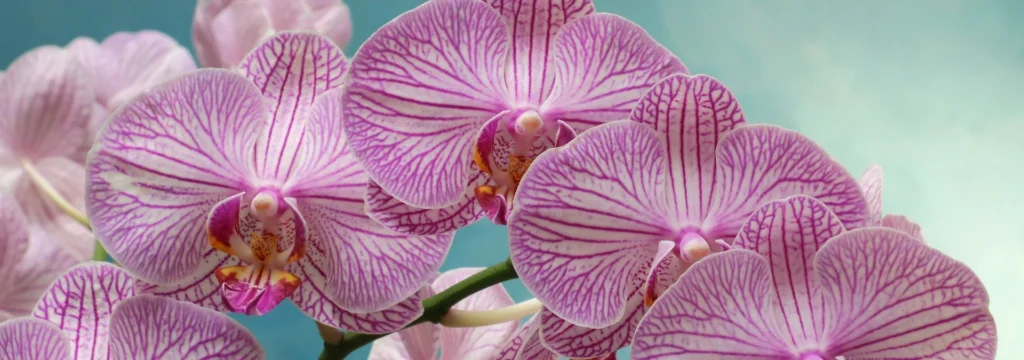
Orchids are beautiful and elegant plants that are often used as decoration in homes and offices. However, if an orchid stops flowering, there can be several reasons.
Here are some tips to help your orchid bloom again:
1. Check the light conditions
Orchids need plenty of light to bloom. Make sure your plant receives sufficient indirect light, but avoid direct sunlight, as this can cause burns.
2. Check temperature and humidity
Orchids also require specific temperature and humidity ranges to thrive. Ensure the temperature is between 18 and 22 degrees Celsius and the humidity between 40 and 60 percent.
3. Check the condition of the pot and the growing medium
Check whether the pot in which your orchid grows is large enough and whether the growing medium offers sufficient aeration. A pot that is too small or too large can impair growth, and a medium that is too dense can lead to root rot.
4. Fertilize your orchid
They also need regular fertilization/nutrients to bloom. If they do not receive sufficient nutrients, they may stop flowering. Use a specialized orchid fertilizer and follow the instructions on the packaging to avoid over-fertilization.
5. Cut back spent stems
Remove stems that no longer have flowers to direct the plant’s energy toward producing new blooms.
By following these tips you can ensure your orchid remains healthy and returns to flowering. If your plant still does not bloom, it may simply be undergoing a resting period before it flowers again.
6. Insufficient humidity
Orchids require high ambient humidity to thrive and bloom. Dry air can cause flower buds to dry out and drop.
Over- or under-watering
They need regular watering, but overwatering can lead to root rot and underwatering to drought stress. Both can cause the orchid to stop flowering.
7. Age of the plant
Orchids have a limited lifespan and may stop blooming after a few years. In such cases it may be necessary to replace the plant. By paying attention to these factors, you can help ensure it stays healthy and continues to bloom.
Room temperature for orchids
Orchids are demanding plants that require specific conditions to thrive, remain healthy and bloom. An important consideration is room temperature, as it affects growth and flowering.
Optimal temperature
Orchids prefer a constant temperature between 18 and 24 degrees Celsius during the day and between 15 and 18 degrees Celsius at night. This temperature range mimics the conditions in which they grow in their natural environment.
Temperature requirements for specific orchid species
It is also important to note that different orchid species may have different temperature requirements. For example, Phalaenopsis orchids prefer a higher room temperature of 21 to 26 degrees Celsius, while Cymbidium orchids prefer lower temperatures of 15 to 20 degrees Celsius.
Avoiding temperature fluctuations
It is important to avoid temperature fluctuations, as they can negatively affect the growth and flowering of orchids. Therefore avoid locations exposed to direct sunlight or strong drafts that can lead to sudden temperature changes.
Temperature adjustment for flowering
If you want your orchids to bloom, it is important to expose them to cooler temperatures. Reduce the room temperature to 15 to 18 degrees Celsius at night and raise it during the day to 18 to 21 degrees Celsius.
Relocating orchids
If your orchid has stopped flowering, its location may be the cause. They often require bright but indirect light. If your plant receives too much direct sunlight, this can cause its leaves to burn or its roots to dry out.
A change of location may also be necessary if your orchid is in a spot that is too cool or too warm. The plants prefer a temperature between 18 and 25 degrees Celsius. If it becomes too cold, the flower buds may drop, and if it becomes too warm, the leaves and flowers may wilt.
If you want to move your orchid, choose a location with bright, indirect light and sufficient humidity. Ideally, acclimate the plant to the new location gradually to avoid stressing it.
It can also help to rotate the orchid regularly to ensure that all parts of the plant receive the light and humidity they need.
Dormancy for your orchid: When does it need a break?
As already mentioned, orchids are among the most popular houseplants because their splendid flowers are a real eye-catcher. However, to ensure they bloom again in full beauty every year, it is important to attend to their needs. A period of dormancy is part of that.
What is a dormancy period for orchids?
Most orchid species require a dormancy period to survive. This means they stop forming flowers for a certain time of the year and enter a kind of winter rest. During this time they need less light, water and nutrients.
When does your plant need a dormancy period?
Most orchids require a rest period in winter, when days shorten and temperatures drop. This, however, depends on the orchid species and its natural habitat. Some species need no dormancy, while others take a break in summer.
How can you tell if the orchid needs a dormancy period?
If an orchid requires a dormancy period, it will typically shed its flowers and leaves. Leaves may yellow and curl. This is a sign that the plant is entering a kind of hibernation and requires fewer nutrients.
How to manage the dormancy period?
During dormancy the orchid needs less water and nutrients. It is important to water the plant only when the substrate is completely dry. Fertilizing should also be reduced. The orchid also requires less light during this time and can therefore be placed in a slightly darker location.
How long should the dormancy period for the orchid last?
The length of the dormant period depends on the species of orchid. As a rule, however, it lasts about six to eight weeks. After this time new shoots should form again, and the plant will produce flowers once more.
By taking an orchid’s dormant period into account and managing it accordingly, you can help ensure the plant blooms in full beauty again each year.