
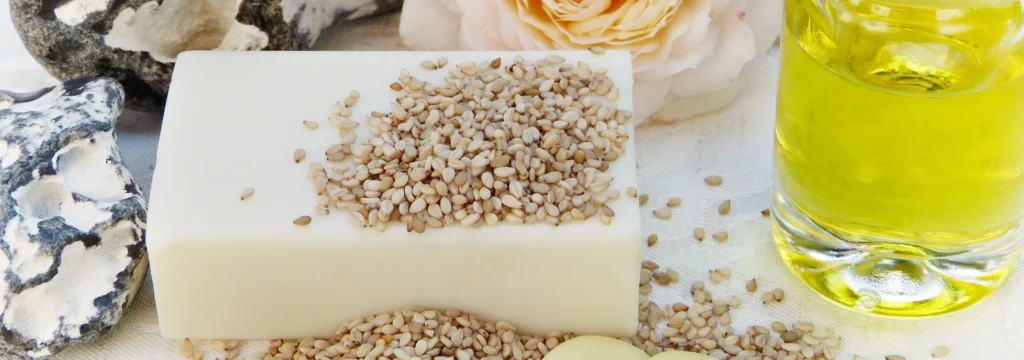
In the realm of sustainable hair care, hair soap and solid shampoo are becoming increasingly popular. Both products offer environmentally friendly alternatives to conventional liquid shampoos because they do without plastic packaging. Although they may appear similar at first glance, there are clear differences between hair soap and solid shampoo. This article explains how they differ, what advantages and disadvantages each has, and which option best suits your needs.
What is hair soap?
Natural-cosmetic hair soap is a traditional care product based on natural ingredients and produced by saponification. Oils or fats are mixed with an alkali in the process, yielding a solid soap. Hair soaps often contain re‑fatting ingredients such as coconut oil, olive oil, black seed oil, rosemary oil, citronella oil or shea butter, which condition both hair and scalp. The traditional Aleppo soap is also commonly used as hair soap or beard soap. Here we recommend the naturhaus Aleppo soap. Hair soaps are particularly suitable for people seeking a natural, plastic‑free alternative to conventional shampoos.
What is solid shampoo?
Solid shampoo, by contrast, is a concentrated shampoo in solid form. It often contains similar ingredients to liquid shampoos but with far less water, so close attention should be paid to the ingredient list. Solid shampoos such as, for example, Bioturm solid shampoo commonly rely on mild surfactants responsible for cleansing the hair. They are generally less alkaline than hair soaps, and for that reason an acidic rinse is not required. Solid shampoo lathers similarly to liquid shampoo and rinses out easily, making it particularly suitable for beginners.
Manufacture and composition of hair soap
Hair soap is produced by a process called saponification, in which natural oils or fats are combined with an alkali to create soap. The FINigrana hair soaps, for example, are available in four varieties: with black seed oil, with citronella oil, with rosemary oil or with lavender oil. As mentioned, solid shampoo is a concentrated shampoo that contains much less water and is likewise (depending on the manufacturer) often packaged plastic‑free.
Application of hair soap – solid shampoo
The application of hair soap and solid shampoo differs in several respects. Hair soap is rubbed directly into wet hair or lathered in the hands. The resulting foam is massaged into the hair and scalp and then rinsed out thoroughly. Because hair soap has a higher pH, an acidic rinse is often necessary to remove lime soap and restore the hair’s natural pH. For the acidic rinse mix apple cider vinegar or lemon juice with water. Our tip: mix 1–2 tablespoons of apple cider vinegar or the juice of half a lemon with 1 liter of cold water. Pour the entire rinse over the hair. The rinse can remain in the hair; a further rinse is not necessary. The vinegar smell dissipates quickly. With this acidic rinse lime deposits cannot adhere to the hair. Afterwards the hair is rinsed with it after cleansing. Here you need to find the perfect mixing ratio for yourself, because every scalp and every hair is different. And the transition of the hair to hair soap also requires some time. Solid shampoo is used in the same way as a bar of soap. The solid shampoo is rubbed directly into wet hair or lathered in the hands. The foam is easy to distribute. An acidic rinse is generally not required for solid shampoo.
Advantages and disadvantages of hair soap
Hair soap has several advantages that make it a popular choice for many people. It is usually made from purely natural ingredients and is biodegradable. Its re-fattening properties care for dry hair and the scalp. In addition, hair soap is particularly environmentally friendly because it typically comes without plastic packaging; natural cosmetic hair soaps are usually only wrapped with a paper band. However, there are also disadvantages or points to be aware of. Especially in regions with hard (calcium-rich) water, an acidic rinse is required after washing hair with hair soap. Otherwise the hair can feel dull after washing and may appear greasy. The use of hair soap therefore requires a certain adjustment period, as hair and scalp must first get used to the changed care routine. In addition, the application of an acidic rinse is an extra step for many users, which is sometimes perceived as cumbersome.
Advantages and disadvantages of solid shampoo
Solid shampoo offers an „uncomplicated“ alternative to hair soap. It is easy to apply, foams well and does not require an additional acidic rinse. Due to the mild surfactants it is also gentle on the scalp. Like hair soap, solid shampoo is travel-friendly because it contains no liquid, cannot leak in luggage and saves space. The disadvantages of solid shampoo lie, as with conventional shampoo, in the formulation. We therefore recommend paying attention to the ingredients and choosing natural cosmetic solid shampoos. The environmental friendliness of solid shampoos also varies by manufacturer and brand, particularly regarding packaging and ingredients.
Who is hair soap suitable for?
Hair soap is particularly suitable for people who prefer completely natural hair care and are willing to go through an adaptation phase. Hair soap is suitable for all hair types. Those living in areas with soft water generally do not need an acidic rinse. Hair soap is also a good choice for people who value plastic-free products.
Who is solid shampoo suitable for?
Solid shampoo is the right choice for anyone who wants the convenience of a shampoo while avoiding plastic waste. It is suitable for all hair types and is particularly practical for beginners, as it does not require a transition period. Frequent travelers also appreciate solid shampoo for its compact form and liquid-free nature.
Environmental aspects
Both hair soap and solid shampoo are more environmentally friendly than liquid shampoos in plastic bottles. They do not require plastic packaging. For both products, pay attention to brands that prioritize eco-friendly packaging and sustainable ingredients.
Conclusion
Hair soap and solid shampoo are both environmentally friendly alternatives to conventional liquid shampoos, but they differ in composition and application. Hair soap stands out for its natural composition and intensive care, but requires somewhat more effort in application. Solid shampoo is straightforward to use and functions similarly to conventional shampoos. The choice between hair soap and solid shampoo depends on your individual needs, your hair type, and your preferences. Both options help reduce plastic consumption and protect the environment. Try out which method suits you best and enjoy the benefits of sustainable hair care.