
In a world where sustainability is becoming increasingly important, more and more people are seeking environmentally friendly alternatives. One such method that combines tradition and environmental awareness is the Furoshiki-Methode. This Japanese art of wrapping gifts with fabric is not only practical but also aesthetically pleasing and resource-efficient. In this article you will learn about the Furoshiki method, its origins and possible applications, and how you can use it in your everyday life.
What is the Furoshiki method?
The Furoshiki-Methode is a centuries-old Japanese tradition. It uses fabric cloths to wrap gifts, purchases, or other items. The method is valued not only in Japan but has gained popularity worldwide, particularly in response to the growing demand for environmentally friendly packaging. It is an environmentally conscious alternative to conventional wrapping paper and also a creative way to present gifts.
The word „Furoshiki“ consists of two Japanese terms: “Furo” meaning “bath” and “Shiki” meaning “covering.” Originally the technique was used to transport clothing and bathing items. Over time, Furoshiki developed into a popular method for wrapping all kinds of objects — from gifts to food to everyday items.
Advantages
The Furoshiki method offers numerous advantages.
- Sustainability: Unlike conventional wrapping paper, which is often used only once and then discarded, this is reusable. Fabric cloths can be used repeatedly over years, thereby reducing waste and resource consumption.
- Versatility: Furoshiki cloths are available in various sizes and materials. Use them for a wide range of purposes — from wrapping gifts to carrying purchases, or as a bag or blanket.
- Creativity: This method offers virtually unlimited creative possibilities. There are numerous wrapping techniques that produce different shapes and designs, enabling gifts to be wrapped in an individual and unique way.
- Aesthetics: Furoshiki cloths often feature attractive patterns and colors that enhance the gift. They introduce a tasteful, Japanese flair to the wrapping. Continue to use them as a decorative element after unwrapping.
- Cost savings: Because Furoshiki cloths can be reused multiple times, they are more economical in the long term than wrapping paper, which needs to be purchased anew each year.
Furoshiki: The proper technique
The Furoshiki method is based on various wrapping techniques that are applied depending on the shape and size of the item to be packaged. Some of the most common methods are:
1. The simple wrapping technique
This is the simplest technique and is ideal for smaller gifts such as books or bottles. The cloth is placed in the middle of the gift and the corners are brought together diagonally. Then the two ends of the cloth are tied. This technique can be used for various shapes of objects and is quick and easy to learn.
2. The pouch (Furoshiki pouch)
A very popular application of the Furoshiki method is folding cloths into practical pouches. The corners of the cloth are tied together so that a small pouch is formed. You can use this for carrying purchases or as a handbag. This technique is particularly practical because it is both environmentally friendly and functional.
3. The flower technique (Hana Furoshiki)
The flower technique is a somewhat more complex wrapping method. You fold the cloth so that it appears as if a flower is emerging from the center of the package. This technique is especially suitable for wrapping round or square gifts such as boxes, bottles, or cups. It gives the gift an elegant, floral look.
4. The bottle technique (Bottle Furoshiki)
Wrap a bottle in style. Fold the Furoshiki cloth so that it fully encloses the bottle and tie the ends together at the top. This technique is commonly used for wine bottles, juices, or other beverages. It not only protects the bottle but also provides an attractive presentation for the gift.
5. The square wrapping technique
This technique is particularly practical for square or rectangular gifts. The cloth is simply wrapped around the gift, and the corners are either tied or folded into pleats to create a clean and compact package. It is a quick and straightforward method suitable for many types of gifts.
Materials for Furoshiki cloths
Choosing the right material for a Furoshiki cloth is critical, as it must meet both aesthetic and practical requirements. Furoshiki cloths are available in various fabric types, including:
- Cotton: Use cotton, as it is a popular material. It is durable and easy to handle. Cotton Furoshiki cloths are particularly versatile and suitable for everyday use.
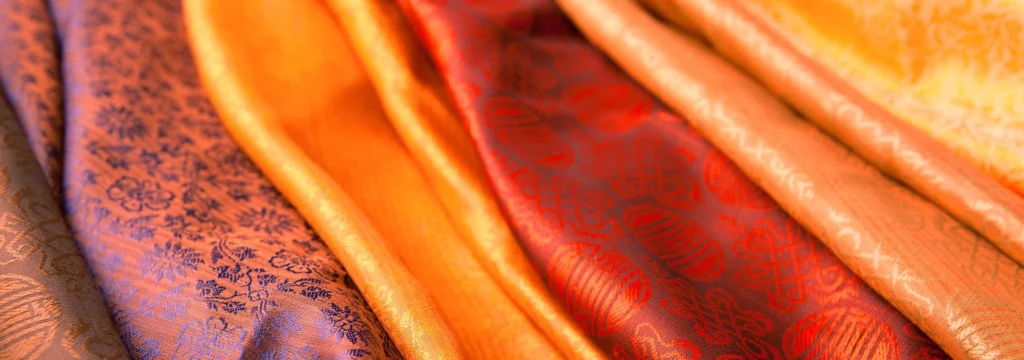
- Silk: Silk gives the Furoshiki cloth a luxurious appearance. It also feels pleasant on the skin. Silk Furoshiki cloths are often used for particularly elegant or festive occasions.
- Leather: For particularly robust and sustainable packaging, leather can also be used. Leather Furoshiki cloths are durable and suitable for larger or heavier gifts.
- Linen: Linen is another material that is both functional and environmentally friendly.
Furoshiki in everyday use: Additional applications
In addition to use as gift wrapping, there are many other applications for Furoshiki. You can use the cloths, for example, as:
- Bag or pouch: Create your own eco-friendly shopping bag easily using the Furoshiki method. This avoids the use of plastic bags.
- Tablecloth or picnic blanket: Use a Furoshiki cloth of the appropriate size as a stylish tablecloth or picnic blanket.
- Decoration: Furoshiki cloths with attractive patterns and colors are well suited as wall hangings or decorations for special occasions.
- Scarf or headscarf: Use a Furoshiki cloth as a scarf or headscarf. Incorporate it easily into your wardrobe.
Furoshiki as a sustainable alternative
Furoshiki is a sustainable alternative to conventional wrapping paper and other disposable packaging methods. Simply reuse the cloths. In doing so you help reduce waste and conserve resources.
Conclusion
The Furoshiki method is a creative, versatile and sustainable way to wrap gifts, and at the same time conserves resources. This traditional Japanese technique offers a wide range of applications — from simple gift wrapping to use as a bag, decoration or even an item of clothing. By incorporating Furoshiki into your daily life, you make a meaningful contribution to a more sustainable lifestyle while also expressing your creative side.