
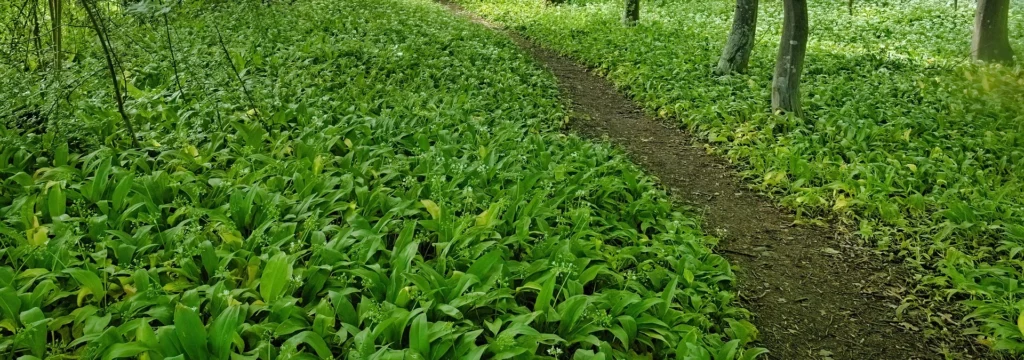
Wild garlic (Allium ursinum) is one of the popular wild herbs, valued both in the kitchen and as a medicinal plant. With its pronounced garlic scent and high content of valuable nutrients, it is a genuine superfood. It grows mainly in shaded forests and meadows and is harvested from March to May. Its piquant aroma makes it a favored ingredient for pestos, soups and salads.
Origin and botanical characteristics
It belongs to the leek family (Alliaceae) and is closely related to garlic, onions and chives. It prefers moist woodlands in Europe and Asia. Its long, narrow leaves are intensely green and emit a characteristic garlic odor when crushed. During the flowering period in May, white, star-shaped flowers form, visually distinguishing wild garlic from other plants.
In the kitchen – versatile and flavorful
Its flavour is milder than that of garlic, yet still piquant and aromatic.
1. Pesto
For this, fresh wild garlic leaves are mixed with olive oil, Parmesan, nuts and salt – ideal as a dip or with pasta.
2. Wild garlic soup
A creamy soup is quick to prepare and tastes particularly good in spring. It gives the soup a fresh, piquant note.
3. Wild garlic butter
Simply mix with softened butter, a little salt and lemon juice – a fitting accompaniment to bread, grilled dishes or vegetables.
4. Wild garlic salt
Dried wild garlic can be mixed with coarse sea salt and used as an aromatic seasoning for many dishes.
5. Wild garlic as an accompaniment
Fresh wild garlic can be used in salads, omelettes or as a seasoning in sauces.
Wild garlic in the kitchen – notes on preparation
Wild garlic should be processed as fresh as possible, since it wilts quickly and loses its aroma. If it cannot be used immediately, it can be frozen or processed into pesto. Care is required when foraging, as wild garlic can be easily mistaken for poisonous plants such as lily of the valley. A reliable identification feature is the characteristic garlic smell that the leaves emit when crushed.
1. Classic wild garlic pesto – the most popular recipe
Wild garlic pesto is one of the simplest and most delicious ways to preserve this aromatic wild herb. It is excellent as a pasta sauce, bread spread or dip.
Ingredients:
100 g fresh wild garlic
50 g pine nuts or walnuts
50 g Parmesan or nutritional yeast flakes for the vegan variant
100 ml olive oil
1 clove of garlic
Salt and pepper to taste
Preparation:
Wash the wild garlic, pat dry and roughly chop. Lightly toast the pine nuts in a pan without fat. Finely blend all ingredients in a mixer or with an immersion blender. Fill into a jar and cover with a little olive oil so the pesto keeps longer.
2. Wild garlic butter – Perfect for grilled dishes and bread
This savory butter is versatile and freezes well for storage.
Ingredients:
100 g butter or vegan alternative
1 handful wild garlic
1 tsp lemon juice
Salt and pepper to taste
Preparation:
Bring the butter to room temperature. Finely chop the wild garlic and add it to the butter with the lemon juice, salt and pepper. Mix thoroughly and shape into a roll in cling film. Chill in the refrigerator until firm or freeze in portions.
3. Wild garlic bread – Hearty and aromatic
This homemade bread is light and fluffy and has a subtle wild garlic note.
Ingredients:
500 g flour (wheat or spelt)
1 cube fresh yeast or 1 packet dry yeast
300 ml lukewarm water
1 tsp salt
1 tsp sugar
2 tbsp olive oil
1 handful chopped wild garlic
Preparation:
Dissolve the yeast with the sugar in lukewarm water and let rest briefly. Mix the flour with the salt, then add the yeast mixture and the olive oil. Knead well until a smooth dough forms. Knead in the chopped wild garlic. Cover the dough and let it rise for about 1 hour, then bake at 200°C (top/bottom heat) for about 30 minutes.
4. Wild garlic salt – The versatile all-rounder
Wild garlic salt is a simple way to preserve the wild herb and enjoy it year-round.
Ingredients:
100 g fresh wild garlic
200 g coarse sea salt
Preparation:
Finely chop the wild garlic and mix with the salt. Spread the mixture on a baking tray and dry in the oven at a low temperature (50°C). Then grind finely in a blender and fill into a screw-top jar.
5. Wild garlic gnocchi – Italian delight with wild herbs
These gnocchi are an aromatic alternative to the classic variant.
Zutaten:
500 g potatoes
150 g flour
1 egg yolk (or egg substitute)
1 handful wild garlic
salt and pepper
Preparation:
Boil the potatoes, peel and mash them. Finely chop the wild garlic and add it with the flour, egg yolk, salt and pepper to the potatoes. Knead everything into a smooth dough. Shape rolls from the dough, cut into small pieces and press lightly with a fork. Cook in boiling salted water until they rise to the surface.
6. Wild Garlic Risotto – Creamy and savory
A simple risotto with wild garlic is perfect for a quick dinner.
Ingredients:
250 g risotto rice
1 onion
500 ml vegetable broth
100 ml white wine
1 handful wild garlic
2 tbsp butter or plant-based alternative
50 g Parmesan or nutritional yeast flakes
Preparation:
Finely chop the onion and sauté in butter. Add the rice and briefly sweat it. Deglaze with white wine, then gradually add the vegetable broth while stirring. Once the rice is creamy and cooked, stir in the chopped wild garlic and Parmesan.
7. Wild Garlic Dip – Fresh and versatile
This dip pairs perfectly with bread, vegetable sticks or potatoes.
Ingredients:
200 g quark or plant-based alternative
100 g yogurt
1 handful wild garlic
1 tsp lemon juice
salt and pepper
Preparation:
Finely chop the wild garlic and mix with the remaining ingredients. Let REST briefly and enjoy.
Collecting and identifying wild garlic correctly
When collecting wild garlic, exercise caution, as it can easily be mistaken for poisonous plants such as lily of the valley or autumn crocus. A reliable identifying characteristic is the strong garlic smell the leaves emit when crushed. If in doubt, you should buy wild garlic from the supermarket or at the weekly market.
Storage and preservation
Since wild garlic tastes best fresh, it should be used as soon as possible. To make it last longer, there are several methods:
Wild garlic leaves can be preserved in oil and used as a flavored oil.
The leaves can be finely chopped and frozen to be used later as a seasoning.
Dried wild garlic is suitable as a seasoning but loses aroma.
Wild garlic as a medicinal plant
In addition to its culinary use, wild garlic is also valued in naturopathy. It can be prepared as a tea or tincture. It is particularly used for gastrointestinal complaints or for detoxification.
Conclusion
It is not only a delicious wild herb, but also a plant with many benefits. It can promote digestion. At the same time it is a natural ingredient that can be easily integrated into the diet.
Whether as a pesto, soup or seasoning – wild garlic is a genuine asset for the kitchen and health. Those who harvest or buy fresh wild garlic leaves in spring benefit from its flavor and valuable nutrients.