
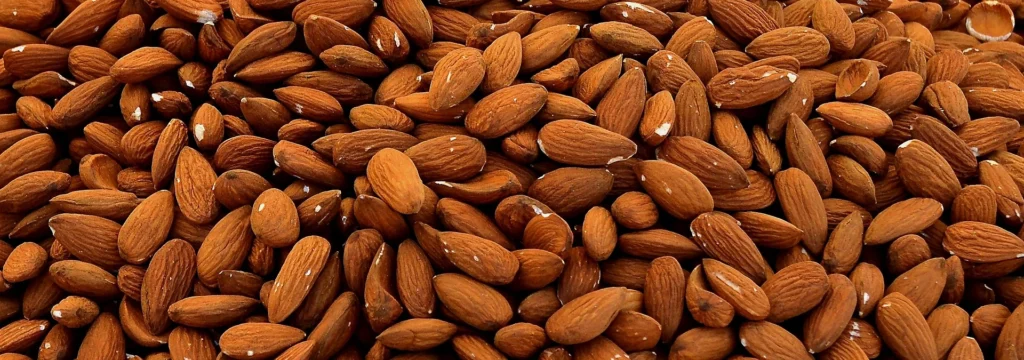
Almonds are one of the world’s most popular and versatile nuts. Whether as a snack, an ingredient in cooking or as the basis for skin care products – almonds offer a variety of benefits and applications. Their high content of valuable nutrients makes them a superfood that should not be missing from a balanced diet. In this article you will learn everything about their origin, health benefits and creative uses.
What are almonds?
They are the edible seeds of the almond tree (Prunus dulcis), which belongs to the rose family. Originally almonds come from the Mediterranean region and the Near East, but are cultivated worldwide today, particularly in California, which is considered the largest producer. There are two main types:
- Sweet almonds: These are predominantly consumed and used in cooking.
- Bitter almonds: These contain amygdalin, which is toxic in high amounts, and are mainly used to produce flavor extracts.
Nutrients and health benefits
Almonds are not only tasty but also highly nutritious. They provide a range of important nutrients:
1. High-quality fats
They consist of approximately 50% healthy unsaturated fatty acids.
2. Protein source
With around 21 g of protein per 100 g, they are an excellent plant-based protein source, ideal for vegetarians and vegans.
3. Rich in vitamins and minerals
They contain high amounts of vitamin E, as well as magnesium, calcium, potassium and zinc.
4. Dietary fiber
They provide about 12 g of dietary fiber per 100 g, which supports digestion and produces a long-lasting feeling of satiety.
5. Weight management
Despite their high caloric content, almonds can assist with weight loss. The combination of fiber, healthy fats and protein promotes satiety and prevents cravings.
Almonds in the kitchen
They are incredibly versatile and can be used in both sweet and savory dishes. Here are some popular uses:
1. As a snack
They are a healthy, convenient snack that is easy to take with you. Eat them raw, toasted or salted.
2. In baked goods
As an ingredient in cakes, cookies or as a base for marzipan. Give your baked goods a distinctive flavor and a soft texture.
3. Almond milk
Almond milk is a popular alternative to cow’s milk. It is well suited for vegans or people with lactose intolerance. Make it yourself easily: blend almonds with water, then strain the mixture through a sieve.
4. Almond flour
Make almond flour easily by grinding the almonds very finely. It is a gluten-free alternative to conventional flour and is often used in low-carb cuisine.
5. Almond butter
Almond butter is a creamy spread and a nutrient-dense ingredient for smoothies or mueslis.
6. In savory dishes
Almonds are frequently used in Mediterranean and Middle Eastern cuisine, for example in sauces, fillings or as a crunchy topping for salads and vegetable dishes.
Recipe: Spiced roasted almonds
Ingredients:
- 200 g raw almonds
- 1 tbsp olive oil
- 1 tsp paprika powder
- 1 tsp cumin
- 1/2 tsp salt
Preparation:
- Combine almonds with olive oil and spices.
- Spread on a baking sheet and roast at 180 °C for about 10–15 minutes.
- Let cool and enjoy as a snack.
In cosmetics
Almonds are not only valuable in nutrition but also a versatile ingredient in skincare:
1. Almond oil
Almond oil is pressed from the kernels of almonds and is particularly rich in vitamin E and fatty acids. It is well suited for caring for dry skin, as a massage oil or as a hair care product. We recommend the naturhaus Bio Mandel Hautöl.
2. Exfoliants
Finely ground almonds can be used as a base for gentle exfoliants that remove dead skin cells and smooth the skin.
3. Hair care
Almond oil provides moisture to the hair and makes it soft. It can be used as a hair treatment or to care for dry ends.
DIY recipe: Almond oil facial mask
Ingredients:
- 1 tbsp almond oil
- 1 tsp honey
- 1 tbsp plain yogurt
Preparation:
- Stir all ingredients into a smooth paste.
- Apply to the face and leave on for 15 minutes.
- Rinse off with warm water.
Sustainability and almond cultivation
Almond cultivation is not without controversy because it requires a lot of water, particularly in arid regions such as California. There are nevertheless ways to choose sustainably produced almonds:
- Organic almonds: Look for almonds from organic farming that are produced without the use of chemical fertilizers and pesticides.
- Regional products: Buy them from Mediterranean regions to avoid long transport routes.
- Fair trade: Support brands that promote fair working conditions and sustainable cultivation practices.
Tips for storing almonds
- Store cool and dry: Keep almonds in an airtight container in a cool, dark place to protect them from moisture and light.
- Freezing: They can be frozen without issue to extend their shelf life.
- Recognizing freshness: Old almonds often develop a rancid taste due to oxidized fats.
Conclusion
Almonds are a genuine all-rounder, offering numerous benefits in the kitchen, in skin care and for health. They are not only nutrient-dense and versatile, but also enjoyable for every palate. Whether as a snack, in recipes or as a beauty product, almonds enrich everyday life in many ways. With the right recipes, appropriate care and sustainable sourcing, you can make the most of this superfood. Try the ideas presented and let the versatility inspire you.