
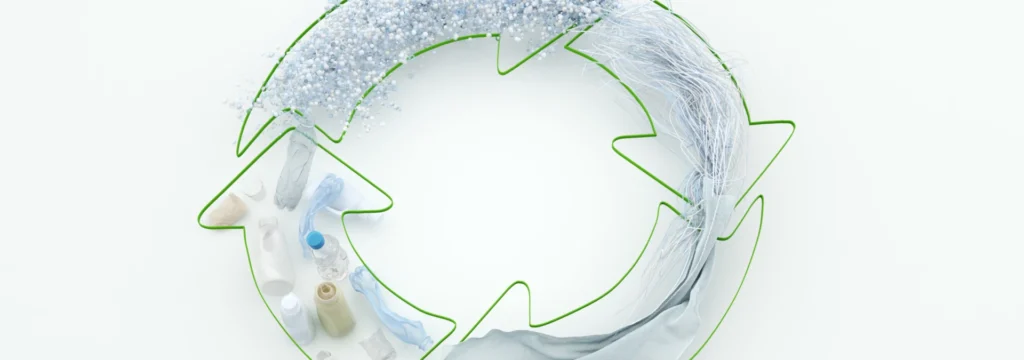
Recognise and avoid microplastic, everyone can make a small contribution
Is a life without microplastic possible?
Already around 160 years ago the first plastic was presented at an exhibition in London, then commonly known under the term „Parkesine“. Since then this durable material has become increasingly popular and eventually made its way into both private and commercial use.
But alongside the triumphal advance that persisted until a few years ago, many problems emerged. In addition to its practical use, more and more people recognised that plastic can become a problem, not only for humans but also for nature.
Recognising and avoiding microplastic: What is microplastic?
Plastic fragments smaller than five millimetres are referred to as microplastic. These are usually difficult to detect with the naked eye. Two types of microplastic are described below.
Base pellets:
The question of what microplastic is has long occupied many people. These essentially constitute the base material used in the production of plastic.
These include, for example, granules that are contained in numerous hygiene and cosmetic products. Whether in toothpaste, scrubs, detergents or in various devices, the possible applications vary. They also find use in medicine.
Secondary microplastic:
This arises when larger plastic pieces break down over time into smaller plastic fragments. For example through biological, chemical or physical influences. This is often referred to as degradation.
Especially weathering influences such as extreme heat, water or environmental factors in general contribute to the decomposition. Quite often, if one is lucky, tiny particles can be seen on the seabed or on the surface of seas or lakes. And also on beaches. These generally constitute microplastic. Particles that detached, for example, from old plastic bottles or packaging.
Example:
During a single wash cycle, up to two thousand synthetic fibres from, for example, fleece garments enter the seawater. This velour fabric is not fully broken down in the natural environment by weathering and other influences. That may not sound like much at first, but the tiny particles accumulate with every wash per household. These micro-particles are difficult to distinguish from grains of sand on beaches. In the end, a family cannot tell whether their child is playing in sand or in microplastic particles during a visit to the beach.
Products without microplastic:
In general, products that have packaging without any plastic are usually free of microplastic.
Fresh items:
If:
consumers, for example, buy fish, meat, sausage or baked goods and use suitable transport options that are not made of plastic
or the vendors at the respective stall refrain from plastic packaging and bags made of this material,
then these can be considered products without plastic contamination.
Everything that is stored or offered for sale in glass or ceramic containers as well as stoneware vessels is free of plastic. Cucumbers in glass, canned foods or beverages in stoneware bottles are normally also free of microplastic.
Everyday items:
Plastic is often present not only in food but also in consumer goods as well as machinery and everyday objects. Exceptions include, for example, wooden toys, items made from 100 percent natural materials (Fröbel toys), instruments for early musical education (tone blocks, triangle …) or mechanical tools such as hammers, screwdrivers, higher-quality gardening tools and so on. One can also assume that foods marketed as organic mostly do not contain plastic particles, provided they have plastic-free packaging.
Those who care about their own appearance use microplastic-free cosmetics and beauty products from this segment. There are many companies that specialize precisely in such items. Not only to achieve higher sales, but also to build trust with consumers. Many companies are also committed to nature and animal protection. For that reason they generally avoid using plastic as far as possible in the production and distribution of their goods.
Recognizing and avoiding microplastic:
First one must ask the question: can microplastic be avoided completely? The answer could fill many pages of books. Briefly, in theory global avoidance is possible. In practice, however, it is not yet desired by many companies, countries and states. After all, plastic as a material is practical. Fewer trees need to be cut down for cellulose-based packaging and it is relatively easy to manufacture. Many proponents would argue so, or at least something similar.
In reality microplastic pollutes not only groundwater in many places, but also the world’s oceans and nature. Trees for cellulose can be replanted more easily than the environment and nature can be freed from microplastic in the medium term. Despite fighting a losing battle, many institutions and committed individuals have made it their (life) task to rid the world of microplastic. Starting with personal abstention from products and taking an active leading-by-example role, each of us can do our part by refraining from products with these ingredients as well as their packaging.
Recycling
If this, for whatever reason, cannot be achieved 100%, one can at least take active steps to help. By practicing waste separation and not disposing of plastic residues into the household sewage or burning them. Toxic fumes produced during burning can also cause long-term health damage. Sadly, there are many countries and areas without regulated waste collection, for example the seemingly evergreen island of Ireland. Some regions have no or only insufficient recycling options. But there is hope. In the long run, this should change in various affected regions and countries, provided they are not among the pooREST in the world.
In the medium term, change always begins with the individual, but seen across the mass of people microplastics can at most be banned entirely within one’s own country, depending on the government and its climate goals. A starting point is banning single-use plastic products, for example straws, disposable containers made of Styrofoam or plastic, fast-food packaging or shopping bags made from this material. However, without global regulations there will always be plastic products and waste in this area.
Bans?
Those who are not willing to forgo plastic items here in the country, such as popular straws or plastic plates, will order them from other regions of the world—large online platforms make that possible. Thus, despite production and local retail sales bans, pollution from such plastic products does not come to a decisive end. Without consistent bans, many consumers will not give up the conveniences that plastic products provide. Public awareness and the catalogue of measures are far too limited to effectively and broadly counter environmental pollution from microplastics.
Conclusion:
Recognize and avoid microplastics: everyone deals with the issue of microplastics differently. Those who consistently want to avoid plastic products and items, to do themselves some good, generally succeed. Labels on packaging and products and a vigilant eye usually help to identify products that are plastic-free. It is important to form your own opinion, rely on regional suppliers for food, and, when possible, bring containers made of glass, earthenware or stainless steel when purchasing or collecting food.
Relying more on one’s own organic cultivation and giving up everyday items that contain plastic is a difficult task that must be addressed continuously with some effort and will. In the end it is about nature and one’s own health and that of future generations. Products without microplastics can be purchased, for example, in specialised stores, on farms or often directly from manufacturers. There are also companies that offer their products online and ship them without plastic packaging. The number of companies specialised in this area is increasing annually and steadily. Those who refrain from microplastics can also have a clear conscience for themselves and in relation to others.
Microplastic information on Wikipedia
Image credit: iStock 1293731211 Recycling plastic loop