
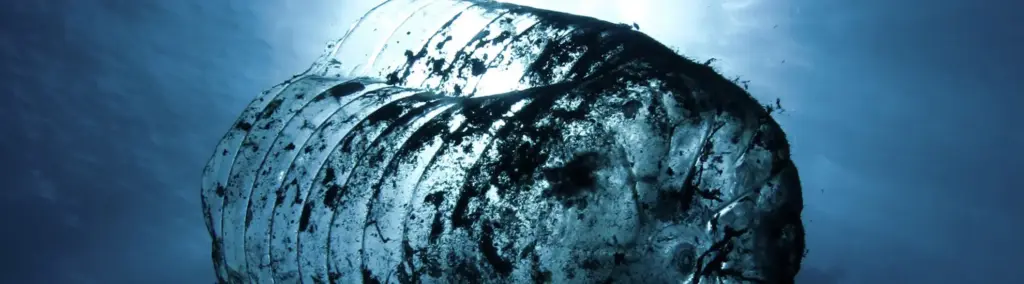
Microplastic and cosmetics — ingredients and packaging. Some background information.
What is microplastic?
The umbrella term microplastic covers both solid and soluble synthetic plastics (polymers) with a diameter under five millimetres (5000 micrometres). The particles are difficult to detect with the naked eye. Microplastic is extremely persistent. It can take decades, possibly centuries, to biodegrade. Microplastic accumulates in the environment and represents a previously underestimated—because little researched—risk to wildlife and possibly to humans.
The health effects on humans are not yet fully clarified; the impacts on the environment are better documented. For several common microplastics used in cosmetics, clear evidence already exists that they are harmful to the environment. Microplastic provides a large adhesion surface for heavy metals and persistent organic pollutants, so-called „POPs.“ These contaminants accumulate on the surface of the plastics, turning them into lethal toxin cocktails.
If they then end up in the digestive tract of animals, the toxic substances can accumulate in their tissues. Through the food chain, the toxins then also enter the human body. As a rule, three groups of microplastic are distinguished.
Types of microplastic
- Primary microplastic Type A>: This category is regarded as a chemical. It includes all types that are added directly to products (e.g. cosmetic products or hygiene items such as scrubs, toothpaste, hand wash, as well as cleaning agents, varnishes, etc.). Some manufacturers have begun replacing environmentally harmful microplastic in cosmetics with water‑soluble polymers („liquid microplastic“). The products are then often marketed with the label „microplastic-free“.
- Primary microplastic Type B: is manufactured for specific industrial applications. The base material for plastic production here are the so‑called base pellets, small plastic granules that are further processed into plastic products. This category enters the environment directly (without detours) as microplastic.
- Secondary microplastic: forms through the breakdown of larger plastic items under the influence of sunlight, wind and waves (the so‑called degradation of macroplastic parts). The plastic fragments gradually disintegrate back into their original form, into base pellets. The share of secondary microplastic is considerably higher—at around 82% of the total share in the environment—than that of primary microplastic.
Microplastic in the environment
Microplastic is now omnipresent in our oceans, rivers and lakes, that is, ubiquitous. But it is also present in the air and even in the most remote regions of the planet, such as the Arctic or the Antarctic. Microplastic has been detected in food and in human organs. People ingest microplastic daily via food, air and other sources. Researchers estimate that each person eats and drinks up to five grams of microplastic per week.
The critical issue is that microplastic releases its chemical constituents in the human body — such as Bisphenol A and plasticizers. Plasticizers are found, for example, in cosmetic products such as shampoo, sunscreen and nail polish, as well as in numerous foods packaged in plastic. Plasticizers are potent chemicals that act like hormones in the body. According to recent scientific findings, this in turn promotes hormonally influenced diseases, e.g. certain tumors, diabetes and cardiovascular diseases. The other active substance, Bisphenol A, likely damages nerves and is considered carcinogenic.
Long degradation times
Because microplastic has very long degradation times, its concentration in our environment continues to increase. Microplastic has spread across the planet, and if not actively countered soon, the consequences for our waters, our soils and ultimately for humans will be severe. In various countries, e.g. the USA or Sweden, microplastic is now banned. Unfortunately not yet in Germany. At least the EU has now introduced an initiative to ban primary microplastic, which still needs to be ratified by most national parliaments. The fact is,
Microplastic is one of the major acute environmental problems. The invisible threat in our environment is the subject of controversial debate. The issue of microplastic in cosmetics has also become part of the public debate.
Emissions of microplastic and synthetic polymers from cosmetic products amount to only 19 grams per capita per year and are quantitatively of relatively minor importance. Nevertheless, they are part of the overall microplastic problem.
Where is microplastic found everywhere? Microplastic in cosmetics …
Microplastics are present in more everyday products than commonly assumed. Primary microplastics occur primarily in common personal care products and cosmetics. Synthetic polymers (plastics) are used as exfoliating particles in various products. Microplastics are found, for example, in shampoos, make-up, lipsticks, sunscreens and many other cosmetics. In liquid or gel form, plastics are also used as fillers and binders. Some cleaning agents also contain microplastics. How can consumers find out what is in products? The legally required ingredient list helps here. INCI, the „International Nomenclature of Cosmetic Ingredients“, prescribes exactly how the information on, for example, a shampoo bottle must appear. If the ingredient list contains substances such as „Polyethylene“ (PE), „Polypropylene“ (PP), „Polyamide“ (PA) or „Polyethylene terephthalate“ (PET), the product definitely contains microplastics.
Which plastic-free alternatives are available?
Many cosmetic manufacturers now acknowledge that microplastics can pose a risk to humans and the environment. For a wide range of cosmetic and personal care applications such as hair and skin care, sun protection, make-up or nail polish, specific liquid polymers are now used. Because some liquid polymers, for example polyurethanes (PU), are biodegradable, they are—unlike solid polymers (microplastics)—a more environmentally friendly alternative for consumers.
However, that is not sufficient for environmental organizations such as Greenpeace and BUND. They demand that industry and manufacturers also refrain from liquid and soluble plastics—in short, from all synthetic polymers. In the case of cosmetics, one can, for example, avoid products that intentionally contain primary microplastics. Among other things, try washing your hair plastic-free. One example: conventional shampoos and shower gels in plastic bottles generate vast amounts of plastic waste.
Hair soap as a plastic-free alternative
The average person uses approximately 787 bottles of shampoo in their lifetime. That does not have to be the case. As a plastic-free alternative for hair care, solid hair soap in particular is increasingly reappearing in personal care arsenals. Hair soap can be used not only for washing hair but also for shaving and body care. Washing hair plastic-free is very much in vogue. A special highlight among hair soaps is Aleppo soap, a specific laurel soap from Syria. It has been traditionally produced since ancient times. Aleppo soap is among the oldest soaps in the world. It is 100% plant-based (85% olive oil, 15% laurel oil) and free of any additives.
Due to this 100% natural composition it is fully biodegradable. The soap can, in addition to personal care, also be used for washing laundry. Conclusion: Anyone who wants to do something for our environment can start with microplastic cosmetics. Plastics in care products are unnecessary, as shown by natural cosmetics manufacturers that consistently avoid microplastics in their products.
Buy cosmetics without microplastics from Naturhaus online
Naturhaus care products overview
Plastic-free hair washing with hair soap